
What Happens When a Brand Relies on a Single Supplier?
Summary
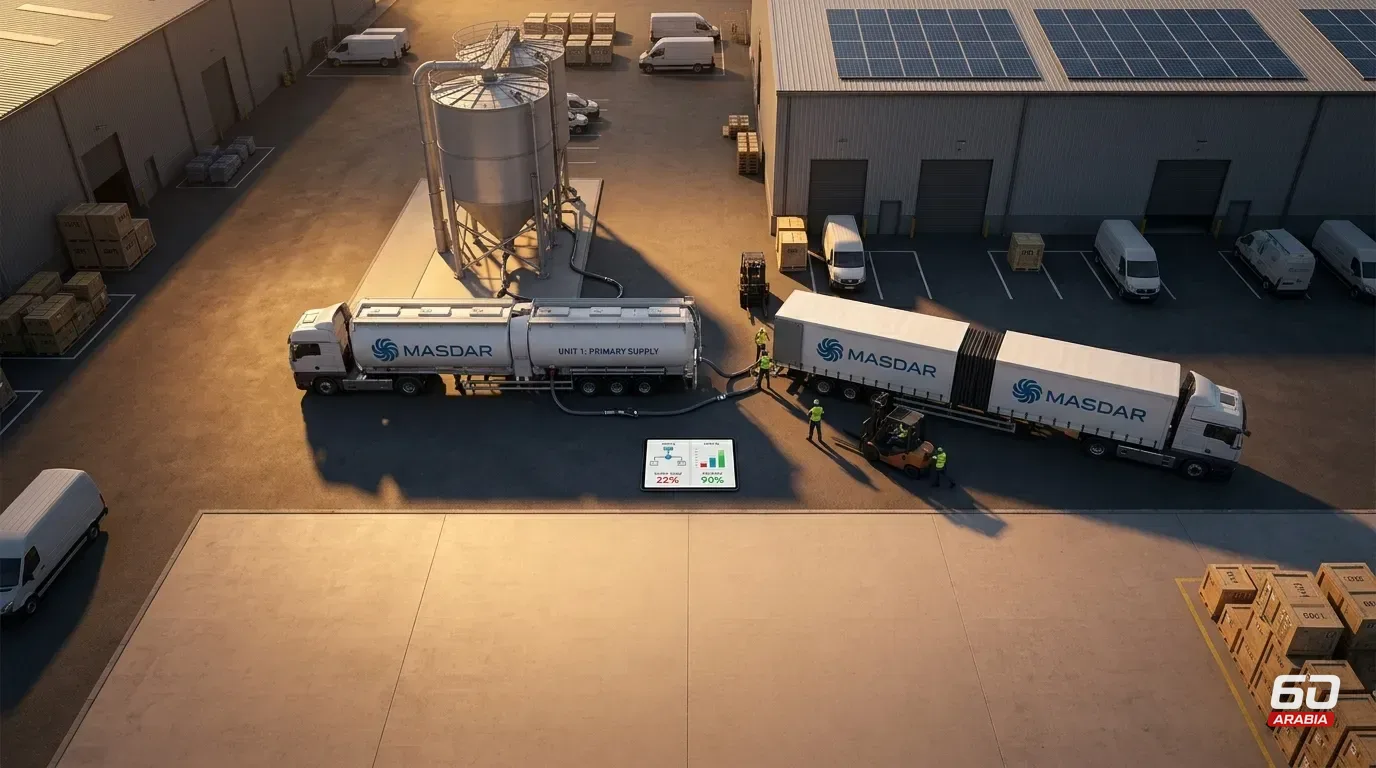
Imagine one of a brand's restaurants relying on a single supplier for meat. But what happens if the supplier suddenly stops delivering due to a financial crisis, a production issue, or a transport disruption?
What happens when a brand relies on a single supplier?
Imagine one of a brand's restaurants relying on a single supplier for meat supply.
The relationship is stable, prices are fair, quality is good, and supply has been regular for years.
Management decides to continue with them because they are a reliable supplier and sees no reason to look for an alternative.
But what happens if the supplier suddenly stops delivering due to a financial crisis, a production issue, or a transport disruption?
Suddenly, the brand faces a problem that could impact all its branches.
The problem is not relying on a good supplier, but rather lacking an alternative when that supplier stops.
Why does relying on a single supplier pose a risk?
When a company relies on a single source for an essential raw material, it places a portion of its business continuity under the control of a single external party.
These risks can manifest in several forms:
- Supply Disruption: A sudden stoppage or delay in supply.
- Price Dependency: Weakened negotiating leverage in the absence of alternatives.
- Quality Risk: A decline in quality without a ready alternative source.
- Capacity Limitation: The supplier's inability to scale quantities as the brand grows.
- Geographical Risk: The supplier being impacted by an issue in a specific geographical region or transport route.
These risks may not surface throughout years of business, but they become highly impactful when they occur.
Is supplier diversification always the solution?
Not necessarily.
Dealing with a large number of suppliers can increase operational complexity, make quality standardization difficult, and reduce purchasing volume from each supplier, which may negatively impact pricing and contractual terms.
The goal is not to increase the number of suppliers just for the sake of it, but rather to build a Supplier Risk Management framework that identifies critical raw materials, dependency levels on each supplier, and available alternatives.
It is not necessary to have five suppliers for every item, but it is dangerous to have an essential ingredient without which the restaurant cannot operate, and for which no qualified alternative exists.
How do you build a safer supply network?
There are four basic steps:
1. Identifying Critical Materials (Critical Items)
Start by identifying items whose stoppage causes operational disruption or directly impacts sales.
Not every item has the same importance; a disruption in supplying an essential ingredient can be far more dangerous than a shortage of an item that can be easily substituted.
2. Qualifying an Alternative Supplier
Do not wait for a crisis to occur before searching for a new supplier.
The alternative supplier must be tested in advance, reviewing their production capacity, pricing, quality, and documentation, ensuring their ability to comply with required specifications.
Having a supplier's name in the database does not mean they are an operationally ready alternative.
3. Calculated Risk Diversification
Quantities can be allocated between a primary supplier and a secondary supplier based on item importance, demand volume, supplier capacity, and cost.
It may be appropriate to maintain the primary supplier for most volumes while executing regular purchases from the alternative supplier so that the commercial relationship and operational readiness remain intact.
4. Developing a Contingency Plan
The company must know in advance what it will do if the primary supplier stops:
Who will handle communication with the alternative supplier?
What quantity can they provide?
How long will delivery take?
Is current inventory sufficient during the transition period?
These questions must have answers before a crisis occurs, not during it.
Practical Example
Suppose a brand consumes 10 tons of meat monthly and relies entirely on a single supplier.
If the supplier stops, the problem will not merely be securing 10 tons from elsewhere.
The alternative may require quality testing, specification approvals, transport and storage arrangements, and possibly a period of time before actual supply begins.
Therefore, management must take into account the transition period, appropriate inventory levels, and the true capacity of the alternative supplier.
This brings up the concept of Supply Chain Resilience—the ability of the supply chain to absorb disruptions and recover without stopping operations.
Conclusion
A good supplier represents real value for a brand, but a single supplier with no alternative can become a strategic vulnerability.
Procurement management is not limited to negotiating prices and improving supply terms; it also includes protecting the company from the risks of over-reliance on a single source.
Do not wait until you lose your supplier to start looking for an alternative, because the cost of preparing for a crisis is usually lower than the cost of dealing with it after it occurs.
In the next article, we move on to one of the most important topics within any Food Brand:
Inventory: An Asset or a Hidden Problem?
Inventory may protect operations from interruption, but it can also turn into tied-up capital, costs, and waste if not managed properly.

Supply Chain Manager with experience in procurement, planning, warehousing, inventory management, transportation, and logistics, focused on improving operational efficiency, optimizing costs, and developing processes and systems. I believe successful supply chains go beyond product availability. They require integrated planning, data-driven analysis, and effective decision-making to support sustainable business growth. I am passionate about turning operational challenges into opportunities for improvement, leveraging technology and AI to build more efficient, agile, and resilient supply chains.
Profile and all their articlesWhat We Don't See Behind the Food Brand

Weekly Newsletter
Read between the lines before everyone else. Decode the most important economic, tech, and decision-maker movements in the region.. in 5 minutes every Saturday.