Equity Issuances Plummet Over 90% in Saudi Arabia and the UAE: Freeze or Depression in Wartime?
Summary
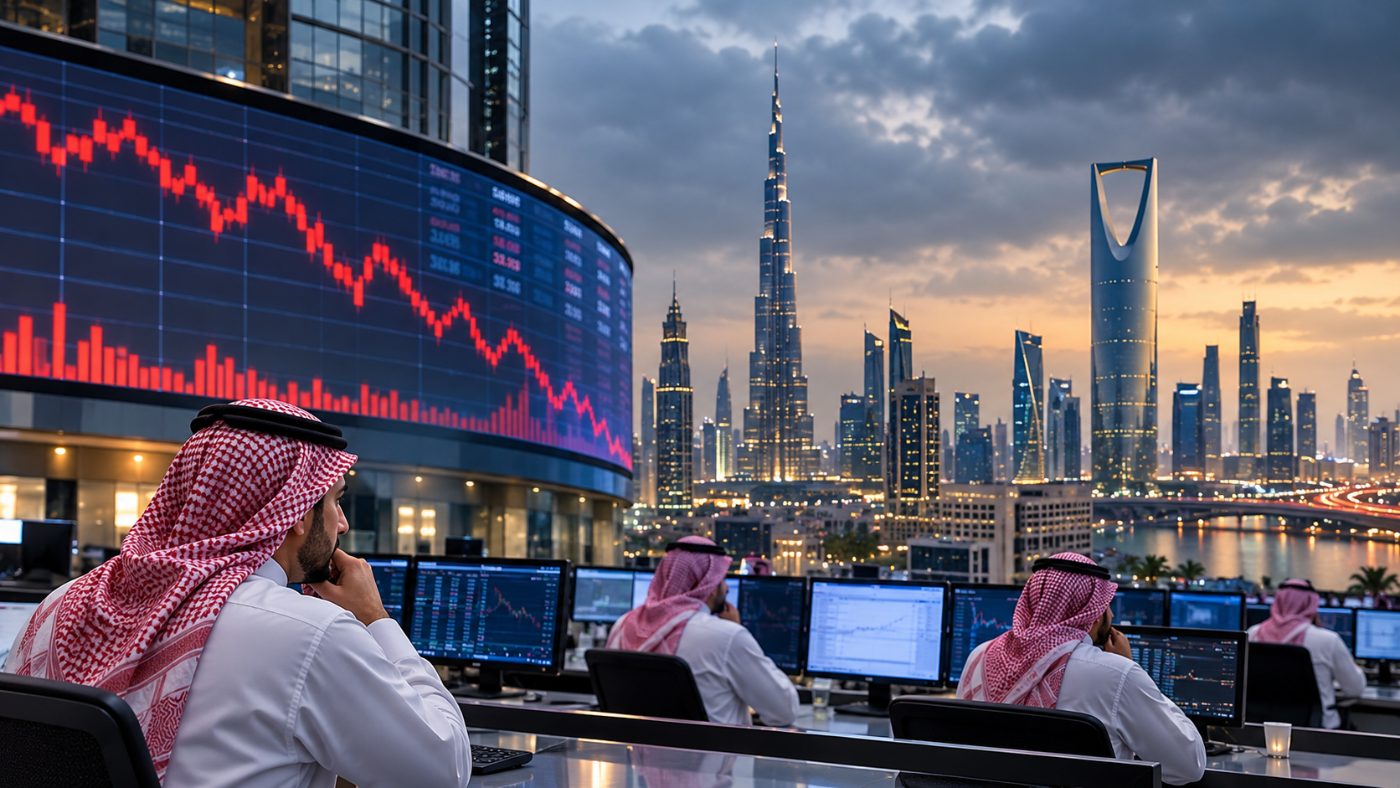
Saudi and UAE IPOs froze during 2026 due to war and investor caution, but current numbers do not support the Great Depression label, and a comeback in 2027 hinges on the reopening of the Strait of Hormuz.
On June 9, a Saudi contracting firm withdrew an $800 million offering after institutional investors oversubscribed the offered shares multiple times. The deal lacked neither demand nor advisors, yet the file was closed. This incident epitomizes a year in which IPO markets froze in Saudi Arabia and the UAE, bringing a troubling question back to the forefront: Has the Gulf entered a phase resembling the Great Depression?
The answer, according to available data up to November 20, is no. The primary market is indeed stagnant, and the economy is expected to contract this year due to an ongoing war. However, there is a difference between a freeze and a depression—one decided by numbers, not headlines.
Shocking Figures that Require a Closer Reading
Equity issuances in the UAE dropped 92% to $437.4 million, and in Saudi Arabia by 94% to $276.3 million during the first nine months of 2026. Both figures pertain to equity issuances in general, not IPOs alone. If we look at Saudi IPOs, the picture is equally bleak: only three listings in the first eight months raised 522.5 million riyals (around $139 million), compared to 29 listings worth 13.27 billion riyals a year earlier. The largest among them did not exceed $67 million.
In the UAE, the year's first IPO did not arrive until November, when "DIB Holding" raised around $529 million, with its stock rising up to 6.2% in its inaugural session. A single offering larger than the entire nine-month proceeds.
Yet the entire region did not freeze. The Sultanate of Oman raised $1.16 billion—more than Saudi Arabia and the UAE combined—while Egypt jumped over elevenfold to $79.5 million. What froze were the two largest markets.
A Weary Market Before the War Even Began
The war with Iran began at the end of February, but it found a market already exhausted. The TASI index lost 12.8% in 2025, and ten out of 26 companies that completed their IPOs in the UAE this decade were trading below their offering price by November of last year. Some major issuers failed to reach price guidance, causing their shares to drop sharply. An investor burned by previous listings does not enter new ones with the same appetite and demands lower valuations. This is what bankers explicitly state today: offerings will not return without regional stability and sellers accepting prices lower than what they obtained before the war.
Three Deals Tell the Story
The first is "Mutlaq Al-Ghowairi". The company aimed to sell 30% of its shares for around 3 billion riyals, marking the first major test for the Saudi market after the war. The order book was covered, but the company subsequently withdrew the offering, stating it had reviewed its strategic goals and priorities, without citing a more precise reason. The most likely probability, judging from market behavior, is that the disagreement was over pricing rather than the presence of demand; "Dar Al-Balad" stock surged 28% in its first session and later traded about 41% above its offering price, while "Al-Rashed" stock remained near its listing price. This is my reading and not an official announcement from the company, so it should not be taken as definitive.
The second is "Emirates Global Aluminium". Its offering, at a valuation ranging between $10 billion and $15 billion, had initiated investor meetings prior to the war. On March 28, an Iranian missile and drone attack struck the Taweelah smelter in Abu Dhabi, leading to an emergency shutdown. Roughly half of the smelter returned to operation in October, with the company expecting full production in the first quarter of 2027, having declared force majeure on some of its contracts. I deduce that a company in this position will not present investors in 2026 with profits and cash flows reflecting its true capacity, making it difficult to price. A deal of this magnitude changes annual statistics on its own, explaining part of the decline.
The third is "DIB". Its offering came at a price accepted by investors, so it went through. A limited signal, yet sufficient to demonstrate that a well-priced deal is possible even in this climate.
In Saudi Arabia, a domestic reason was added to the war. Land transactions dropped 55% in the first quarter after a higher tax came into effect, and profits of listed developers fell 18% in the first half. It is no wonder that "Al Diyaar Al Arabiya" paused its offering plans.
Why Did Debt Hold Up Against Equity?
Bond issuances in the region fell by only 10% to $129.7 billion, while UAE issuances remained steady at $34.2 billion. The reason is that a bond promises a known return and maturity based on the issuer's creditworthiness, whereas equity relies on growth expectations and a price agreed upon by seller and buyer. Furthermore, debt is an un-deferrable obligation: regional maturities total about $50 billion annually over the next two years, whereas a private company can afford to wait another year. This final part is my inference, while the figures are from the market.
However, debt did not come without a price. First Abu Dhabi Bank, which priced a tranche of supplementary capital in June at 140 basis points over US Treasuries, issued a second tranche in November with initial guidance near 210 basis points. The doors are open, but the ticket is more expensive.
New Rules for an Unrecovered Market
The Saudi Capital Market Authority's new rules came after the crisis, not before. The draft was published for consultation on September 22, approved on October 28, and implemented on November 2. "Mutlaq Al-Ghowairi" withdrew its offering five months prior, and the nine-month numbers preceded the rules. They define the shape of the 2027 market rather than explain the 2026 figures.
The most prominent change is that the underwriting agreement must take effect before book building begins, obligating the underwriter to purchase all offered shares from that moment, even if the company fails to list. The Authority's objective is legitimate, as an order book unsupported by actual liquidity misleads pricing. However, the cost is clear. Bankers say the rules provide clarity while raising the bar for due diligence, and experts expect underwriters' appetite—especially foreign ones—to weaken. It was reported that the Authority proceeded with the amendments despite warnings from bankers.
The question the Authority owes the market: What is the metric for the success of these rules? The number of IPOs in 2027, or stock performance post-listing? Transferring risk to underwriters in a frozen primary market deserves a declared, accountable benchmark.
Where Does the Gulf Stand Regarding Depression?
The American Great Depression involved a 29% collapse in real GDP between 1929 and 1933, unemployment reaching 25%, consumer prices dropping 25%, and the failure of nearly 7,000 banks—about a third of the banking system. That is the benchmark.
As for the Gulf, the IMF projects a 3.3% contraction for Saudi Arabia and 3.9% for the UAE in 2026, followed by growth of 7.9% and 7.7% in 2027. The difference is vast, with a necessary caveat: comparing a single-year projection to a four-year collapse involves very different contexts. This contraction is by no means minor, as the IMF lowered the UAE's forecast by 7 percentage points from April, while Bahrain, Iraq, Kuwait, and Qatar face double-digit contractions.
Nor do the markets tell a story of collapse. At the close of November 19, the Dubai Financial Market index was up 2.9% year-to-date, Abu Dhabi down 2%, and TASI down 3.2%. Brent crude is trading near $92, and Saudi Arabia and the UAE have maintained exports exceeding 60% of pre-war levels via alternative routes toward the Red Sea and Fujairah. My conclusion is that pressure on income stems from disruptions in exported volumes rather than price collapse—an inference requiring confirmation through revenue data.
However, recovery is an assumption, not a reality. The IMF's forecasts rely on the Strait of Hormuz beginning to reopen in March 2027; yet through early November, commercial navigation remained restricted and vessels faced attacks while mediation efforts continued. These forecasts were prepared before the October attacks on Riyadh airport. The IMF warns that growth will remain below pre-war trajectories through the end of the decade. Lacking comparative Gulf data on unemployment or bank bankruptcies, my judgment rests on output, markets, and credit. It is more accurate to describe the situation as an expected war-related contraction alongside a freeze in the primary equity market. The term "depression" lacks evidence today.
A Conditional Comeback During 2027
Bankers expect debt to precede equity, starting with a wave of bonds and sukuk in January and February, followed by IPOs starting in the second quarter, as Ramadan and Eid rule out major listings in the first quarter. Citi alone is working on three IPOs in the UAE and three in Saudi Arabia, but these are ongoing mandates, not firm commitments, and their success depends on sellers' willingness to lower prices. Dividend-paying income stocks, including Emirates Global Aluminium, are expected to lead the way.
The trajectory is tied to the strait. If it reopens as assumed by the IMF, the timeline discussed by bankers is likely to materialize. If delayed, the stability condition they set will not be met, and offerings will likely be postponed, restricted to smaller deals with clearer cash flows. This is my own deduction, not a published forecast.
Keynes wrote in "The General Theory" that if animal spirits dim and spontaneous confidence falters, leaving only mathematical expectations, enterprise will wither and die. The idea is evident in this year's figures themselves: a covered order book was not enough to complete the Mutlaq Al-Ghowairi offering, whereas the DIB offering succeeded when the price aligned with investors.
In the coming months, four signs are worth watching: the success of the first major Saudi offering under the new rules, sellers accepting lower valuations than pre-war levels, post-listing stock performance (since a bad experience closes the market more than any rule), and the actual reopening of the strait at the time assumed by the IMF. Until that happens, the first successful major offering will remain the most important economic news in the Gulf.

Ibrahim Gamal Ibrahim is an Egyptian journalist and expert in digital media, economic and financial journalism, with more than 20 years of experience across the Middle East and North Africa (MENA) markets. He specializes in leading editorial teams, developing content and digital growth strategies, and integrating artificial intelligence into newsrooms, with extensive experience covering financial markets, monetary policy, and the banking sector. He has held editorial positions at Argaam, Veto, Besraha, Al Mal, and Mubasher.
Profile and all their articlesBeyond The Number

أندرويد ينضم لترميز البطاقات في مصر: تأخر زمني وحكم مؤجل للأرقام
مكالمات الأرباح الإلزامية في السعودية: شفافية تحت الاختبار أم عبء جديد للشركات؟
قبل بيع 15% من مصر لتأمينات الحياة.. أسئلة الأرباح والتسعير وحقوق الأقلية أولاً

14 سهماً بتركيز خمسة: ماذا يشتري المستثمر في صندوق التوزيعات السعودي؟
Weekly Newsletter
Read between the lines before everyone else. Decode the most important economic, tech, and decision-maker movements in the region.. in 5 minutes every Saturday.