
US Army Awards $67 Million to Five Companies to Develop Electronic Warfare Systems
The US Army awards nearly $67 million to five companies for electronic warfare prototypes to counter adversaries' satellite targeting of its forces.
Listen to this story
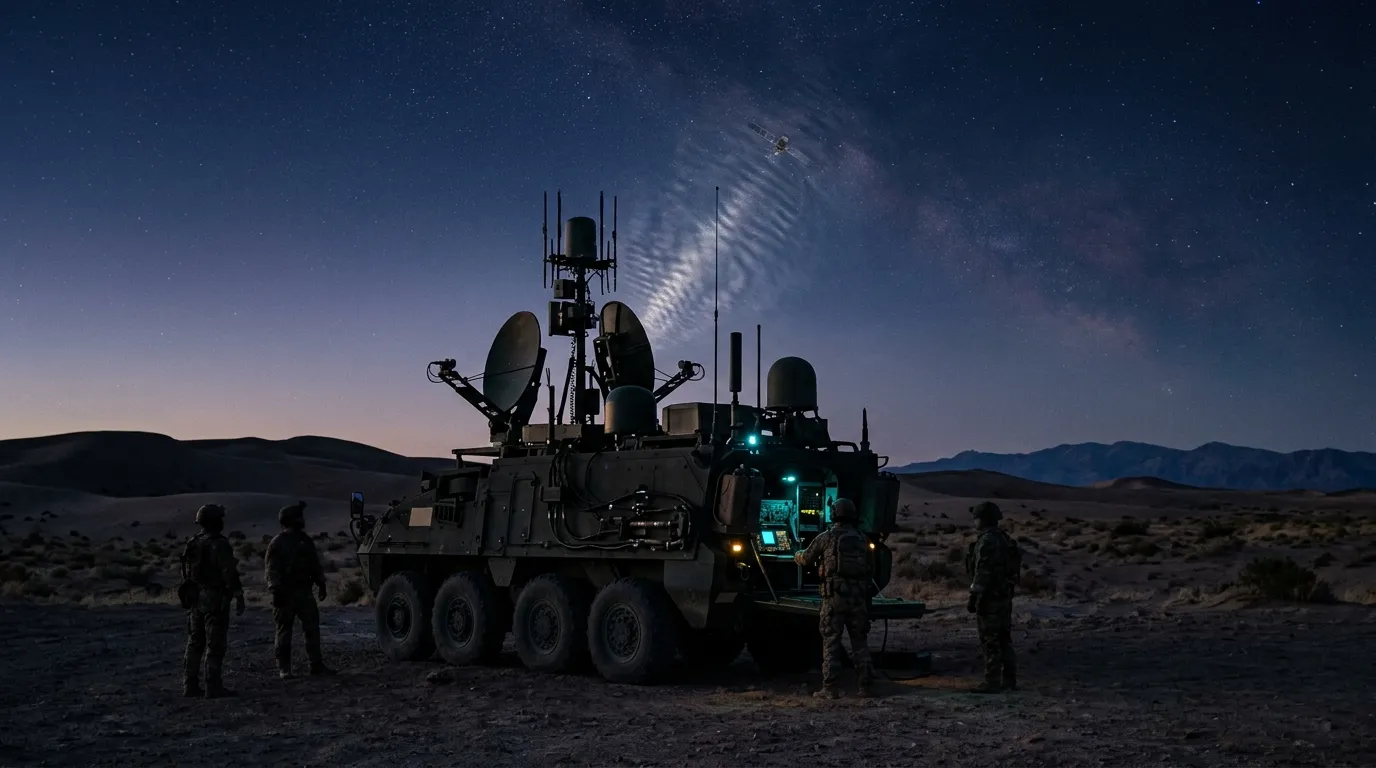
The US Army announced a commitment of nearly $67 million across five agreements to KBR, Raytheon, Northrop Grumman-Xectron, STR, and ICR to develop electronic warfare system prototypes that will enter testing prior to any full-scale production.
These systems aim to complicate adversaries' ability to use satellite-based surveillance to locate and target US forces by jamming or spoofing sensors rather than targeting the satellites themselves, according to a SpaceNews report on October 3. This type of system is used alongside other means to protect units moving in open areas.
The funding comes amidst a rising trajectory of spending on counter-satellite capabilities, as militaries seek to protect their forces from space-based reconnaissance, which has become accessible to a larger number of countries thanks to lower launch costs for small satellites. Protection from reconnaissance is a growing priority in modern military doctrine, as the ability to track targets from orbit is evolving faster than the ability to conceal forces on the ground.
A number of major publicly listed defense contractors benefit from these agreements, including Raytheon, Northrop Grumman, and KBR, making the decision significant for observers of both defense sector stocks and space technologies. This comes at a time when the defense sector is experiencing growing investor interest, making any new contract a point of focus in the markets.
What do these terms mean?
Electronic warfare: The use of jamming and electronic signals to disrupt or mislead adversary systems. Prototype: An experimental version developed to test a concept before full-scale production. Space surveillance: Monitoring Earth and identifying locations from satellites.
Weekly Newsletter
Read between the lines before everyone else. Decode the most important economic, tech, and decision-maker movements in the region.. in 5 minutes every Saturday.