
Brent Crude Returns Above $100 as Washington-Tehran Talks End Without Progress
Brent crude returned above $100 to $100.1, up nearly 2%, after talks between Washington and Tehran in New York ended without progress, while West Texas Intermediate remained near $93.
Listen to this story
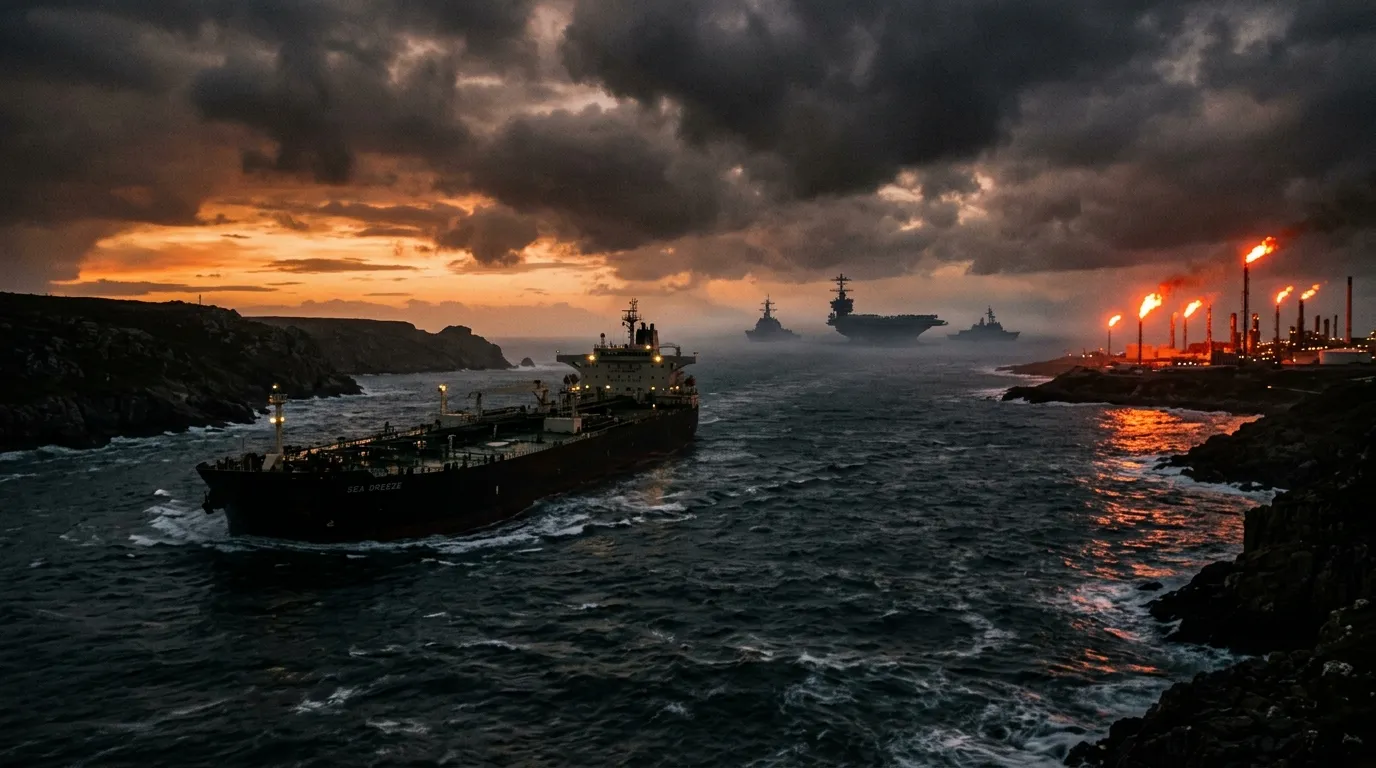
Brent crude returned to trading above the $100 per barrel level after talks between Washington and Tehran in New York ended without achieving any progress, with reports quoting US officials saying that Secretary of State Marco Rubio ordered the Iranian delegation to leave New York early, while Iran's mission to the United Nations denied this and said the delegation's departure was scheduled in advance. Brent crude recorded around $100.1 per barrel, an increase of nearly 2%, while US West Texas Intermediate crude, the US benchmark, remained near $93 per barrel, in a swift market reaction to the stumbling diplomatic path.
Washington is sending a third aircraft carrier strike group to the Middle East, while reports indicate the deployment of up to ten thousand additional troops by late November, a military reinforcement that increases market fears of a widening confrontation extending to shipping lanes.
Supply concerns returned to the fore following attacks targeting tankers near the Strait of Hormuz, strikes hitting refineries in the region, Russia's ban on diesel exports, and the cancellation of Chinese gasoline and jet fuel shipments. These factors combined point to simultaneous pressure on different supply sources at the same time.
Thus, Brent crude returns to trading above the $100 per barrel level, a level closely watched because it raises the cost of fuel, transportation, and basic commodities. A large portion of global crude exports passes through the Strait of Hormuz, making any tension near this waterway an event that immediately impacts energy markets.
What do these terms mean?
Brent crude is one of the world's most important benchmark oils, based on which the majority of crude exports from the Middle East are priced, while West Texas Intermediate crude is the reference type in the United States and usually trades at a lower price than Brent. The Strait of Hormuz is a narrow waterway through which a large portion of global oil exports passes, and any disruption to it raises shipping and insurance costs, followed by fuel prices. An aircraft carrier strike group is a naval unit comprising an aircraft carrier and accompanying protective ships. Diesel is a fuel used in trucks, factories, and maritime transport.
Weekly Newsletter
Read between the lines before everyone else. Decode the most important economic, tech, and decision-maker movements in the region.. in 5 minutes every Saturday.