

Starship Reaches Orbit for the First Time and Deploys 26 Starlink Satellites
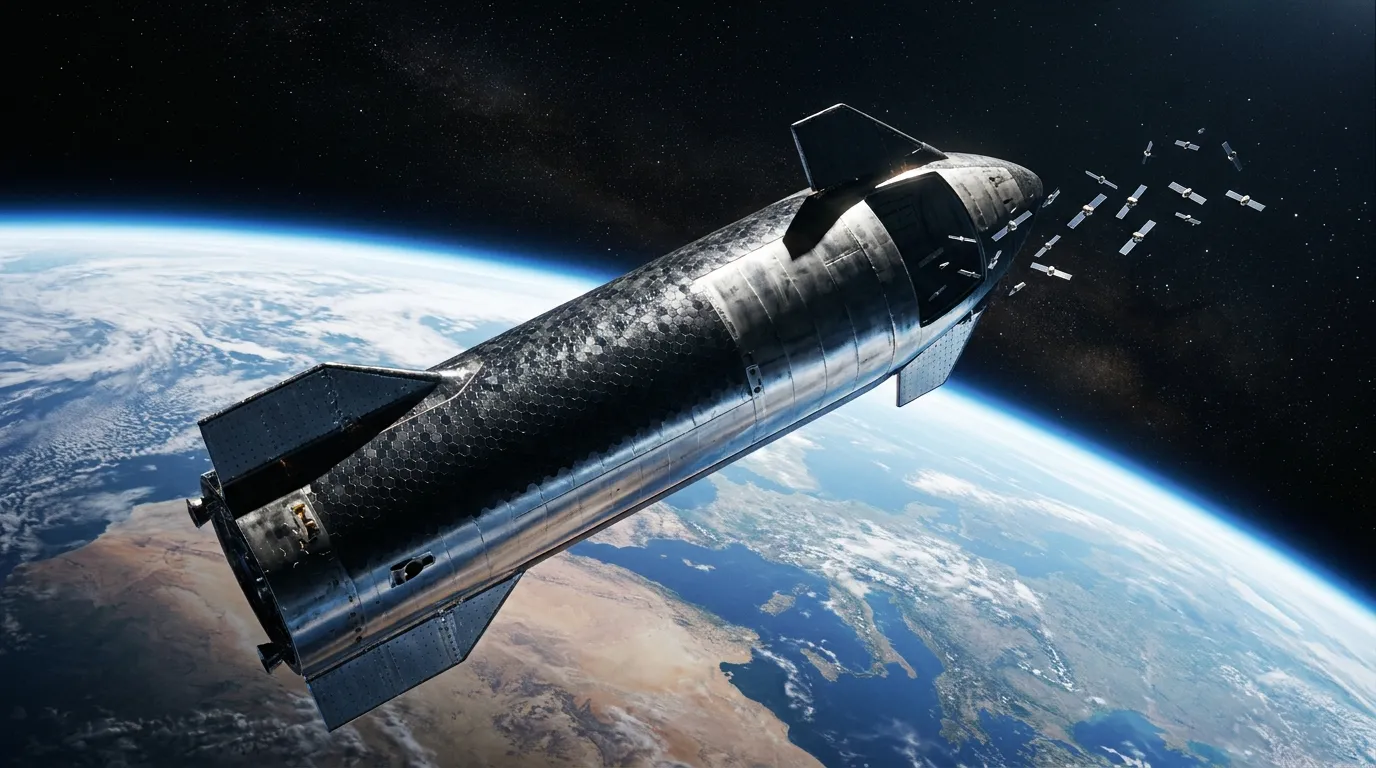
SpaceX's Starship vehicle reaches orbit for the first time on its 14th test flight, deploying 26 third-generation Starlink satellites.
Listen to this story
SpaceX's Starship reached orbit for the first time on its 14th test flight, after lifting off from the Starbase facility near Brownsville, Texas, and deployed 26 third-generation Starlink satellites. This achievement marks a long-awaited milestone in a lengthy series of test flights. Previous flights had ended before reaching orbit, making this flight a turning point in the development program.
One of the six upper-stage engines experienced a failure about two and a half minutes into the mission, and the livestream initially announced that reaching orbit was not possible, before engineers confirmed that an engine burn to achieve orbital velocity was still feasible. This sequence illustrates the level of risk involved in each of the program's flights. Engineers continue to analyze flight data to determine the cause of the engine failure before the next mission.
The booster splashed down in the Gulf of Mexico instead of being caught as the company had planned in previous attempts. The program's cost has reached more than $15 billion to date, while Starship remains the crewed vehicle that NASA relies on for the Artemis III mission to return to the lunar surface. Catching the booster allows the first stage to be reused, a key factor in reducing the cost of every flight.
Arab investors are interested in this development because lowering the cost of reaching space opens up new sectors such as space communications and remote sensing—fields in which countries in the region are investing as part of their digital transformation and economic diversification plans. Furthermore, the success of Starship determines NASA's mission schedule and satellite launch pricing in the coming years, while regional countries monitor these developments due to their connection to plans for launching domestic satellites and expanding communication and monitoring services.
What do these terms mean?
Orbit: The path in which a spacecraft travels around the Earth; reaching it signifies the success of the primary stage of the flight. Booster: The reusable first stage that lifts the vehicle off the ground and then separates from it. Starlink: A satellite network owned by SpaceX that provides internet services from space. Artemis: A NASA program aimed at returning astronauts to the surface of the Moon.
Weekly Newsletter
Read between the lines before everyone else. Decode the most important economic, tech, and decision-maker movements in the region.. in 5 minutes every Saturday.