
Quantum Computing and the AI Electricity Crisis

Summary
Washington allocates $215 million for the first reliable quantum computer, alongside promises to reduce heavy industry emissions. However, the gap between today's 200 qubits and 100 logical qubits spans a decade.
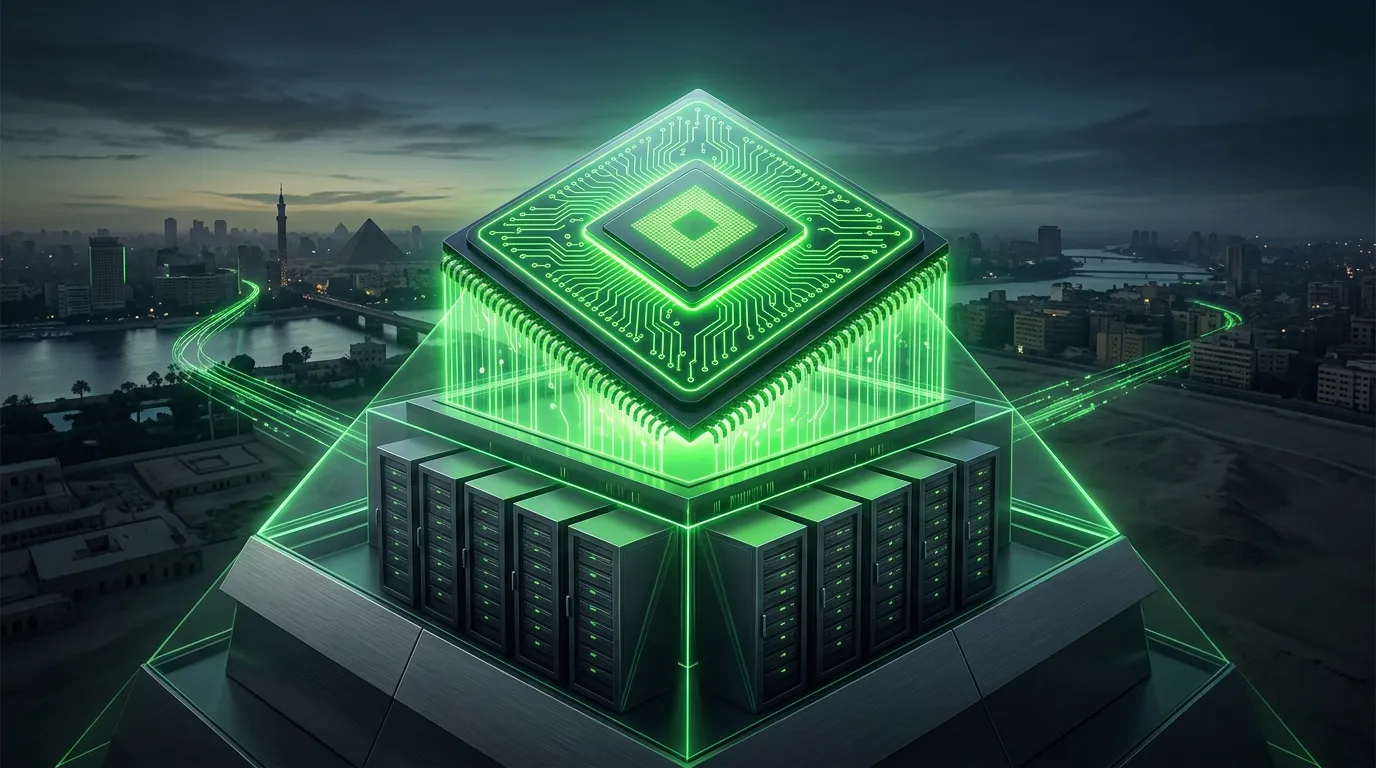
Every new data center built today asks the same question: Where will the electricity come from?
And the answer that began emerging in Washington this week is not a power plant, but a computer.
The U.S. Department of Energy announced funding of up to $215 million as part of a competition it launched to develop the world's first reliable quantum computer. The stated requirement is precise: deploying quantum computers with no fewer than 100 logical qubits, capable of executing hundreds of millions of fault-tolerant operations. This was accompanied by a second, quieter yet more important program: a call for national laboratories to build tools to verify the performance of these computers.
The bet is clear: if quantum succeeds, it could solve problems that conventional computers cannot, at a fraction of the energy.
The accompanying promise is huge. A report by Boston Consulting Group concluded that quantum computing, once mature, could address between 20% and 40% of emissions in hard-to-abate sectors such as steel and cement, with applications in carbon capture, hydrogen, green ammonia, and batteries. The report noted that the carbon footprint of the quantum sector itself will remain relatively small compared to the AI industry, because quantum is closer to a specialized tool for specific problems than a general-purpose technology.
All of this is true. Nevertheless, the answer to the title's question is: Not anytime soon.
The Word That Changes the Meaning: "Logical"
This is where the point that escapes most coverage lies.
A logical qubit is not just a qubit. It is an error-corrected qubit, built from a large number of physical qubits working together to correct one another's errors. The ratio varies across architectures and error rates, but it is measured in the tens to thousands of physical qubits for a single logical qubit.
To grasp the scale of the gap, look at the region: the quantum computer inaugurated by Aramco with French company Pasqal at its Dhahran data center in May controls 200 physical qubits.
The distance between 200 physical qubits and 100 logical qubits is not a double or triple jump. It is a gap of at least one or two orders of magnitude. And that is precisely why the competition exists: because the goal has not yet been achieved.
A Necessary Warning Against Wonder Language
Phrases worth scrutinizing frequently appear in coverage of this technology.
Among these is talk of "quantum batteries releasing more energy than they store." This is a misleading phrasing, because the extra energy does not come out of nowhere, but rather from the charging and coupling system itself. Research here revolves around the speed and efficiency of extracting stored energy, not violating the conservation of energy. Nothing in quantum physics overrides the first law of thermodynamics.
Similarly, when the CEO of a quantum company states that GPUs won't be able to compete with quantum in AI workloads, this is a statement from an interested party, not equivalent to a published laboratory result. It is more accurately read as a commercial expectation rather than an established fact.
This scrutiny is not a dismissal of the technology, but rather its protection. The fastest way to kill funding for a promising technology is to overburden it with promises it cannot deliver on time.
The Timing Problem
The AI electricity crisis is a present crisis: waiting lists for grid connection, turbine shortages, warnings of tight generation margins in advanced markets, and high industrial electricity prices.
As for quantum error correction at a commercially useful scale, it is a late-decade endeavor under optimistic estimates, and beyond under conservative ones. Even the report promising a 20% to 40% reduction in heavy industry emissions conditions this on maturity first, describing an addressable scope rather than a realized saving by a specific date.
There is a third objection we have learned from the entire history of energy: efficiency generates demand. The cheaper computing becomes, the more it is consumed. If solving a complex chemical problem became a thousand times cheaper, the most likely outcome is not a thousand compute hours saved, but a thousand new problems solved.
So What Does This Mean for the Region?
The region is already moving in this direction, but for a reason other than saving electricity.
Aramco's deployment with Pasqal—the first quantum computer in Saudi Arabia and the first commercial quantum computing-as-a-service platform in the Middle East—is directed toward specific industrial problems: reservoir modeling, CO2 storage optimization, port logistics, and rig scheduling. In Abu Dhabi, part of the effort focuses on quantum-resistant cryptography to protect critical infrastructure.
And this is the correct reading. The value of quantum for the region today lies in chemistry, materials, optimization, logistics, and information security, not in lowering a data center's electricity bill.
As for electricity for Gulf data centers over the next five years, it will be decided by less exciting tools: gas, solar, storage, cooling efficiency in an extremely hot climate, industrial electricity pricing, and perhaps nuclear power later on.
What is Worth Watching?
First, the verification program, not the funding program. Announcements about qubit counts have become a marketing tool. The entity building independent measurement tools is the one that will separate claims from achievements. Follow the results of verification labs, not press releases.
Second, the first documented demonstration of 100 stable logical qubits. This is the event that changes the timeline for everything preceding it. Until then, all estimates remain conditional.
Third, regionally: Will quantum investment move from launch to results? The practical benchmark is simple: published papers, disclosed performance benchmarks, and industrial problems actually solved superiorly to classical computing.
In the end, quantum computing may indeed be one of the most important technologies of the second half of this century. But the power grid cannot wait for the second half of the century.
So do we build what we need for this decade, while investing in what might benefit us in the next?
NovaTAQA




Weekly Newsletter
Read between the lines before everyone else. Decode the most important economic, tech, and decision-maker movements in the region.. in 5 minutes every Saturday.