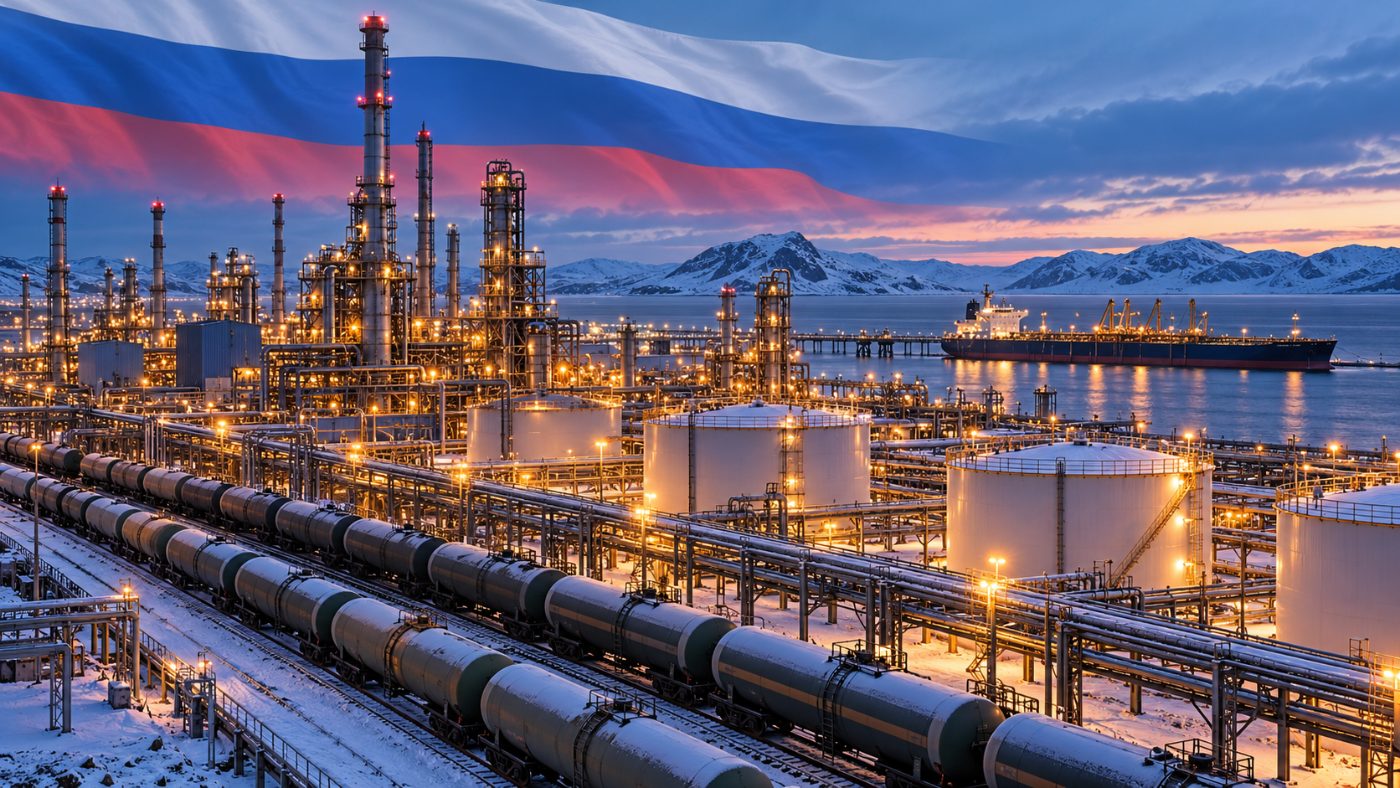
Iran's Exports Hit Zero... So Who Takes Its Seat in the Chinese Market?
Summary
China's imports of Gulf oil jumped 42% in October to their highest level since the start of the war. But the story isn't about surging demand; it's about a vacant Iranian seat and empty storage tanks.
The headline figure this week: China imported 19.7 million metric tons of crude from Gulf producers in October, a 42.4% increase from September—the highest level since the outbreak of the war with Iran.
This marks the fourth consecutive month of gains. According to estimates, Gulf producers covered nearly half of China's contractual supplies in October.
This is usually interpreted as good news for the region: Chinese demand has returned, flows have recovered, and the Strait of Hormuz crisis is easing.
This is a misreading. The number does not mean what it appears to mean, and three facts absent from the coverage explain why.
Fact One: The Vacant Seat
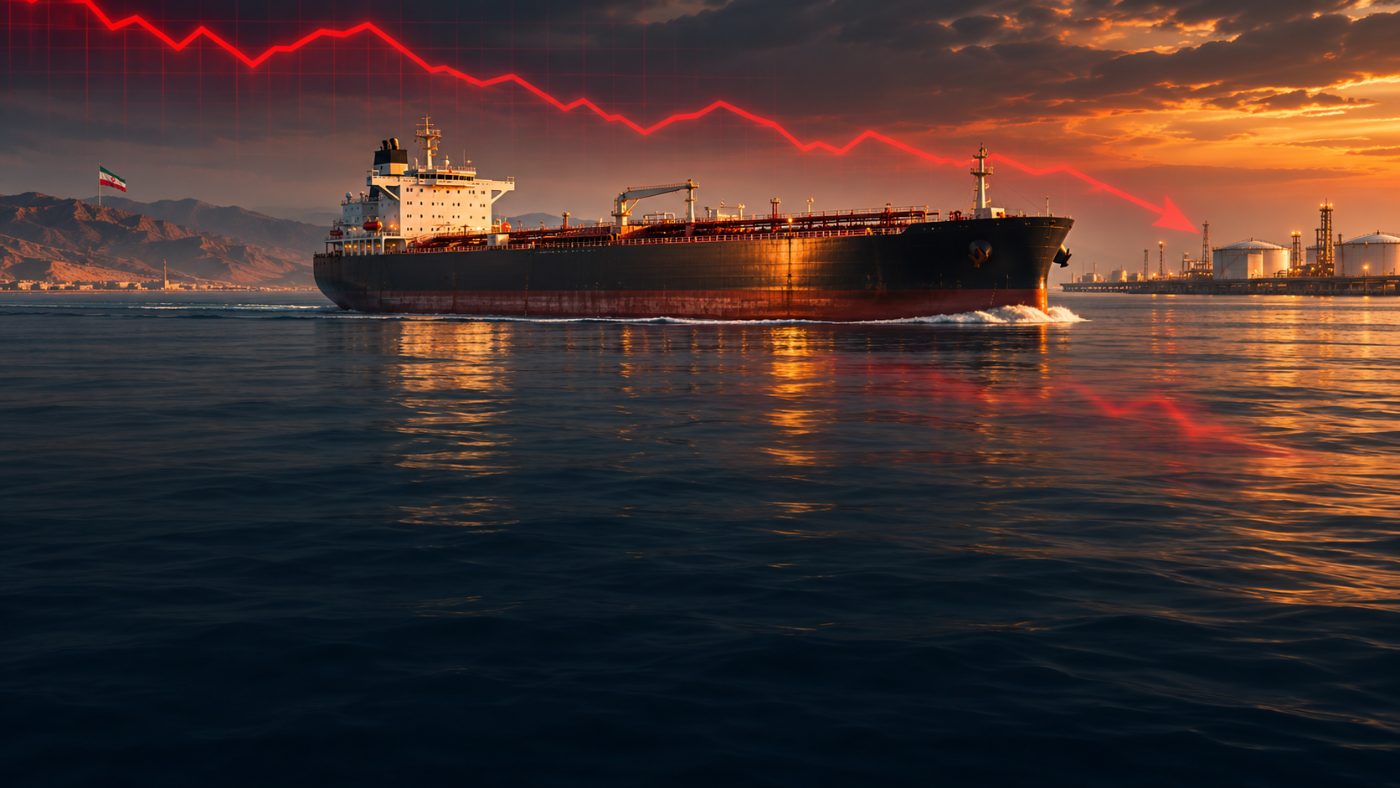
In early 2026, Iran was exporting around two million barrels per day by sea, according to Vortexa. China was buying roughly 80% of that volume.
Then came the gradual collapse: down to around 210,000 barrels per day in August, then about 230,000 in early September.
Then zero. No seaborne Iranian exports in October.
Specifically, Iranian flows to China plummeted from around 1.4 million barrels per day prior to late February to less than 100,000 in October.
The detail revealing the depth of the issue: Iranian floating storage off the Chinese coast—the emergency reserve tapped when shipping is disrupted—fell from 160 million barrels in mid-April to less than one million barrels by October 5.
The reserve pool has run dry.
Thus, when China's imports from the Gulf jump 42%, a large portion of that increase is not new demand. It is replacement.
Who Filled the Void?
The answer carries a heavy geopolitical paradox.
Vortexa projected that China would receive roughly 4.5 million barrels per day from non-Iranian Middle Eastern sources in October, including more than two million barrels from Saudi Arabia and around 1.1 million from Iraq.
In other words, the market share Iran used to sell to its final customer is now being sold by its neighbors.
This even applies to China's independent refineries, known as "teapots," which were historically the largest buyers of discounted Iranian crude. Shandong refineries purchased between 16 and 20.5 million barrels of non-sanctioned Middle Eastern crude from Qatar, Iraq, and the UAE, while Shenghong Petrochemical bought 12 million barrels of Iraqi, Abu Dhabi, and Saudi crude, sold via Mercuria, Vitol, PetroChina International, Zhenhua, and ADNOC.
The buyer is the same, the refinery is the same, but the supplier has changed.
This is not a Saudi or Iraqi maneuver against Tehran. It is a mechanical consequence of the seller's absence. A refinery does not shut down simply because its supplier is disrupted; it buys what is available.
Yet the outcome remains the same regardless of intent: Iran has lost its position in the only remaining market it had, yielding to those it describes as regional partners.
Fact Two: This Isn't Demand, It's Restocking
Here is the number that changes the interpretation of the entire story.
China drew down a record 1.9 million barrels per day from its onshore inventories in September.
Meaning it wasn't consuming more during the crisis; it was eating into its reserves. When flows resumed, it began buying to replenish what it had depleted.
The distinction between the two interpretations is fundamental:
If it were genuine demand, it would be sustainable, justifying capacity expansion and supporting long-term prices.
Restocking, however, has a ceiling. Storage fills up, and purchasing stops. The elevated demand today is precisely what will disappear once inventories are replenished.
Aggregate figures support this reading: China's seaborne imports dropped from around 10 million barrels per day before the war to about 7 million in July, with Kpler expecting them to rebound to between 8.5 and 9 million as buying resumes.
This means we are still below pre-war levels, not above them. The 42% month-on-month surge measures recovery from a trough, not the attainment of a peak.
Fact Three, and the Harshest: Who Pocketed the Money?
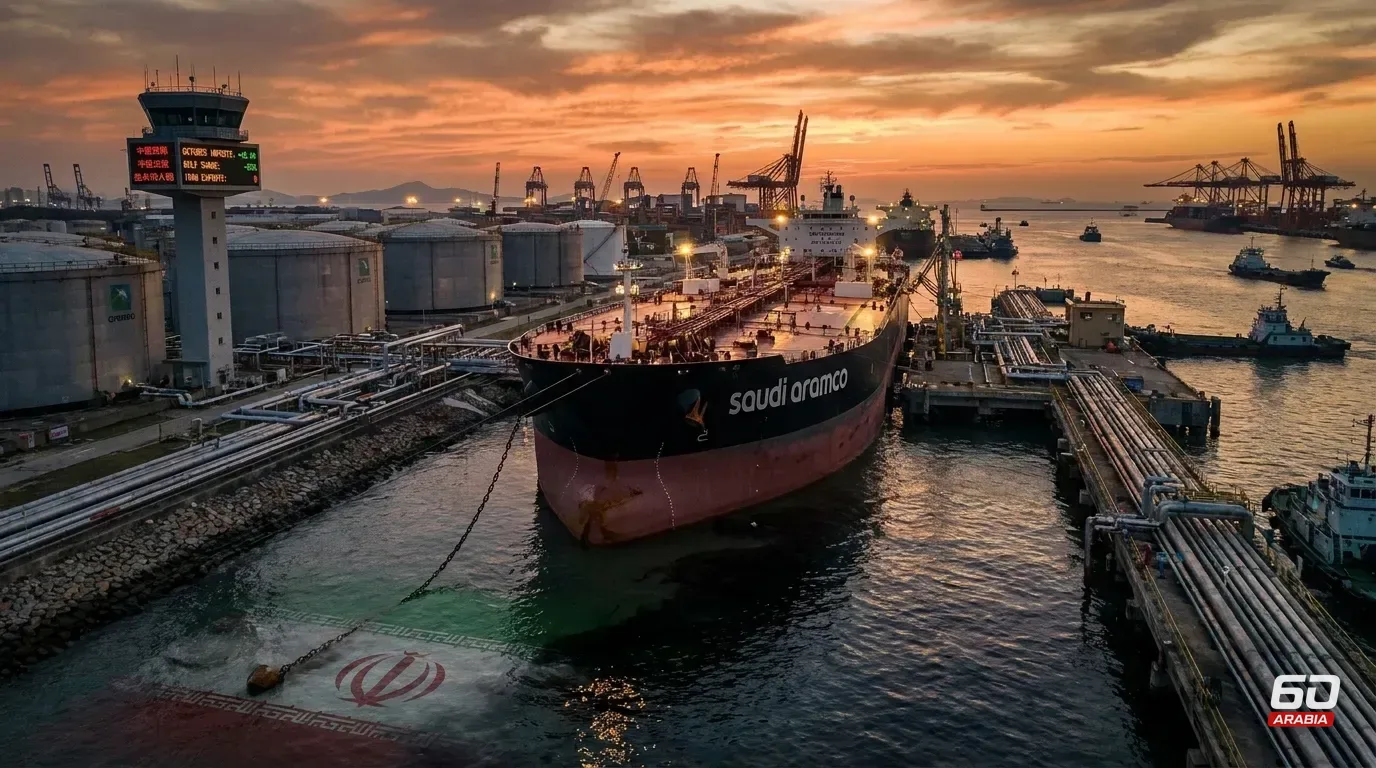
Aramco cut its Official Selling Price (OSP) for Arab Light to Asia for December loading by $2, widening the discount to $6.50 against the Oman/Dubai average. This marks the deepest Saudi discount since May 2020, during the peak of the pandemic.
This is usually interpreted as a sign of oversupply.
However, look at the other number: Kpler reported that Saudi cargoes delivered to China were offered at levels near the OSP plus $20 per barrel.
Read both figures together slowly:
The seller gave up $6.50 at the loading port, while the buyer pays $20 above the index at the destination port.
Where did the difference go?
To the shipowner and the insurer. Freight rates are at record highs, war risk premiums are elevated, voyages are longer, and the fleet is strained in shuttle operations.
The Saudi discount is not market dumping. It is a contribution toward the freight bill. The producer sacrifices part of its revenue so its delivered price at the refinery gate remains competitive, and the seas swallow the sacrifice before it ever reaches the buyer.
This is not unique to Saudi Arabia. It is the new rule in a market with a disrupted transit corridor: the official price no longer reflects what the producer receives or what the consumer pays.
So, Who Wins?
China.
Today, it buys from sellers competing for its favor at a moment when their alternatives have vanished. Saudi Arabia, Iraq, the UAE, and Qatar negotiate over the same price, in the same market, right as China's cheapest supplier has been sidelined completely.
Russia was not absent from the scene either; it was China's largest exporter in September at around 1.90 million barrels per day, acting as another seller under sanction pressures.
China has transformed from one buyer among many into an indispensable customer. This is the strongest negotiating leverage an importer could ever attain.
The Question That Must Be Asked Now
The war will end one day. Sanctions will be eased or circumvented. And Iran will return seeking buyers for two million barrels per day.
It will find its seat at the Chinese table occupied.
So who yields the market share they gained?
Riyadh will not yield voluntarily, nor will Baghdad or Abu Dhabi. The logical outcome when a seller of Iran's scale returns to a market redistributed in its absence is not a return to the status quo, but a price war in East Asia, where the Chinese buyer acts as referee once again.
This brings us to the conclusion missed by everyone who read the 42% statistic as good news:
What we are witnessing is not a Gulf commercial victory. It is rented market share, priced at the deepest discount since the pandemic, paid in rent to shipowners, and expiring the day the absent competitor returns.
The question worth asking in Riyadh, Baghdad, and Abu Dhabi is not: How much did we sell to China this month?
Rather: What will we offer when the absent seller returns, other than a cheaper price?

Amro is an industrial expert and scientist with more than 27 years of experience. Throughout his career, he has focused on developing new technologies that reduce pollution and emissions while optimizing operations. His contributions have earned him several industry accolades, including the 2020 and 2021 Gold Stevie Awards. His work was also highlighted by the UK Science Council in an article ahead of COP26 in Glasgow. Amro is a Fellow and Chartered Scientist of the Institute of Science and Technology (FIScT, CSci), a Fellow and Chartered Chemist of the Royal Society of Chemistry (CChem, FRSC) in the UK, a Full Member of Sigma Xi (The Scientific Research Honor Society), and a Fellow and Council Member of the Institution of Engineers in Scotland. He is also a researcher and writer for multiple newspapers and magazines across the Middle East, focusing on the adoption of new technologies. On a personal level, Amro recently received an award from the Kuwaiti government for finding and returning a highly valuable stolen painting.
Profile and all their articlesNovaTAQA
Canada is Building a Path to Asia... and the Gulf's Seat is on the Line
إطعام الآلة
برنت هبط 17% في خمسة أيام.. فهل انتهت أزمة النفط حقاً؟
حين يتوقف النظام لأنه لا يعرف.. درس من سماء أمريكا
Weekly Newsletter
Read between the lines before everyone else. Decode the most important economic, tech, and decision-maker movements in the region.. in 5 minutes every Saturday.