
Across the Rift: How Saudi Arabia’s Mineral Discovery Illuminates Egypt’s Mining Horizons
Summary
Riyadh announced an estimated 110 million tonnes of rare earth elements and uranium ore at Jabal Sayid. Egypt's Eastern Desert belongs to the same geological shield, but the distance between an "occurrence" and a "resource" is not traversed by rocks alone. Does Cairo have what it takes to cross it?
On September 14, Saudi Energy Minister Prince Abdulaziz bin Salman announced a new figure from Vienna. This took place at the 70th General Conference of the International Atomic Energy Agency (IAEA). He stated that exploration and geological studies at the Jabal Sayid project in the Madinah region revealed estimated resources of about 110 million tonnes of ore, containing high concentrations of rare earth elements, particularly heavy rare earths, alongside promising concentrations of uranium. EnergynewsGulf News
The figure is substantial and makes for a good headline. However, it requires careful interpretation before becoming a narrative about a "treasure" on the other side of the Red Sea.
What Did Riyadh Actually Announce?
First: The figure pertains to ore, not pure metal. The 110 million tonnes refers to the estimated volume of ore in which uranium and rare earth mineralization was detected, not 110 million tonnes of pure uranium. Furthermore, the Saudi government has not yet disclosed the uranium grade in the ore, the extractable content, or whether the entire resource is economically viable. The Researchers
Second: The site is not unknown. Jabal Sayid already houses an underground copper mine operated by a 50/50 joint venture between Ma'aden and Canada's Barrick Gold. Rare earth estimates for the site have been circulating for months. According to an analysis by the Center for Strategic and International Studies (CSIS), based on figures from the Ministry of Industry and Mineral Resources and Ma'aden, the location ranks fourth globally. It contains approximately 552,000 tonnes of heavy rare earth elements such as dysprosium and terbium, 355,000 tonnes of light rare earths like neodymium and praseodymium, alongside an associated uranium resource of around 31,000 tonnes. Saudi Arabia unveils 110-mn-tonne rare earth, uranium find as US ties grow | World News - Business Standard +3
Uranium estimates themselves have changed more than once. The 2024 report by the IAEA and the Nuclear Energy Agency (NEA) recorded 19 million tonnes of indicated ore at Jabal Sayid with a grade of 424 ppm uranium, containing roughly 8,056 tonnes. Thus, the Vienna announcement is an upgrade of a known resource estimate, rather than a discovery out of thin air. The Researchers
Third: The $100 billion figure does not apply to Jabal Sayid alone. The Saudi Press Agency reported that the value of rare earth discoveries across the entire Kingdom reached $100 billion in November 2025, a 90% increase compared to 2018. Arab News
Fourth: The timing is as political as it is geological. The announcement came months after the civil nuclear cooperation agreement signed by US Energy Secretary Chris Wright and his Saudi counterpart on July 22. Ma'aden is working with the US company MP Materials to develop processing capabilities for rare earth elements and uranium production. The message is twofold: the Kingdom possesses the raw ore, and it also possesses the partners and path toward a "transparent" nuclear fuel cycle. Arab NewsThe National
On the Other Side of the Rift
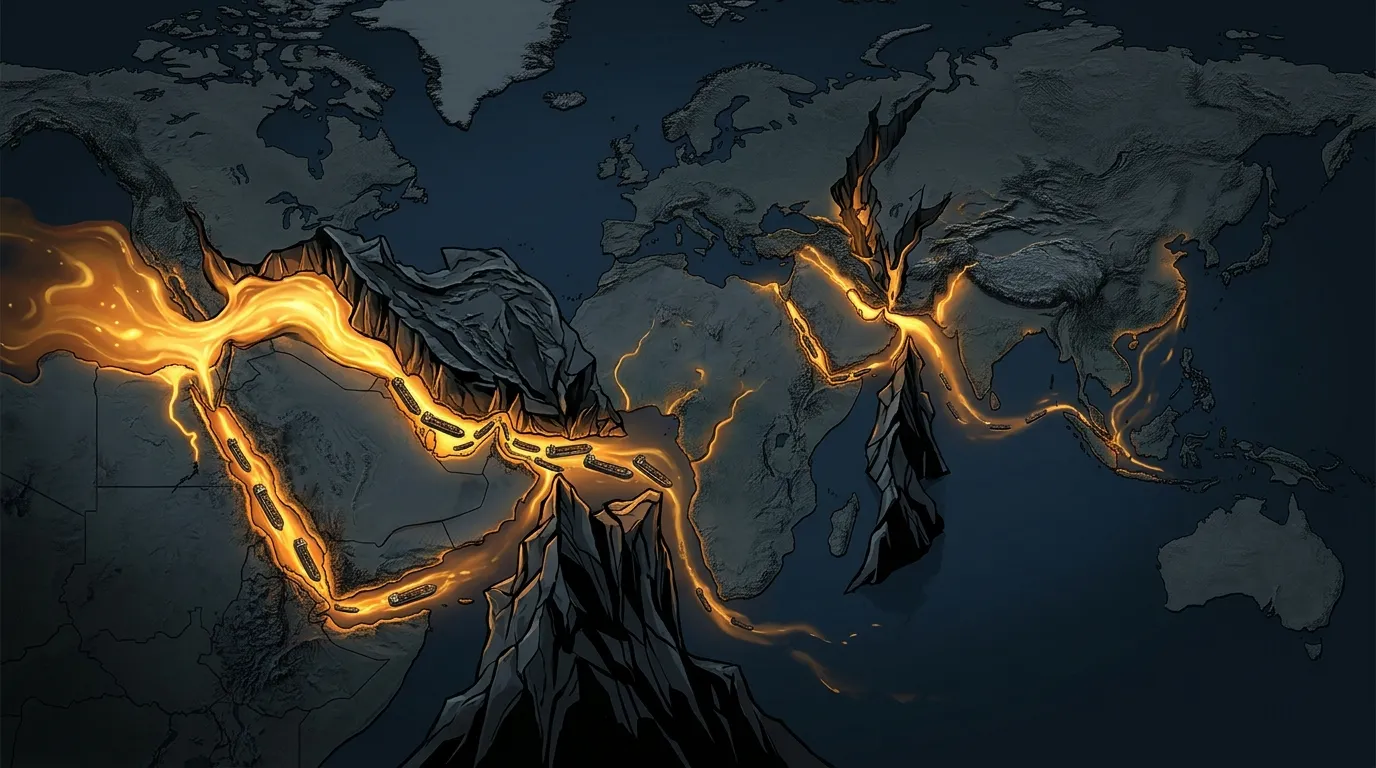
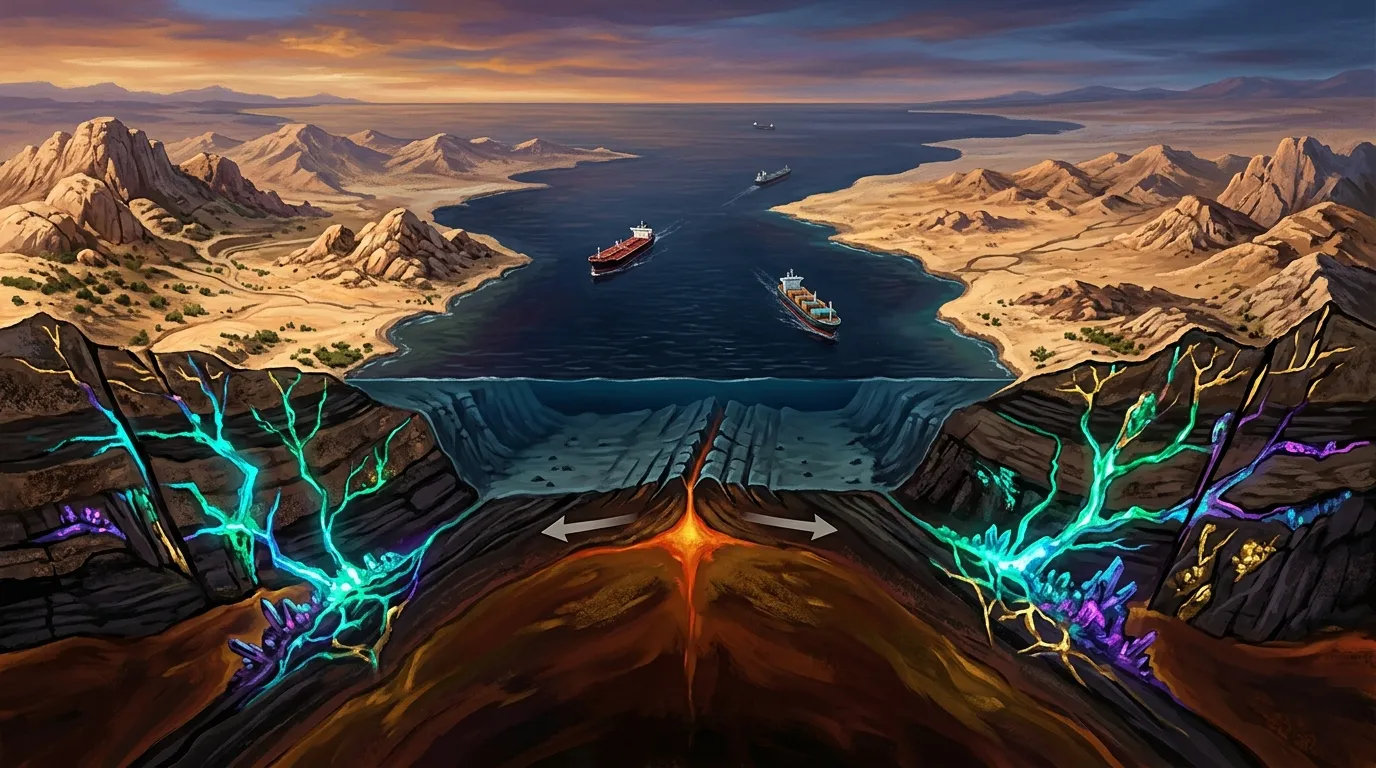
Here begins the Egyptian story. Western Saudi Arabia, eastern Egypt, and Sinai belong to a single rock unit: the Arabian-Nubian Shield. This shield formed approximately 870 to 550 million years ago from the accretion of ancient volcanic arcs. It remained a continuous block until the opening of the Red Sea Rift began only about 25 to 30 million years ago, splitting it into two halves: Arabian to the east and Nubian to the west.
However, belonging to the same geological family does not imply identical features. Jabal Sayid features deposits associated with alkaline granite rich in rare earths. Meanwhile, most prominent known Egyptian occurrences are of other types: uranium in shear zones and veins within granite, and sedimentary uranium in Sinai. The geological similarity increases the probability of discovery, but does not guarantee it.
Four Areas on Geologists' Radar
Abu Rusheid (Southern Eastern Desert): Mylonite rocks and shear zones where published studies have noted significant concentrations of rare earths, uranium, and thorium, hosted by minerals such as xenotime, columbite, and zircon.
Gabal Qattar (Northern Eastern Desert): A heavily faulted granitic mass whose fractures served as conduits for mineral-rich hydrothermal solutions. It is one of the oldest uranium sites studied by the Nuclear Materials Authority.
El-Missikat (Central Eastern Desert): Uranium mineralization within siliceous zones in granite, also associated with fault structures.
Southwest Sinai (Abu Zeneima region): Uranium and polymetallic mineralization in sedimentary rocks controlled by fault lines.
The common denominator among these sites is that they have been studied for decades as mineral occurrences. However, according to published data, none have been declared with resource estimates adhering to international disclosure standards such as JORC or NI 43-101. This represents the real gap between Cairo and Riyadh.
The Gap Is Not in the Rocks
The fundamental difference is institutional. Saudi Arabia possesses a state mining champion backed by massive capital, an American partner equipped with separation and processing technology, and years of systematic drilling. In Egypt, however, the mining sector still contributes less than 1% to GDP, with an official target to raise it to around 6%. Petro-news
Geological data had not been updated for a long time. The last comprehensive airborne survey dates back to the early 1980s. Last May, at Marsa Alam Airport, Egypt signed a contract with Spain's Xcalibur to launch the first comprehensive airborne geophysical survey in over four decades, covering the southern and northern Eastern Desert, Sinai, and the northern and southern Western Desert. The airborne radiometric survey measures potassium, thorium, and uranium ratios in rocks, helping to delineate rock units and identify areas of mineral significance. أول مسح جوي منذ 4 عقود.. عن ماذا تبحث مصر في عمق الصحراء؟ +3
The survey is a necessary step, but it generates a map of potential rather than a map of reserves. Airborne radiometric anomalies subsequently require drilling, analysis, and feasibility studies that can take years. There is an added complexity: uranium in Egypt falls under the jurisdiction of the Nuclear Materials Authority. Therefore, any investor interested in rare earths associated with uranium needs a clear partnership framework with the Authority, beyond a standard mining license.
What Is Worth Watching?
If the government makes the airborne survey data available to investors during 2027, establishes a clear framework for rare earth elements associated with uranium, and launches the first drilling campaigns with published results, Egypt will shift from being a "neighbor to a discovery" to a serious candidate in the critical minerals supply chain.
Glossary of Terms
Rare Earth Elements
A group of 17 metallic elements including the lanthanides, along with scandium and yttrium. They are used in the manufacturing of electric motors, wind turbines, military sensors, and microelectronics, serving as the backbone of the energy transition economy.
Uranium
A naturally occurring radioactive element, the heaviest among common elements in the Earth's crust. It is used as fuel in nuclear reactors for electricity generation and serves as the raw material for nuclear weapons. Its concentration in ore is measured in parts per million (ppm).
Arabian-Nubian Shield
An ancient rock mass extending from eastern Egypt and Sudan across the Arabian Peninsula, formed 870 to 550 million years ago from the collision of volcanic arcs. It is one of the world's richest geological regions in minerals and was a single continuous mass before being split by the opening of the Red Sea.
Ore
Natural rock containing a metal or group of minerals in sufficient concentrations to justify economic extraction. Announcements mentioning "millions of tonnes" typically refer to the weight of the raw ore, not the refined metal.
Inferred/Estimated Resources
A preliminary estimate of the quantity of mineral at a location based on initial, incomplete geological evidence. It precedes proven "reserves," which require extensive drilling and analysis, making it less certain and carrying higher investment risk.
Heavy Rare Earth Elements (HREE)
Rare earth elements with higher atomic masses, such as dysprosium, terbium, and yttrium. They are rarer in nature and higher in value than light rare earths, with over 90% of global supply concentrated in China.
Dysprosium
A heavy rare earth element and a key component in high-temperature NdFeB magnets used in electric vehicle motors and wind turbines. Its extreme scarcity makes it one of the most strategic metals in the clean energy economy.
Terbium
A heavy rare earth element used in high-performance permanent magnets, optical displays, and sensors. It is considered one of the rarest elements and highly sensitive to supply chain disruptions.
Neodymium
A light rare earth element and the principal component of the strongest known permanent magnets (NdFeB). Essential for electric vehicles, wind energy, and microelectronics.
Praseodymium
A light rare earth element similar in properties to neodymium, used alongside it in high-power magnets, glassmaking, and laser fibers.
Thorium
A naturally occurring radioactive element found in granitic rocks alongside uranium and rare earths. It is researched as an alternative fuel for next-generation reactors due to its relative abundance and lower nuclear proliferation risks.
Xenotime
A phosphate mineral crystallizing in igneous and metamorphic rocks, rich in yttrium, heavy rare earth elements, thorium, and uranium. It is one of the most commercially important heavy rare earth ores.
Columbite
An oxide mineral containing niobium and tantalum, forming in granitic and pegmatitic rocks, sometimes accompanying rare earth elements. Niobium extracted from it is used in high-strength steel.
Zircon
A hard silicate mineral resistant to weathering, containing zirconium and hafnium, often trapping rare earths, thorium, and uranium. It is used in ceramics, casting, and geochronological dating.
Mylonite
A rock formed by severe crushing and deformation along fault zones under high tectonic pressure. Characterized by a fine-grained matrix structure, it serves as an indicator of major geological movement zones.
Shear Zones
Regions in rock subjected to intense tectonic stress that induced shearing movement between blocks. They form preferred pathways for mineral-rich hydrothermal fluids and are consequently associated with many mineral ores.
Alkaline Granite
A type of granite characterized by high ratios of potassium and sodium relative to calcium, originating in specific tectonic settings. It is among the rock types most strongly associated with heavy rare earth element mineralization, as seen at Jabal Sayid.
Airborne Geophysical Survey
Measurement of gravitational fields, magnetic fields, and radiation levels from the air using aircraft or drones equipped with specialized sensors. It enables subsurface geological mapping over vast areas at a lower cost than direct drilling.
Radiometric Anomaly
An abnormal elevation in radiation readings in an area relative to its surroundings. It may indicate the presence of radioactive minerals like uranium or thorium, but requires drilling to verify actual concentrations and economic viability.
JORC and NI 43-101 Standards
International disclosure frameworks for mineral resources and reserves that mandate exchange-listed companies to provide independent and transparent assessments of mineral quantities. JORC is an Australian standard and NI 43-101 is Canadian; both are globally recognized guarantees of geological data credibility.
Critical Minerals
Minerals of vital strategic importance to the energy transition, defense, and high-tech industries, carrying high supply risks due to production concentration in a limited number of countries. Western lists include rare earth elements, lithium, cobalt, niobium, tungsten, and others.



Weekly Newsletter
Read between the lines before everyone else. Decode the most important economic, tech, and decision-maker movements in the region.. in 5 minutes every Saturday.