

Why Does the Third Generation Fail in Family Businesses?
Summary
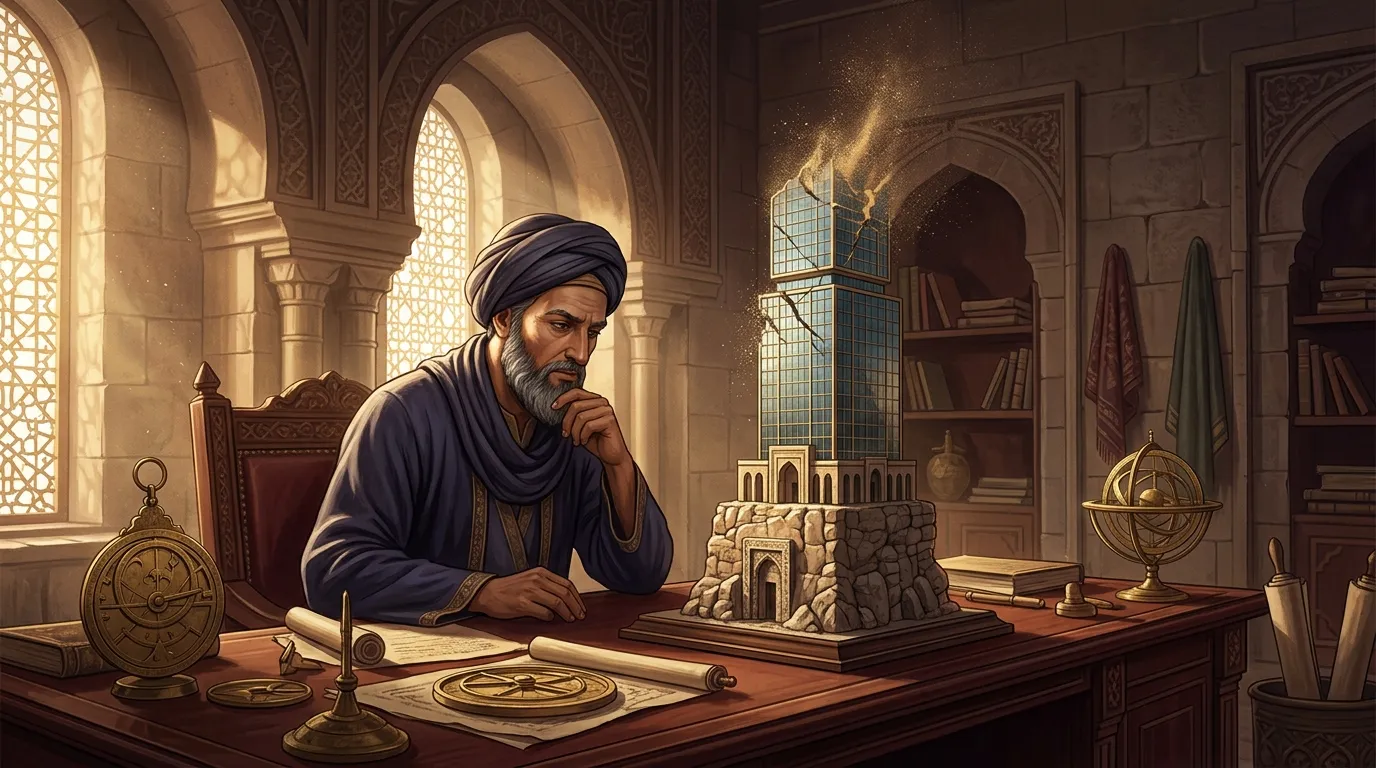
Why does the third generation fail in family businesses? Is the problem really with the third generation… or did its roots begin years before? This time, I didn't look for the answer only in management books; I turned to sociology and Ibn Khaldun's Muqaddimah. And the question I emerged with was different: Does the third generation inherit only the company's wealth, or do they also inherit the
There is a famous saying that is often repeated:
The first generation builds, the second generation expands, and the third generation destroys.
But is this really a third-generation problem?
Or are we discovering in the third generation mistakes that began as early as the first generation?
The question warrants stepping outside management books for a moment and turning back to sociology, specifically to Ibn Khaldun's Muqaddimah.
Ibn Khaldun did not speak specifically about family businesses, nor did he say that the third generation destroys what the first generation built.
However, his analysis of the cycle of social groups and their transition from strength, cohesion, and struggle to luxury and reliance on previous achievements offers us a different lens to understand what can happen within business-owning families across generations.
And here begins the real story.
The First Generation… Did Not Inherit a Business
The founder did not start from a comfortable position.
They usually started from scratch, or close to it.
They risked their money, time, and reputation.
They knew the value of the customer, the supplier, the employee, and every pound that entered the company.
And they were ready to work harder than anyone else, simply because they knew that the failure of the company meant their own failure.
To them, the business was not just a job… it was their life's work.
And here lies the strength of the first generation:
Sacrifice, risk-taking, belonging, and the fear for survival.
Yet here too begins the first paradox.
For the method by which the founder succeeded in building the business may not be the method by which the business can endure.
Because a business that relies on:
"I know… I decide… I solve"
may succeed under a strong founder.
But it becomes dangerous when transferred to a new generation that needs an institution, not just a new founder.
And here begins the first real problem in the succession journey.
The question is not:
Who will succeed the founder?
but rather:
Has the company actually become an institution that can transition from one person to another without shaking?
Article Glossary
Family Business — A company owned and managed by members of a single family, with ownership or leadership passed down through generations. Its core issue lies in balancing family interests with institutional continuity requirements.
Founder — The individual who creates the company from nothing, carrying its primary decision-making authority and full risks. Their strength lies in personally owning the vision, while their weakness often lies in building the company around themselves rather than around a system that transcends them.
Institution — A business system independent of individuals, relying on clear structures, systems, and rules that ensure its continuity regardless of who leads it. The difference between a company and an institution is the difference between relying on one person and relying on a system.
Succession — The process of transferring leadership and ownership from one generation to another or from one person to another within the company. The fundamental question is not "Who succeeds?", but "Has the company become an institution that can undergo transition without being shaken?"
Ibn Khaldun's Muqaddimah — A book by the 14th-century Arab historian and thinker Ibn Khaldun, considered one of the earliest works in sociology and the philosophy of history. In it, Ibn Khaldun analyzes how groups arise, ascend, and then decline through a recurring cycle that begins with struggle and ends with luxury.
Cycle of Social Groups — Ibn Khaldun's theory describing the stages any human group undergoes: formation based on struggle and cohesion, followed by ascension, then prosperity and reliance on ancestor achievements, leading eventually to decline and fragmentation. This cycle applies to the trajectory of family businesses across generations.
Struggle (Mujahadah) — The struggle and effort exerted by the first generation during the building phase. It is not merely hard work; rather, it is the engine that generates true commitment to the project and ensures the founder understands the cost of every decision made.
Affluence/Luxury (Rafah) — The state of relaxation and security inherited by subsequent generations. In Ibn Khaldun's theory, this is not an unmixed blessing, as it weakens the drive for risk-taking and diminishes appreciation for the cost of what was built.
Cohesion and Social Solidarity (Asabiyyah) — The internal bond strength among members of a group or family, termed by Ibn Khaldun as "Asabiyyah."
In family businesses, this cohesion is clearly evident in the initial stages of building, but gradually erodes with the second and third generations if there is no institutional framework to sustain it.
The Family Business Arabia




Weekly Newsletter
Read between the lines before everyone else. Decode the most important economic, tech, and decision-maker movements in the region.. in 5 minutes every Saturday.