
Trump Rejects Iranian Proposal to Reopen Hormuz as Tehran Threatens Attacks on Regional Facilities
US President Donald Trump rejects an Iranian proposal to reopen the Strait of Hormuz, while a senior Iranian official announces that regional facilities will not be safe unless his country's security is guaranteed.
Listen to this story
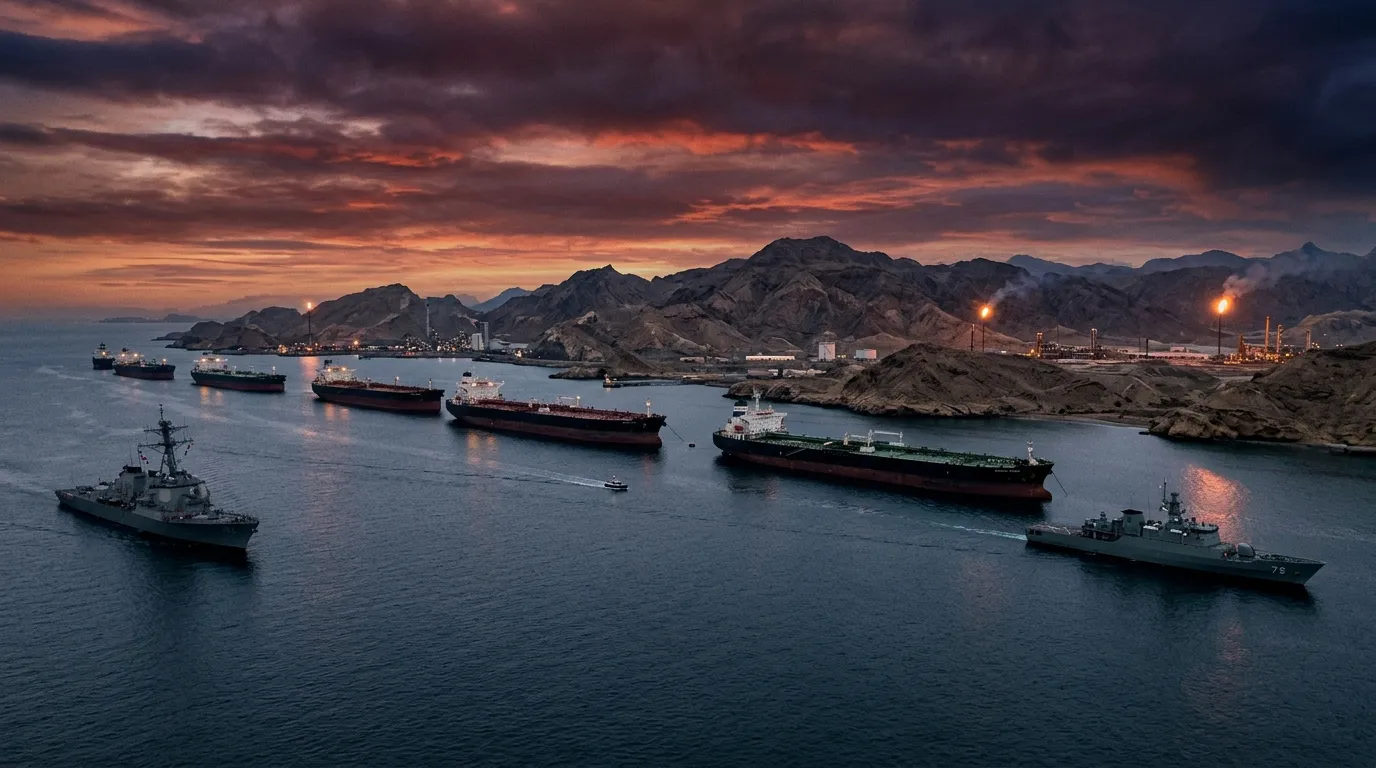
US President Donald Trump rejected the proposal presented by Tehran to reopen the Strait of Hormuz, announcing that Washington will not deal with the plan in its current form. The Iranian Foreign Minister said he expected an official US response within one day, while the US administration did not set a date or outline for its response.
For his part, senior Iranian negotiator Mohammad Bagher Ghalibaf threatened to launch new attacks on regional facilities. Ghalibaf, who is also the Speaker of the Iranian Parliament, stressed that no infrastructure in the region would be safe if his country's security was not guaranteed. State television quoted him as saying that in a region where we cannot sell oil, no one else will sell oil either, and if our security is not guaranteed, no facility will remain safe. These threats come after Tehran accused Washington of disrupting the negotiation track, at a time when US Central Command maintains a stance denying the validity of Iranian claims regarding the extent of damage to military facilities.
In the same context, the World Health Organization warned that the ongoing escalation in Yemen is pushing the health system to the brink of collapse. Annette Heintzleman, Emergency Director at the Regional Office for the Eastern Mediterranean, said that insecurity, damaged infrastructure, displacement of health workers, shortage of medicines and treatments, and limited access to vast areas of the western coast prevent many from receiving care, and that cholera is already spreading widely.
These developments represent a new chapter in the crisis that began after US and Israeli strikes on Iran in February, which led to an effective closure of the Strait of Hormuz to oil traffic. Today, energy market investors are assessing the trajectory of reopening the strait, as any progress or setback directly impacts oil prices, and consequently interest rates and global inflation. The upcoming US response is expected to determine whether negotiations will resume or military escalation will expand. At the same time, Riyadh and Washington are pressuring Beirut regarding Hezbollah's funding, in a separate track that is nonetheless linked to the security of the strait, as Washington believes cutting funding limits the ability of Iran-aligned parties to threaten navigation.
What do these terms mean?
Strait of Hormuz: A narrow waterway off the coasts of Iran and Oman through which a large percentage of the world's oil passes; any closure immediately raises energy prices. Infrastructure: All essential facilities in a country, including refineries, power stations, communication networks, and ports; disrupting them halts daily life and factories.
Weekly Newsletter
Read between the lines before everyone else. Decode the most important economic, tech, and decision-maker movements in the region.. in 5 minutes every Saturday.