
China Launches Chang'e 7 Mission to the Lunar South Pole in Search of Water Ice
China has launched the 8,200-kilogram Chang'e 7 mission to the lunar south pole to investigate the presence of water ice near Shackleton Crater.
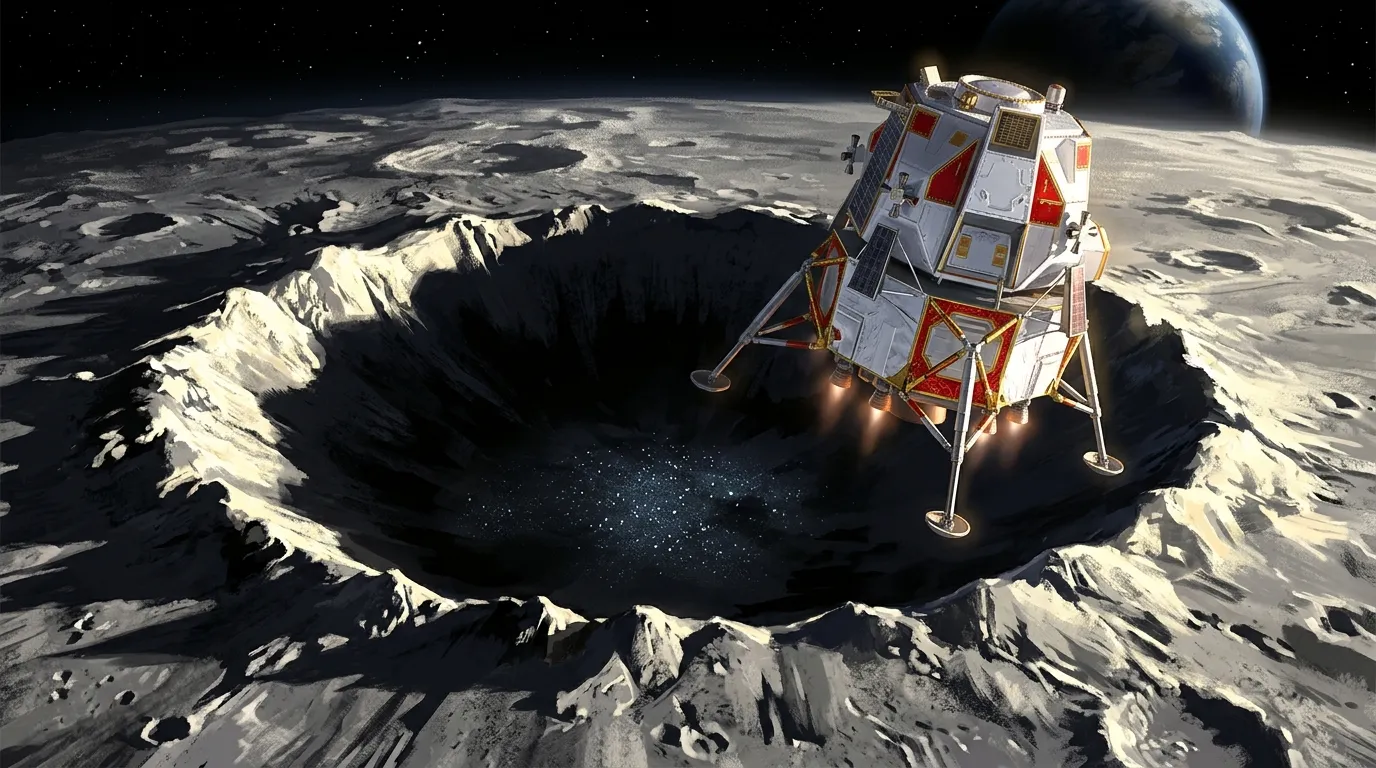
China has launched its 8,200-kilogram Chang'e 7 lunar mission toward the lunar south pole, in an ambitious move aimed at scientifically investigating the presence of water ice inside permanently shadowed craters near the Shackleton region, which is considered one of the most prominent strategic goals in the escalating international space race.
The mission carries a suite of advanced scientific instruments including ground-penetrating radar, temperature measurement devices, and spectral cameras capable of detecting indicators of water. The spacecraft will attempt to land in one of the most challenging environments on the lunar surface, where temperatures drop to some of the lowest levels in the Solar System.
This mission comes within the context of escalating space competition between China and the United States over lunar resources, as both countries seek to demonstrate their capacity for sustainable exploration and establish the first permanent lunar stations by the end of this decade.
If the mission succeeds in confirming the presence of extractable quantities of water ice, it will mark a radical turning point in the concept of space exploration, as water molecules could be broken down to yield hydrogen and oxygen for rocket fuel. Experts believe that whoever first controls water resources at the lunar south pole will hold a massive strategic advantage in the upcoming era of crewed space exploration.
What Do These Terms Mean?
Lunar Water Ice: Deposits of ice believed to exist inside permanently shadowed craters at the lunar poles where sunlight never reaches, serving as a valuable source of water and rocket fuel for future space missions.
Lunar Landing Mission: A space mission that sends a spacecraft to physically land on the surface of the Moon rather than merely orbiting it, making it far more complex and risky than orbiter missions as it requires a precision landing system and enables direct sensing and study of the surface.
Shackleton Crater: A massive crater at the lunar south pole measuring 21 kilometers in diameter, considered an ideal research area because its rims receive near-constant sunlight (suitable for solar power) while its floor remains in permanent darkness, preserving ice.
Weekly Newsletter
Read between the lines before everyone else. Decode the most important economic, tech, and decision-maker movements in the region.. in 5 minutes every Saturday.