The IMF Puts Poison in the Honey: $126 Oil, Gulf Contracts, and Egypt Is 'Out of the Hole'

Summary
The IMF raises its global growth forecast to 3.1% and presents a reassuring picture, but the shock has not disappeared; rather, it has shifted to the Gulf, where Kuwait contracts by 16.7%, Qatar by 15.6%, and Bahrain by 11.3% even as oil touched $126. Meanwhile, Egypt is 'out of the hole,' yet it does not escape the energy bill, Suez Canal disruptions, and remittances. The bottom line is that the
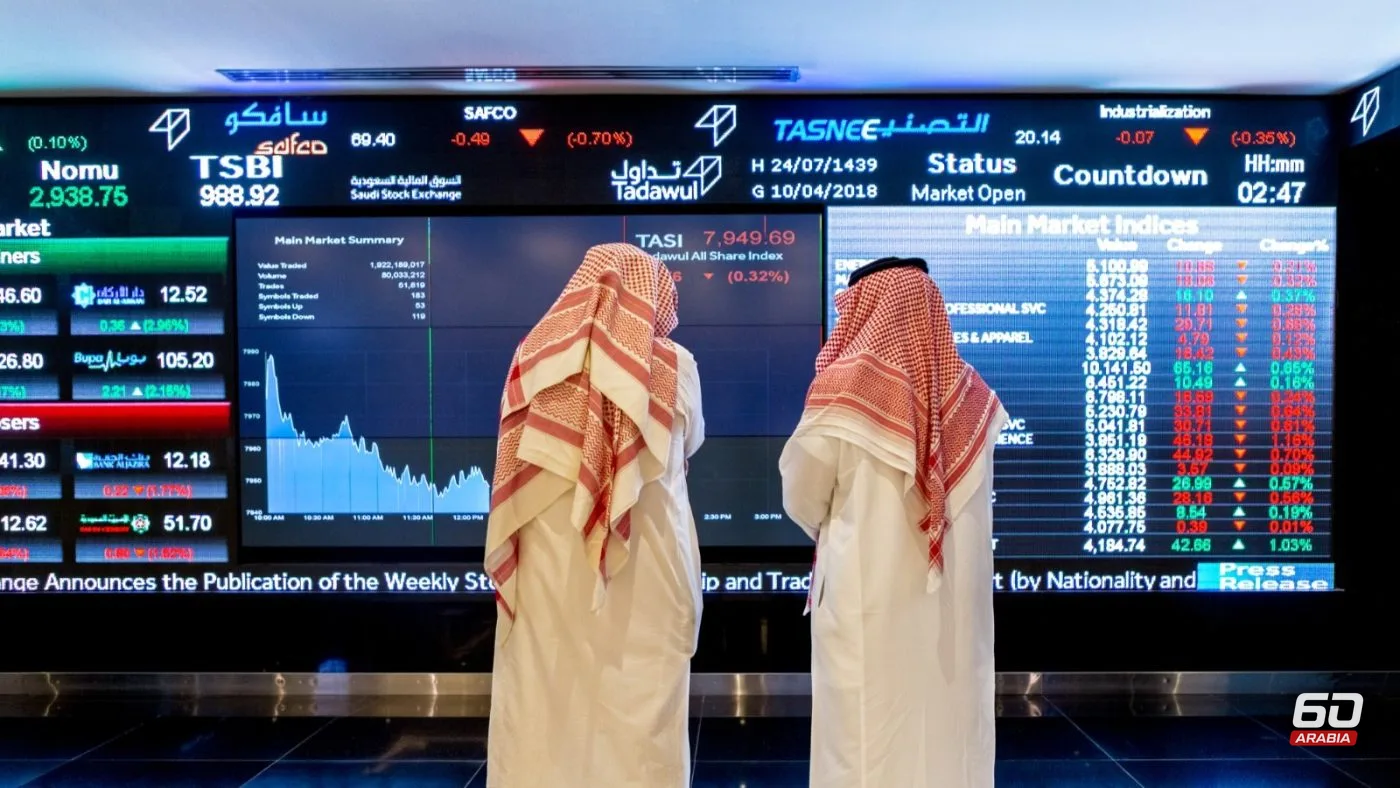
When a barrel of oil surges to $126, Gulf producers expect larger budgets and higher reserves. In 2026, the opposite happened. The International Monetary Fund (IMF) expects in its October World Economic Outlook report that the Gulf economies collectively will contract this year, with the exception of Oman, and that Kuwait, Qatar, and Bahrain will record double-digit contractions. At the same time, the Fund presents a cohesive global picture and rising growth. Anyone who reads the global headline alone will not know who paid the price, and that is what I will unpack.
The Honey: A World That Seems Cohesive
The closure of the Strait of Hormuz in March disrupted about 20 million barrels per day, nearly a quarter of seaborne oil trade, with oil peaking at $126 per barrel in late March, according to the report. However, the price did not stay at its peak; prices nearly doubled in the first months of the conflict before stabilizing at a level only 20% to 40% higher than pre-conflict levels. Dated Brent averaged $93.1 through September.
Against this backdrop, the Fund raised its 2026 global growth forecast to 3.1%, up 0.1 percentage point from July, and expects 3.4% in 2027. It estimates that oil would have averaged around $110 without mitigation measures, and that global growth would have lost 0.9 percentage points, but the net impact did not exceed about 0.3 points. The world also has a second driver—artificial intelligence—with South Korea's growth rising to 3.3% thanks to demand for semiconductors.
The Poison: Who Bears the Shock?
In the Middle East and Central Asia, oil-exporting countries contract by 3.8% while importing countries grow by 4.7%, creating an 8.5-point gap. The Middle East and North Africa region contracts by 2.0% after a 3.3% growth in 2025. When the Fund states that the global impact did not exceed 0.3 points, it attributes this to alternative routes, inventories, and China reducing its imports by 23%. However, this resilience was not distributed evenly, and the Gulf is among the hardest hit.
The details are harsher than the average. Kuwait contracts by 16.7%, Qatar by 15.6%, and Bahrain by 11.3%. The UAE contracts by 3.9%, down from the Fund's April forecast of 3.1% growth, while Saudi Arabia contracts by 3.3%. Oman stands out with a 4.1% growth, benefiting from its ports located outside the Strait of Hormuz, which limits its exports' exposure to direct disruption. In the UAE, inflation jumps to 4.5% from 1.3%, the region's aggregate fiscal deficit widens to 5.0% of GDP, and the current account surplus drops to 1.3%.
A Moving Assumption and an Outcome Presented as Fixed
Gulf growth forecasts in the report are directly affected by the timing of reopening the Strait, an assumption that has been shifting since April. In April, the Fund assumed the conflict would subside by mid-2026. In July, it assumed the Strait would reopen in mid-July and pre-war conditions would return by March 2027. In October, its assumption pushes the reopening start to March 2027, with full normalization completed by October 2027. In other words, July's assumption collapsed after three months, and its replacement added roughly eight months.
This was reflected in the numbers. Saudi Arabia's 2026 growth forecast was 3.1% in April, then around 1.7% in July, followed by a 3.3% contraction in October—a 6.4-point swing in six months. Yet each baseline is presented with a tone of technical precision, as if the political history of the Strait were an economic given owned by the Fund. The IMF itself acknowledged that the buffers that softened the blow are narrowing rapidly.
The 2027 Rebound: Sweetness on a Low Base
The Fund promises double-digit growth in 2027, as production, exports, and logistics return to normal: Kuwait 17.1%, Qatar 18.8%, and Bahrain 13.9%. However, by compounding real growth rates using its own figures, Kuwait's economy in 2027 remains about 2.5% below its 2025 level, while Qatar barely returns to that level. Thus, a large headline number does not mean the loss has been recovered. Furthermore, this rebound assumes the repair of damaged assets. The Director of the IMF's Middle East Department tied the largest downgrade to Qatar's outlook in April to extensive infrastructure damage; opening the Strait restores trade flow, but it does not automatically restore damaged assets.
The Prescription: For Whom Is It Written?
The Fund recommends that affected exporting countries temporarily use their fiscal space to support non-oil activity, and then proceed with fiscal consolidation over the medium term. It asks those benefiting from higher revenues to prioritize rebuilding reserves. Its chief economist noted that the resilience of the global economy is approaching its limits, calling for the restoration of fiscal space. Read the two statements together: the world is resilient, but its resilience is running out, so everyone must tighten their belts—starting with those who lost a significant share of their output.
I write this after more than 20 years of covering the economy and tracking global economic developments, during which I learned to read the footnotes and assumptions of IMF reports before their headlines, test the accuracy of the prescription, and simultaneously ask who bears its cost. In my view, the Fund serves in this prescription the logic of a creditor seeking a debtor capable of repayment, far more than it serves economies that lost their output due to a waterway they have no power to open.
Egypt: Out of the Hole, But with a Bill
The report projects Egypt's growth at 4.7% in 2026 and 5.1% in 2027. The IMF's forecast for Egypt's 2026 growth moved from 4.2% in April, through 4.6% in July, to 4.7% in October—a half-point increase—while Saudi Arabia's forecast shifted from a 3.1% growth to a 3.3% contraction. To be fair, the IMF's figures for Egypt are typically published on a fiscal year basis, so the comparison indicates the magnitude of the shift rather than identical periods. Egypt stands at the average growth of oil-importing countries in the region, but it lacks a bounce-back of 17.1% or 18.8%; all it has is being out of the hole. Yet it is not immune to the shock. It faces a higher energy bill, and the Suez Canal is threatened by renewed attacks in the Red Sea warned about in the report, after the Fund had previously expected the canal's activity to stabilize in 2026.
In April, the IMF blog warned that remittances would decline in labor-exporting countries to the Gulf—with Egypt being one of the largest—yet its forecast for Egypt rose. Local factors may have offset this, but the question remains for the Fund: what tipped the scales? Moreover, Egypt is under an $8 billion IMF loan program, meaning the entity projecting growth rates is the very one setting the financing conditions. This does not necessarily imply bias, but it is reason enough to read the figures with a critical eye.
What Should the Reader Do with the Numbers?
Read the Gulf figures in this report as conditional on the Strait's reopening date, and compare economic levels rather than growth rates alone—a 17% growth following a 17% contraction does not mean a full recovery. If the Strait's reopening is delayed beyond March 2027, the Fund may be forced to revise its numbers once again, as it did in July and October, leaving unanswered the question: who bears the cost of decisions based on moving forecasts?

Ibrahim Gamal Ibrahim is an Egyptian journalist and expert in digital media, economic and financial journalism, with more than 20 years of experience across the Middle East and North Africa (MENA) markets. He specializes in leading editorial teams, developing content and digital growth strategies, and integrating artificial intelligence into newsrooms, with extensive experience covering financial markets, monetary policy, and the banking sector. He has held editorial positions at Argaam, Veto, Besraha, Al Mal, and Mubasher.
Profile and all their articlesBeyond The Number

Between the Dollar and the Dirham: First Abu Dhabi Bank and Emirates Islamic Tap the Debt Market from Two Different Doors
From the 2004 Settlement to the Hyde Park Deal: What Happened to the Dreamland Land in 22 Years?
TASI at Lowest Close in 43 Months.. And the Saudi Investor Beat It to Wall Street

9 Years in the Waiting Room: Banque du Caire Offers 30% of Its Shares, and Pricing Is the True Test
Weekly Newsletter
Read between the lines before everyone else. Decode the most important economic, tech, and decision-maker movements in the region.. in 5 minutes every Saturday.