9 Years in the Waiting Room: Banque du Caire Offers 30% of Its Shares, and Pricing Is the True Test

Summary
Banque du Caire announces the sale of 30% of its shares—amounting to 4.575 billion shares owned by Banque Misr—nine years and eight months after its temporary listing. The offering consists of two tranches: a private placement for qualified investors and a public offering for retail investors.
Nine years and eight months separate the temporary listing of Banque du Caire's shares on the Egyptian Exchange (EGX) in February 2017 and the bank's announcement on Sunday that it will sell 30% of its capital to the public. A bank listed by name on the board, remaining in temporary listing without actual trading on its shares ever beginning. The government has been trying to offer it for years, yet none of its attempts reached execution.
According to a disclosure to the Egyptian Exchange, Banque Misr is selling 4.575 billion of its existing shares in Banque du Caire, representing 30% of the issued capital, which mathematically translates to a total of 15.25 billion shares. The offering comprises two tranches: the first is a private placement for qualified investors in Egypt and other countries, including qualified institutional buyers in the United States under Rule 144A and investors outside it under Regulation S; the second is a public tranche for retail investors in Egypt. CI Capital is serving as the lead manager for the offering, and EFG Hermes as the offering manager. The bank expects to complete subscription in late October and commence trading in November, subject to the approval of the Financial Regulatory Authority (FRA) on the prospectus—an approval that has not yet been issued, according to the same statement.
What the statement left unsaid is more significant than what it stated: there is no price, and no specified ratio for each tranche, meaning the retail investor's share of the offered stock remains unknown. Furthermore, the transaction is a secondary sale, with proceeds going to Banque Misr rather than Banque du Caire. The bank will not receive a single new pound; what it stands to gain is a broader shareholder base and a daily market valuation of its worth.
The story began with a temporary listing of Banque du Caire's shares on the Egyptian Exchange in February 2017. The authority then extended the deadline for completing the offering multiple times, the latest being a deadline that expired on December 31, 2021, followed by another extension to March 23, 2023. In 2020, the bank was planning to float 20% to 30% of its shares in April 2020 prior to the COVID-19 crisis, making the pandemic the first excuse. In 2023, the government announced its intention to offer 32 state-owned companies, including Banque du Caire, with sources speaking of the first or second quarter of that year, yet nothing materialized.
In 2025, the route shifted to a direct sale. Emirates NBD offered $1.2 billion and then $1.5 billion, while the government held firm at $1.8 billion for the entire equity. Pricing stalled, prompting the government to return to the stock market. In December, sources stated that the offering would take place in the second quarter of 2026 to convince the IMF of the government's seriousness in expanding private sector engagement. A tentative target was then set between April and June, after which Hashem El Sayed stated that the offering would be completed in November, with the tranche being covered within a week.
The latest delay came when investment banks agreed with Banque Misr and the Central Bank to postpone the move by three to four months due to tensions related to the Iranian war and a seasonal slowdown in market activity during the summer. A government official stated that the fair value assessment had been fully completed, and in September, the review committee of the State-Owned Enterprises Unit unanimously approved the validity of the updated study.
As for the chain of excuses, it encompassed COVID-19, market conditions, war, and then summer. The reasons appear distinct, but repeated postponements bring the question of pricing back to the forefront. In the failure of the 2025 deal specifically, the issue was not global markets, but the gap between the price offered by the buyer and the price insisted upon by the state. While this gap does not explain every delay, it raises today's crucial question: Will the IPO reach a price that fulfills the seller's expectations while simultaneously attracting investors?
What is being offered today is a bank that has changed significantly since 2017. The statement notes that total loans rose from EGP 109.7 billion in December 2021 to EGP 280.3 billion in June 2026, and deposits grew from EGP 198.7 billion to EGP 443.9 billion. Net profit after tax in the first half of 2026 reached EGP 8.9 billion, with an annualized return on average equity (ROAE) of 27.6%, equity standing at EGP 66.8 billion, and a capital adequacy ratio of 22.1%. Some of these figures are based on bank management information rather than audited financial statements, as the statement notes in its footnotes.
There are many points that warrant attention, chief among which is pricing. A government official estimated in March proceeds of EGP 23 to 32 billion for a stake ranging between 30% and 40%. If these two figures correspond to the lower and upper bounds of the stake, this places the bank's valuation in the range of EGP 77 to 80 billion—roughly 1.2 times book value and about 4.5 times annualized earnings based on H1. These are my own calculations, not an official valuation. However, they place the state before a difficult equation: a high price that protects Banque Misr's proceeds may fail to generate sufficient demand, whereas a low price for a bank with a return on equity near 28% transfers a portion of the value to new buyers.
Second: who will participate in the subscription. "Asharq Bloomberg" quoted sources as saying that the European Bank for Reconstruction and Development (EBRD) and the International Finance Corporation (IFC) intend to acquire a stake of up to 10%, while an EBRD official stated that its share could reach 5%. Their presence is a vote of confidence, but it reduces the public's share in the general tranche. The precedent of United Bank points to strong appetite for banking IPOs—its offering was covered 59 times in December 2024—though it does not guarantee a repeated outcome.
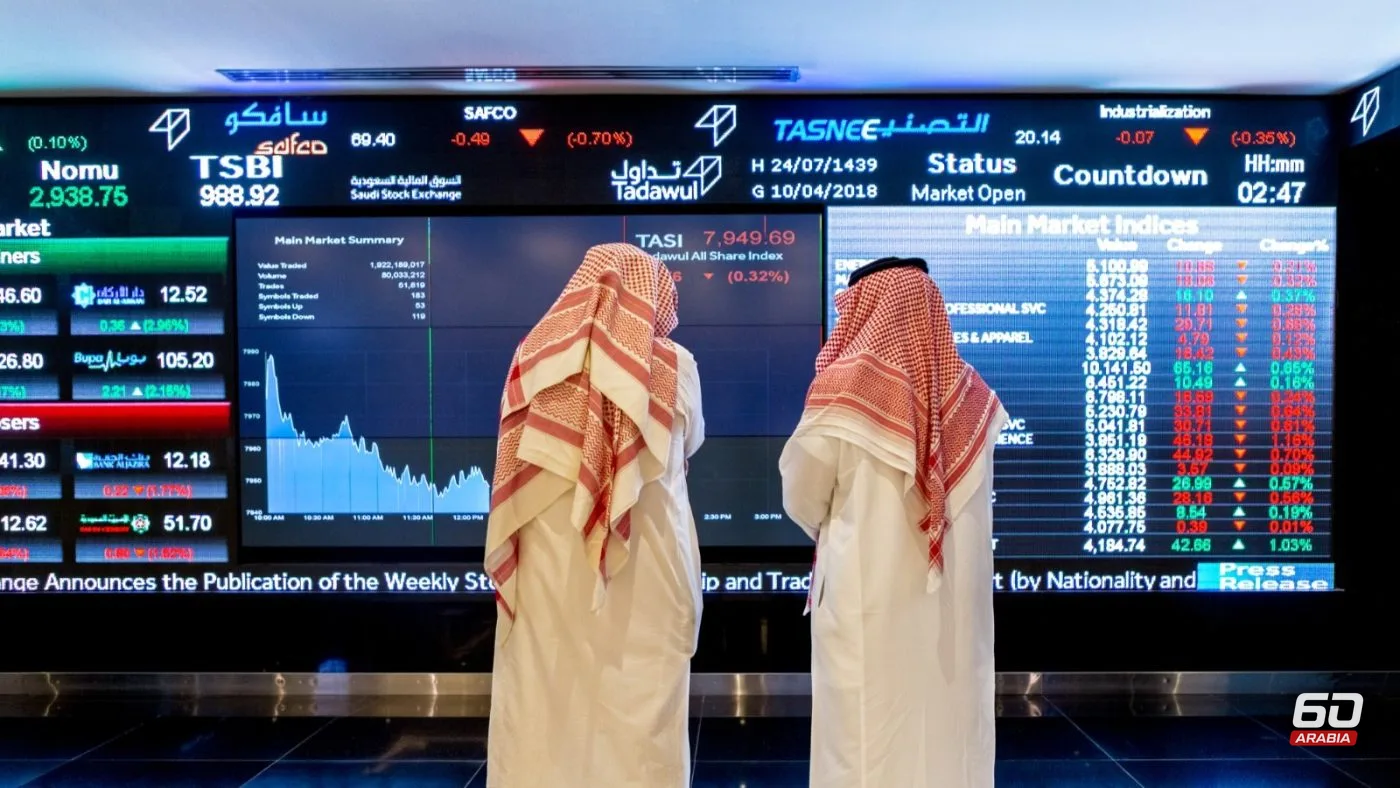
Third: timing. The reasons for which the offering was postponed in the summer have not vanished; Arab stock exchanges, including Egypt, declined on Sunday following the Riyadh airport attack. The question remains how the subscription will be affected by market conditions upon execution.
To the retail investor, I offer a simple word of advice: read the offering prospectus before reading the news, and wait for the price and the retail tranche allocation before deciding. The stock's performance post-listing remains the truest test of all of the above.
Beyond The Number
Ibrahim Jamal Writes on TASI After the Riyadh Airport Attack: Did the Market Absorb the Shock Before It Happened?

"MNT-Halan": 124.8k Lawsuits in the Prospectus of the Largest EGP IPO... Does the Price Compensate the Investor for the Risks?

Saudi Arabia Between a Widening Deficit in 2026 and Declining Spending in 2027: Is Vision 2030 Entering Its Toughest Test?

Algorithms in Saudi Arabia and Telegram Recommendations in Egypt... Who Protects Retail Investors?
Weekly Newsletter
Read between the lines before everyone else. Decode the most important economic, tech, and decision-maker movements in the region.. in 5 minutes every Saturday.