Ibrahim Jamal Writes on TASI After the Riyadh Airport Attack: Did the Market Absorb the Shock Before It Happened?
Summary
Following the King Khalid Airport attack on Saturday afternoon, the author believes this figure hides more than it reveals. The article puts forward the hypothesis that the market had priced in part of the risk in advance and warns that the absence of sellers does not imply the presence of buyers.
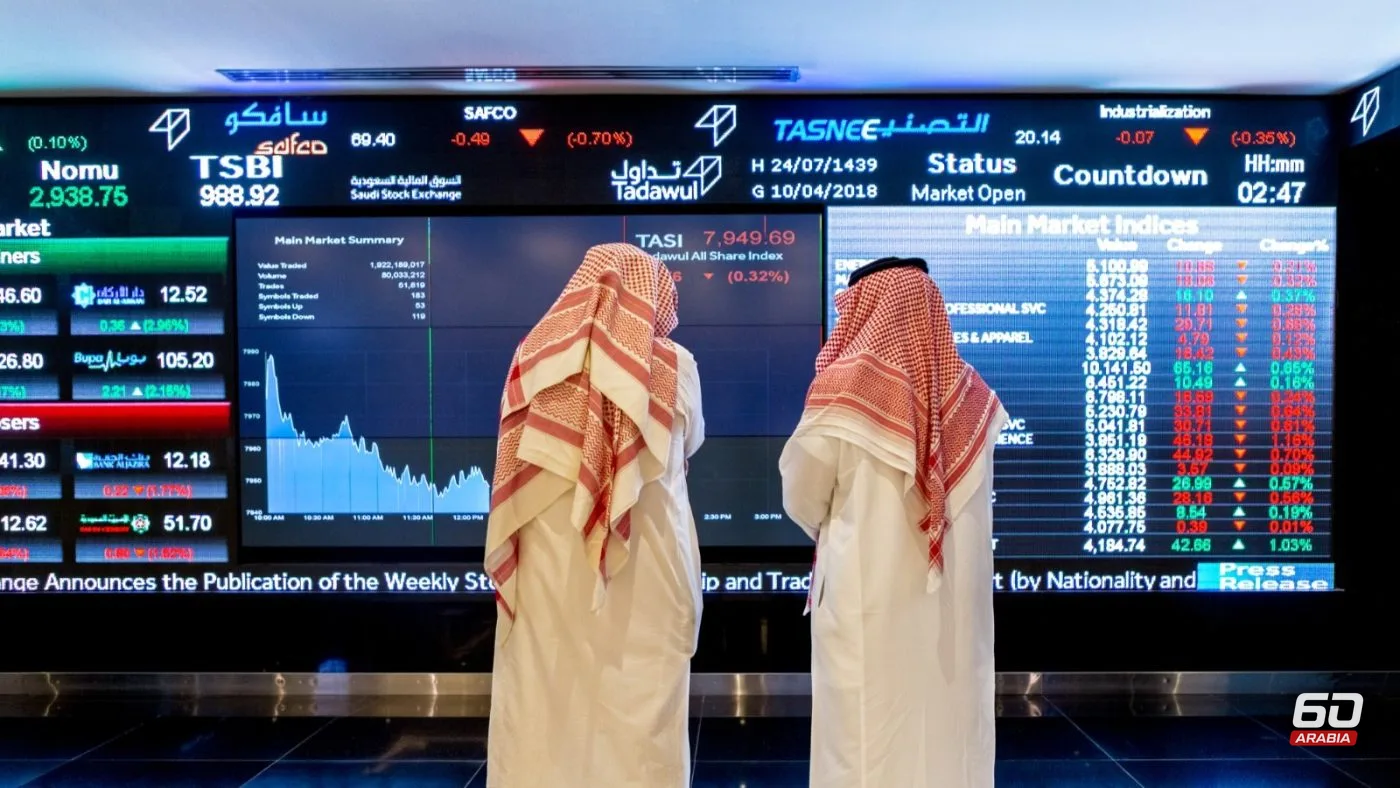
The attack on King Khalid Airport occurred on Saturday afternoon, leaving 12 dead and 309 injured. Then, the TASI index closed on Sunday morning down just 0.15% at 10,360.74 points. Anyone looking at the figure alone might assume that the Saudi market is immune to shocks. I view this as a hasty reading. A limited drop does not mean fear has dissipated, and the decline preceding the attack raises a question worth examining: did prices price in part of the risk before it occurred, or did the index hide greater pressures behind its minor loss?
The Closing Figure Hides More Than It Reveals
Sunday's session opened under clear pressure, with Aramco shares losing 0.8% and Petro Rabigh 1.6% in the morning. The index then erased its losses and turned upward briefly before sliding back to a slight decline at 10,375.17 points. At the close, Saudi Awwal Bank (SAB) had lost 1.1%, while Aramco settled for a 0.2% loss.
Aramco is the heaviest weighted stock, and its minor loss absorbed part of the shock at the index level. However, the decline in Saudi Awwal Bank's stock is not enough to conclude that banks led the sell-off; such a judgment requires assessing the performance of the entire sector and the breadth of advancing versus declining stocks. What can be said now is that the headline figure concealed divergence among individual stocks. Regionally, Qatar's index fell 1.5% to its lowest level since May 2020, and other Arab stock markets declined, including Egypt. This synchronization is worth monitoring, without attributing to it a causal relationship I have not proven.
Did the Market Price In the Risk in Advance?
The numbers give weight to the question. The index had risen 7.2% by the end of the first quarter, then erased all gains of 2026 and entered October in negative territory. It closed on Wednesday, October 7, at 10,542 points. Calculating Sunday's close and its loss points, Thursday's close was around 10,376 points, meaning the index lost about 1.6% in a single session before the attack—a loss more than ten times greater than that of the attack day itself.
Moreover, the market was not surprised by the targeting of airports. The Houthis had conducted four days of strikes on Saudi airports that killed three people and disrupted hundreds of flights, preceded in September by smoke near King Khalid Airport following attacks on Riyadh. Saturday's attack was the deadliest, but it was not the first.
Perhaps this trajectory limited the room for further decline in certain stocks; I cannot be certain beyond that. AGBI newspaper quoted asset managers as saying that cheap valuations limit losses and that there is no earnings-related reason for the drop. I report this view without endorsing it, as low prices may also reflect weaker earnings expectations or a higher risk premium. And the absence of sellers is not the presence of buyers.
Domestic ownership is often invoked to explain market calm. In November 2025, market capitalization reached SAR 9.413 trillion, with around SAR 8.91 trillion held by Saudi investors. This figure includes government and strategic stakes that do not necessarily reflect the liquidity available for daily trading. It describes who holds the shares, not how they act.
What Research Houses Said Before the Attack
As of Sunday evening, I found no new notes addressing the attack itself; everything below predates it. Goldman Sachs warned in March, with the outbreak of the Iran war, that risks to growth and borrowing costs in the Gulf were higher than anticipated. Citigroup recommended underweighting Saudi equities since December due to weak earnings growth and momentum. Conversely, Morgan Stanley Investment Management noted in its June quarterly commentary an increase in the non-oil PMI to 53.3, and Fitch reported that market capitalization grew by about 7% year-on-year through the end of May. The picture is paradoxical: expanding non-oil activity alongside investment caution toward equities, and these readings alone are insufficient to explain a single session.
I tend to believe the close says less than it appears. What we saw was selling exhaustion, not a return of confidence. The market lost more before the attack than it did on the day of the attack itself, and investors who wanted to exit likely did so prior to Saturday.
What I Will Watch in Upcoming Sessions
I will judge any rebound by three criteria combined: its breadth across sectors, the accompanying trading volume, and its ability to hold for more than one session. I will also monitor the divergence between banks and Aramco without drawing standalone conclusions from it, as banks move on earnings expectations and credit, while Aramco is also influenced by energy prices. What matters is whether pressures spread across sectors or remain confined to specific stocks.
The airport itself has a reassuring precedent; after a previous attack, operations returned to normal around Friday morning. However, Saturday's attack was more severe. Organizers of two major energy and investment conferences confirmed they will take place this month, but the question remains who will actually attend and what business and travel will cost. As for escalation, reports indicate that the Houthis asked oil sector workers to avoid facilities they consider targets, while Washington's stance on intervention wavers, with reports suggesting Trump will not conduct new strikes before the midterm elections. If targeting extends to energy facilities or ports, I will reassess the hypothesis that the prior downturn mitigated the impact of the new shock.
When reading third-quarter bank results—statutorily required before November 11—I will start with loan growth, asset quality, provisions, and funding costs, then interpret net profits in their light. The question is not how much banks earned, but whether this performance reflects conditions prior to the attack or an impact from new risks.
The next session will not prove that the Saudi market has overcome the shock, nor will a decline necessarily mean that the attack has fully repriced equities. What I will be looking for is what distinguishes a market where a selling wave has temporarily paused from one where investors have begun re-evaluating risk.
Beyond The Number

9 Years in the Waiting Room: Banque du Caire Offers 30% of Its Shares, and Pricing Is the True Test

"MNT-Halan": 124.8k Lawsuits in the Prospectus of the Largest EGP IPO... Does the Price Compensate the Investor for the Risks?

Saudi Arabia Between a Widening Deficit in 2026 and Declining Spending in 2027: Is Vision 2030 Entering Its Toughest Test?

Algorithms in Saudi Arabia and Telegram Recommendations in Egypt... Who Protects Retail Investors?
Weekly Newsletter
Read between the lines before everyone else. Decode the most important economic, tech, and decision-maker movements in the region.. in 5 minutes every Saturday.