TASI at Lowest Close in 43 Months.. And the Saudi Investor Beat It to Wall Street
Summary
The week's most alarming numbers did not come from the trading screen. They came from the Capital Market Authority's quarterly bulletin, showing that every additional riyal traded by Saudis in the second quarter went abroad.
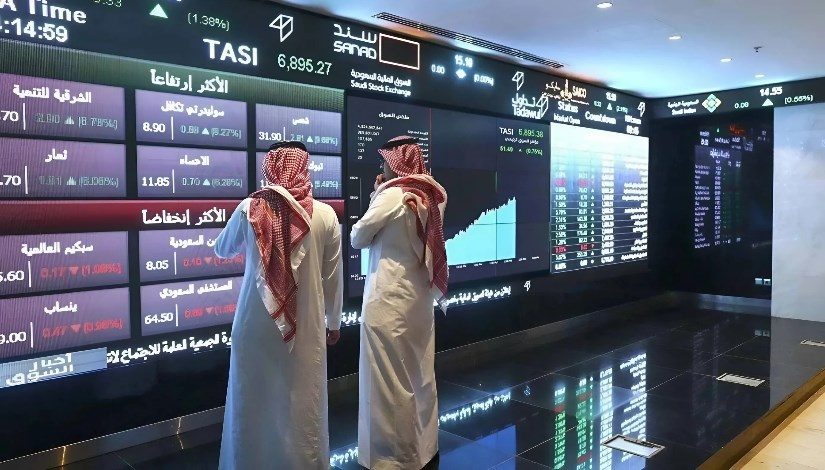
The TASI index closed Monday's session at 10,284 points, down 0.7% (77 points), marking its lowest close since March 2023, approximately 43 months ago. The index moved between 10,248 and 10,356 points with a trading value of SAR 3.5 billion, never touching Sunday's close of 10,360.74 points at any moment. With this decline, its losses since the August peak reached nearly 1,000 points, or 9%.
However, the week's most alarming numbers did not come from the trading screen. They came from the Capital Market Authority's quarterly bulletin, showing that every additional riyal traded by Saudis in the second quarter went abroad.
A Session Without Domestic Support
In Monday's session, pressure broadened as most sectors declined, led by banking, while listed real estate companies and REITs recorded their lowest levels since listing. The energy sector held up relatively well, supported by rising oil prices, and Aramco's stock slipped only slightly, preventing losses from widening. Oil softens what appears on the index, while banking and real estate reveal what lies beneath it—the exact same picture that emerged on Sunday.
Flat Domestic Trading and a 59% Jump Abroad
The trading value of Saudi investors in foreign markets rose in the second quarter of 2026 by 59.07% year-on-year to SAR 312.12 billion, compared to SAR 196.22 billion a year earlier. In contrast, their trading in the domestic market remained virtually flat at SAR 654.49 billion compared to SAR 655 billion, down 0.08%.
Total Saudi trading rose by SAR 115.4 billion to SAR 966.61 billion, while their foreign trading alone increased by SAR 115.9 billion, meaning the domestic market captured none of the overall growth. The share of foreign markets reached 32.29% of total Saudi trading, up 18% from the first quarter, which recorded SAR 264.42 billion.
Destination Reveals More Than Volume
A total of 96.81% of these trades went to the US market, valued at SAR 302.18 billion, an all-time high. Meanwhile, GCC equities did not exceed SAR 2.35 billion, and Arab equities stood at just SAR 28 million. Foreign activity was not spread across neighboring markets, but concentrated in the world's largest market.
Trading Equivalent to 6.8 Times Assets
There is a figure that tempers capital flight interpretations: assets of Saudi institution clients in foreign-listed securities reached SAR 45.6 billion by the end of June, compared to SAR 26.1 billion a year earlier, up 74.3%. Second-quarter trading alone equaled roughly 6.8 times these assets. This represents heavy trading on a relatively small base, and the figures do not show capital flight. The asset value reflects both what investors bought and price changes in their holdings, yet limitations apply to all these numbers: the bulletin covers locally licensed institutions only and does not capture accounts opened directly with foreign brokers.
Is It Flight from Geopolitical Events?
In my humble view, geopolitics is part of the explanation, but I do not see it as the sole factor, and there are limits to the evidence.
What supports this interpretation: the second quarter followed the outbreak of the war with Iran, during which US market trading jumped about 25% from the first quarter, rising from SAR 241.9 billion to SAR 302.2 billion. Goldman Sachs warned in March that risks to growth and borrowing costs in the GCC were higher than expected. Stagnant domestic trading alongside a surge in foreign trading resembles the behavior of someone deciding where to deploy new capital.
What tempers certainty: the trend far predates the war. The US stock share of Saudi trading was 9.7% in Q1 2023, reaching 28.5% in Q1 2026, with their trading growing annually for seven consecutive quarters up to that quarter. Moreover, the numbers measure trading value—both buys and sells—through market institutions, not net flows. Nor do they state the motive: broader options in the US market, easier broker access, stock performance, and portfolio diversification desires are all valid possibilities alongside geopolitics.
Furthermore, the second quarter preceded the attack on King Khalid Airport. The attack did not initiate this trend; at most, it might accelerate it. As for the two sessions following it, they point to a market lacking buyers at previous price levels, which aligns with the same trend. However, two days are insufficient to judge demand, so zero-growth domestic trading and modest foreign buying bring back the most famous argument for TASI's calm: local ownership remains stable.
In November 2025, market capitalization reached SAR 9.413 trillion, with about SAR 8.91 trillion held by Saudi investors. This figure includes government and strategic stakes that do not trade daily, describing who owns assets rather than how they behave.
Now we know something about how active domestic money behaves: all growth in its activity went abroad. So who sustains demand if domestic trading fails to grow? Foreigners did step in. The Authority opened the main market to all categories of non-resident foreign investors in February 2026, and they recorded net purchases of around SAR 6 billion in Q2, making Saudi Arabia the only GCC market to attract positive foreign flows.
However, this figure is tiny compared to SAR 654.49 billion in domestic trading. Non-founding foreign ownership excluding Aramco reached 11.22% of the market at the end of July, down slightly from the previous week, and AGBI reported that diminished expectations of opening the market to greater foreign ownership weakened sentiment. This leaves a market reliant on Aramco, oil, and banks—with banks leading the losses.
What I Am Watching Now
The first test is 10,248 points, Monday's session low. A close below it means a new closing trough, and alongside it I look at trading volumes—any bounce on weak volumes I do not trust. I am also following the third-quarter bulletin, which will reveal whether foreign trading accelerated or slowed in the quarter that saw the September attacks, while the impact of the October attack awaits the fourth-quarter bulletin.
In Q3 bank results, required by regulation before November 11, I will look first at loan growth, asset quality, provisions, and funding costs before net profits. If targeting extends to energy facilities and ports, I will re-evaluate the resilience of the energy sector itself—the last support for the index—and examine its impact on production, exports, and insurance costs.
The question left open by the numbers: What does the Saudi investor find on Wall Street that they do not find in their domestic market?

Ibrahim Gamal Ibrahim is an Egyptian journalist and expert in digital media, economic and financial journalism, with more than 20 years of experience across the Middle East and North Africa (MENA) markets. He specializes in leading editorial teams, developing content and digital growth strategies, and integrating artificial intelligence into newsrooms, with extensive experience covering financial markets, monetary policy, and the banking sector. He has held editorial positions at Argaam, Veto, Besraha, Al Mal, and Mubasher.
Profile and all their articlesBeyond The Number

9 Years in the Waiting Room: Banque du Caire Offers 30% of Its Shares, and Pricing Is the True Test
Ibrahim Jamal Writes on TASI After the Riyadh Airport Attack: Did the Market Absorb the Shock Before It Happened?

"MNT-Halan": 124.8k Lawsuits in the Prospectus of the Largest EGP IPO... Does the Price Compensate the Investor for the Risks?

Saudi Arabia Between a Widening Deficit in 2026 and Declining Spending in 2027: Is Vision 2030 Entering Its Toughest Test?
Weekly Newsletter
Read between the lines before everyone else. Decode the most important economic, tech, and decision-maker movements in the region.. in 5 minutes every Saturday.