From the 2004 Settlement to the Hyde Park Deal: What Happened to the Dreamland Land in 22 Years?
Summary
Twenty-two years after the 2004 settlement, the Dreamland land returns to the spotlight with the sale of 415 feddans from the Egyptian Company for Real Estate Asset Management and Investment—owned by the National Bank of Egypt and Banque Misr—to Hyde Park Developments. Neither the sale price, the buyer selection process, nor the evaluating entity were disclosed. However, assessing the economic eff
Twenty-two years have passed between the 2004 settlement supervised by the Central Bank and today's deal, yet the land where everything began remains just land. Its owner changed, its legal status changed, and its original founder passed away. Still, the most crucial question remains without a public answer: how much was it sold for?
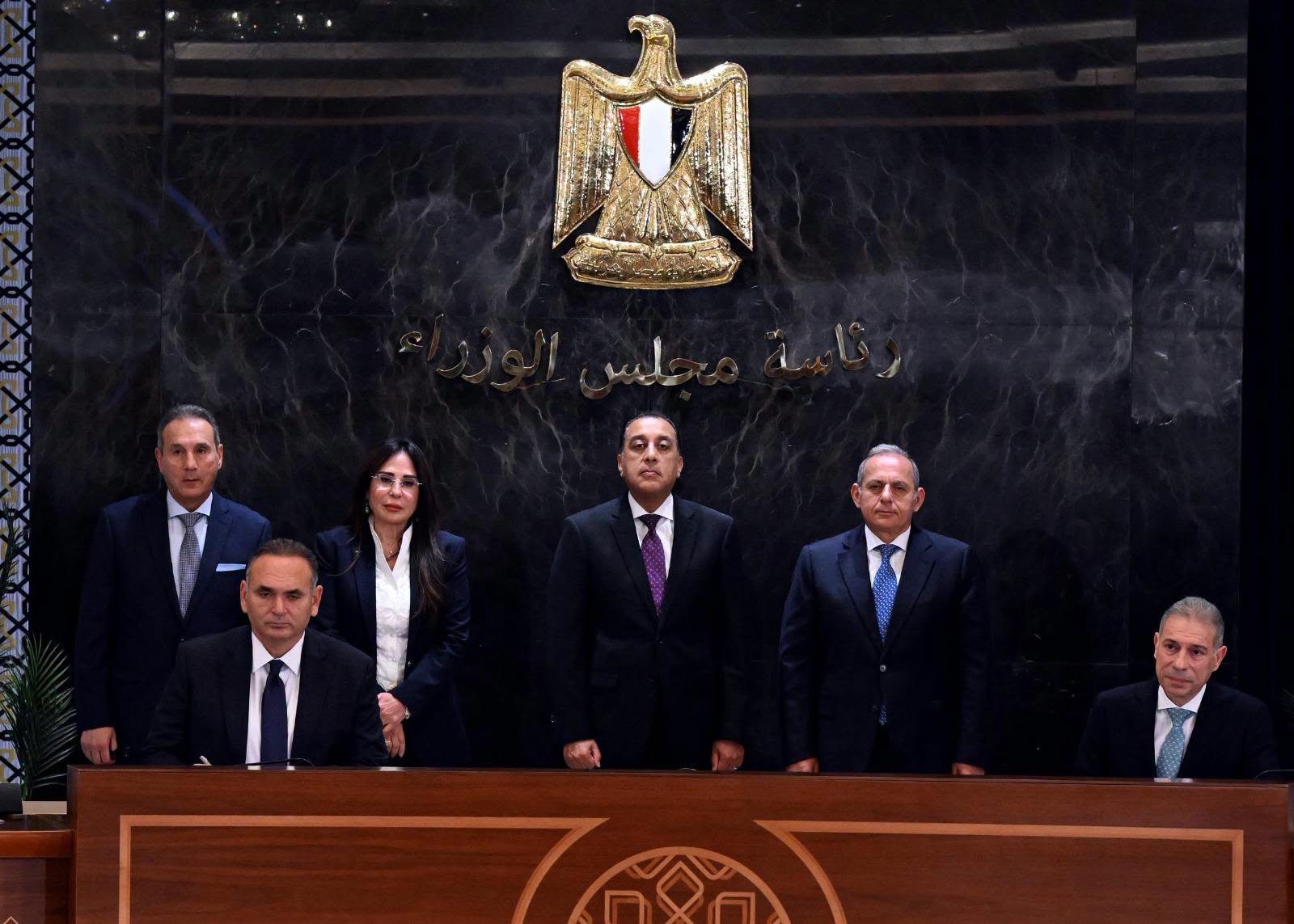
Today, October 12, 2026, Hyde Park Developments signed a contract to purchase 415 feddans from the Egyptian Company for Real Estate Asset Management and Investment, owned by the National Bank of Egypt and Banque Misr. The signing took place in the presence of Prime Minister Dr. Mostafa Madbouly, and was signed by Amin Serag, Managing Director of Hyde Park, and Karam Salah, Chairman of the Egyptian Company for Real Estate Asset Management and Investment.
I write this as someone who has followed this file from its inception. I closely tracked its intricate details inside the closed offices of both banks, in the Public Prosecution, through international arbitration, and finally at the settlement table. Every time it seemed the final chapter had arrived, a new one emerged. Therefore, I read today's news with the caution of a journalist who has covered the case for a long time, as an ending announced in a press conference always requires a thorough review of its details.
In 2004, a settlement was signed between Dr. Ahmed Bahgat, owner of the Bahgat Group, and the National Bank of Egypt and Banque Misr under the supervision of the Central Bank of Egypt, headed by Dr. Farouk El-Okda. The debt was split between the National Bank of Egypt (83%) and Banque Misr (17%). The settlement did not hold, and the dispute escalated to litigation and arbitration. In 2017, the two banks stated that Bahgat and his children had filed lawsuits in the United States against the Egyptian state and the National Bank of Egypt claiming over five billion dollars, which the U.S. courts ultimately dismissed.
On May 21, 2021, Dr. Ahmed Bahgat passed away at the age of 70 during a medical treatment trip in the United States. On October 11, 2021—less than five months later—the final settlement was signed, ending disputes that spanned over ten years and transferring approximately 4 million square meters of land to the Egyptian Company for Real Estate Asset Management and Investment in execution of arbitration and judicial rulings favoring the two banks. Thus, Dr. Ahmed Bahgat did not witness the final settlement, nor today's deal that came five years later.
The 2021 settlement statement mentioned 4 million square meters, equivalent to roughly 952 feddans (calculating one feddan as 4,200 square meters). Today, Mohamed El-Etreby, CEO of the National Bank of Egypt, stated that the company owns 818 feddans, having sold 415 to Hyde Park. The sold area thus accounts for about 51% of the land currently owned by the company, leaving approximately 403 feddans.
This is a land area percentage, not a value percentage. Land varies in location, usage, licensing, and utility access; two plots equal in area may differ substantially in price.
The discrepancy between 952 and 818 feddans remains in need of explanation. Available statements do not clarify whether both numbers describe the exact same scope of land or what accounts for the difference. It could stem from a prior disposition of a portion of the land, or a difference in how the calculated area was defined. I have no evidence for either explanation, which is precisely why the question must be asked.
The fundamental question is: why did the two banks sell now? When a debt is converted into land, the bank becomes a real estate owner despite not operating in real estate. Vacant land requires security, permits, utilities, and marketing decisions—tasks suited for developers. Holding onto it carries an opportunity cost because its value is trapped in a non-yielding asset.
As for the ownership status, it likely played a role in the timing of the sale. The final settlement and the execution of rulings eliminated a significant portion of the litigation risks that previously hindered disposing of the land, though this does not imply the absence of all legal and regulatory risks.
About five years passed between the settlement and the deal. We do not know what sale attempts, offers, or studies of alternatives took place during this time, nor whether there were prior offers with different terms. Assessing the efficiency of this period requires such information.
The most curious aspect was regarding the price and sale terms, as the selling price of the 415 feddans was not announced. As for the 10 billion EGP figure, it belongs to a financing contract signed by Banque Misr with Founders, a subsidiary of Hyde Park, to purchase and market middle-income housing units belonging to the New Urban Communities Authority. Both contracts were announced on the same day, but what has been disclosed so far does not prove that the financing is contractually tied to the land purchase, and it cannot be considered its price.
Furthermore, the National Bank of Egypt owns 83% of the selling company and simultaneously owns 24% of the buyer, Hyde Park, according to El-Etreby's statement. This does not inherently prove a conflict of interest or pricing flaw. However, it renders the following questions legitimate, requiring public answers:
Was the land sold through a competitive auction or through direct negotiation with a single buyer? Was it evaluated by an independent entity, and if so, who? What was the price per feddan, and what are the payment terms? These are funds belonging to two state-owned banks.
A discussion about Dreamland is incomplete without its founder. Ahmed Bahgat was a graduate of Cairo Engineering, earned his PhD from the Georgia Institute of Technology in 1982, and invented an electronic prayer compass in the U.S. before returning to Egypt in the mid-1980s following a meeting with former President Hosni Mubarak. He established the Goldi home appliances factories, Dream TV channel, and built Dreamland in 6th of October City. Upon his passing, the press described him as the owner of Egypt's first private TV channel, October's first residential compound, and the largest amusement park in the Middle East.
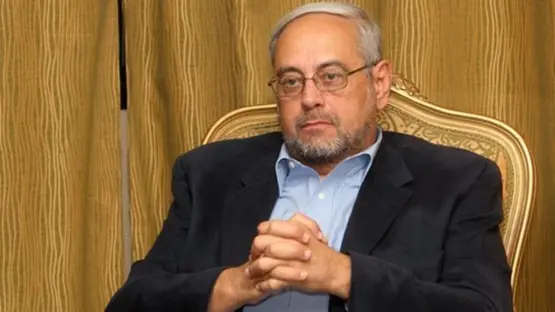
He held American citizenship and passed away in the U.S., but he requested in his will to be buried in Egypt. Those who knew him are not surprised by this.
Today, the two banks succeeded in concluding a dispute that began two and a half decades ago and in turning a portion of the land into a project. This is a real achievement. However, evaluating the deal itself hinges on three unannounced elements: the price, the sales method, and the fate of the remaining 403 feddans.
When these figures are published, we will know whether the banks retrieved the fair value of the land. Until then, the only certainty is that the legal dispute has ended. The financial account, however, remains open.
Ibrahim Gamal Ibrahim is an Egyptian journalist and expert in digital media, economic and financial journalism, with more than 20 years of experience across the Middle East and North Africa (MENA) markets. He specializes in leading editorial teams, developing content and digital growth strategies, and integrating artificial intelligence into newsrooms, with extensive experience covering financial markets, monetary policy, and the banking sector. He has held editorial positions at Argaam, Veto, Besraha, Al Mal, and Mubasher.
Profile and all their articlesBeyond The Number
TASI at Lowest Close in 43 Months.. And the Saudi Investor Beat It to Wall Street
9 Years in the Waiting Room: Banque du Caire Offers 30% of Its Shares, and Pricing Is the True Test
Ibrahim Jamal Writes on TASI After the Riyadh Airport Attack: Did the Market Absorb the Shock Before It Happened?

"MNT-Halan": 124.8k Lawsuits in the Prospectus of the Largest EGP IPO... Does the Price Compensate the Investor for the Risks?
Weekly Newsletter
Read between the lines before everyone else. Decode the most important economic, tech, and decision-maker movements in the region.. in 5 minutes every Saturday.