

Japan Launches MMX Probe Toward Phobos to Collect First Sample
Japan launched the MMX probe on an H3 rocket from Tanegashima, on a journey that will reach Mars in 2027 and land on Phobos to bring samples back to Earth in 2031.
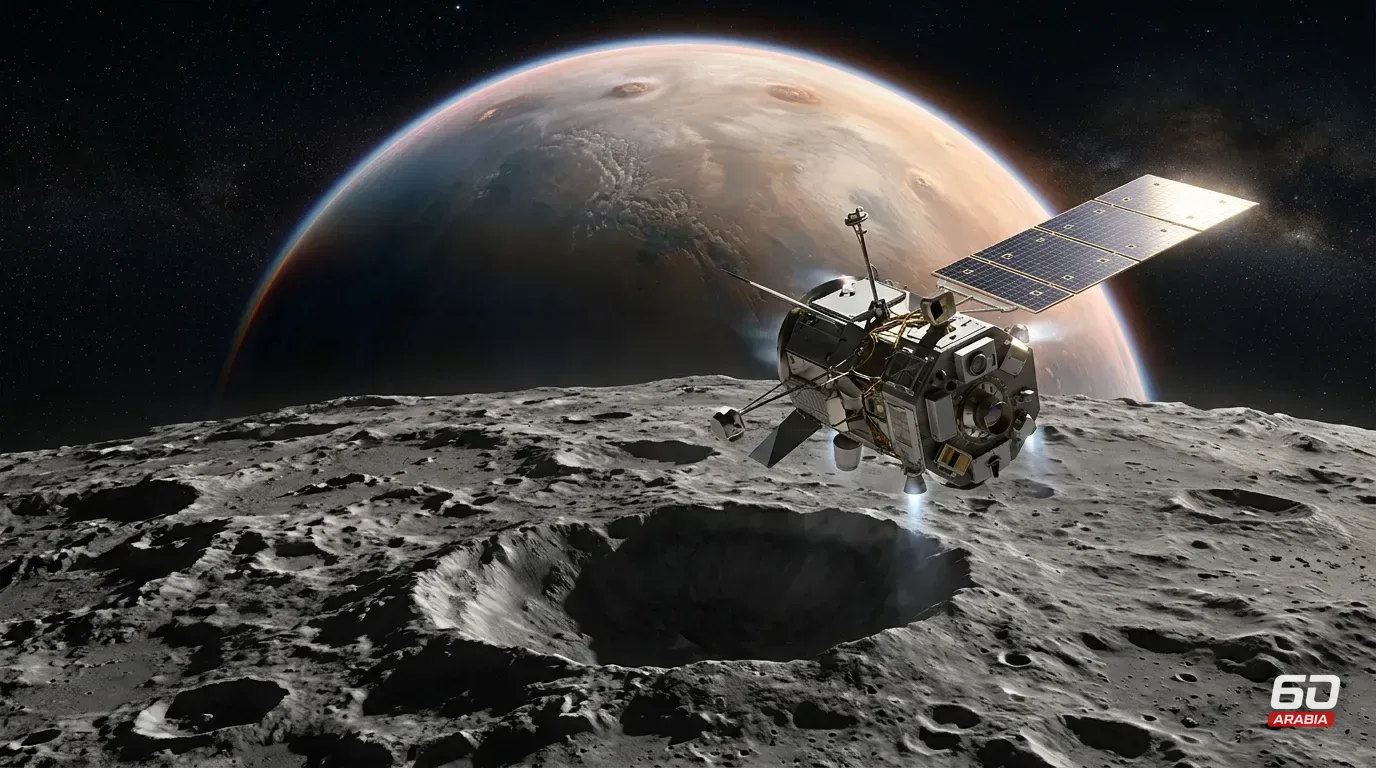
The Japan Aerospace Exploration Agency (JAXA) launched the MMX probe on an H3 rocket from Tanegashima Space Center, on a mission aimed at reaching Mars and collecting samples from its moon Phobos.
The probe lifted off at 3:41 p.m. EDT on October 19, corresponding to 4:41 a.m. Japan Standard Time on October 20, and is scheduled to reach Mars in August 2027.
The spacecraft is scheduled to land on Phobos no earlier than December 2028, before returning with samples to Earth in 2031, in the first attempt of its kind to retrieve material from a Martian moon.
The probe carries 13 scientific instruments, including NASA's MEGANE spectrometer, making it an international project aimed at understanding the origin of small moons and the history of the solar system.
What do these terms mean?
Phobos: The larger and closer of Mars's two moons, its surface is believed to bear traces from the early formation of the solar system.
H3 Rocket: A Japanese heavy-lift launch vehicle developed by JAXA and Mitsubishi, used for scientific missions and commercial satellites.
Spectrometer: A device that analyzes light coming from an object to determine its surface composition and minerals without needing to touch it.
Sample: A small quantity of rock or soil collected by a probe and returned to Earth for analysis in laboratories.
Weekly Newsletter
Read between the lines before everyone else. Decode the most important economic, tech, and decision-maker movements in the region.. in 5 minutes every Saturday.