
Hormuz Disruption Threatens 20% of Global Oil Supply and 17% of LNG Exports
Specialized studies revealed that any disruption in the Strait of Hormuz exposes 20% of global oil supplies and 17% of LNG exports to the risk of interruption, posing a threat to global energy security.
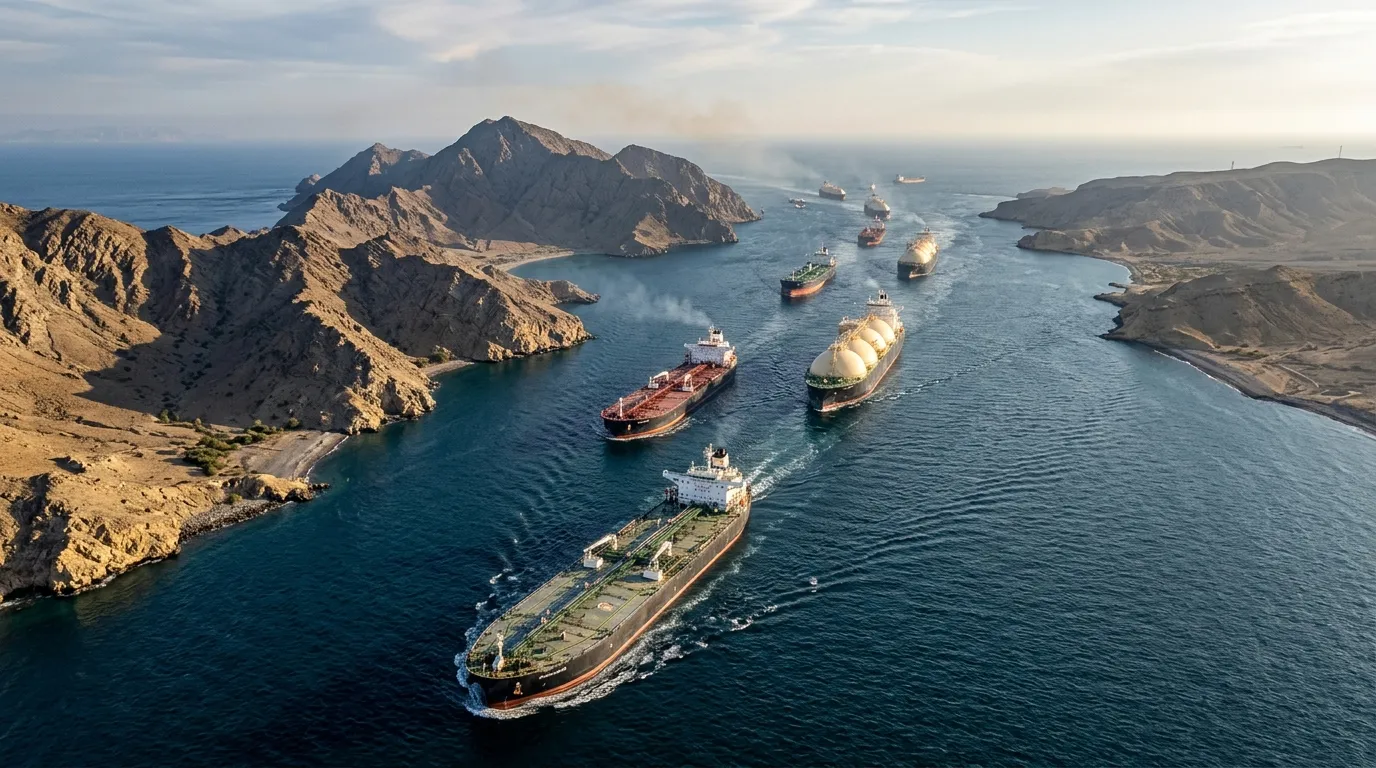
Studies issued by the International Energy Agency and specialized research centers revealed that any disruption in the Strait of Hormuz exposes more than 20% of global oil supplies and 17% of LNG exports to the risk of interruption.
These figures are the highest for any maritime chokepoint in the world, making the Strait of Hormuz the most strategically sensitive passage in terms of the economic impact of any disruption.
Some producing countries, such as Saudi Arabia and the UAE, possess alternative pipelines that bypass Hormuz, but their capacity remains far below the volume of daily exports passing through the strait.
Experts agree that the strongest shield against Hormuz risks lies in diversifying supply routes and enhancing storage capacity, but achieving this requires huge investments and years, and that the political solution remains the fastest and least costly option to ensure the security of energy supplies.
What do these terms mean?
Maritime chokepoint: A narrow waterway that ships cannot avoid, which during crises becomes a source of extreme strategic pressure on trade traffic and energy supplies.
International Energy Agency: An international organization based in Paris that includes most energy-consuming countries, tasked with monitoring markets and publishing supply and inventory data.
Alternative pipelines: Pipeline networks used to transport oil or gas overland away from risky maritime passages, serving as a partial alternative during times of tension.
Weekly Newsletter
Read between the lines before everyone else. Decode the most important economic, tech, and decision-maker movements in the region.. in 5 minutes every Saturday.