
Global Air Freight Grows 15% in 2026 as Middle East Share Declines Due to Airspace Closures
The global air freight sector reportedly grew by 15% in 2026, while the share of Middle Eastern carriers declined due to the closure of parts of regional airspace and flight rerouting, adding extra costs and transit times for air cargo carriers.
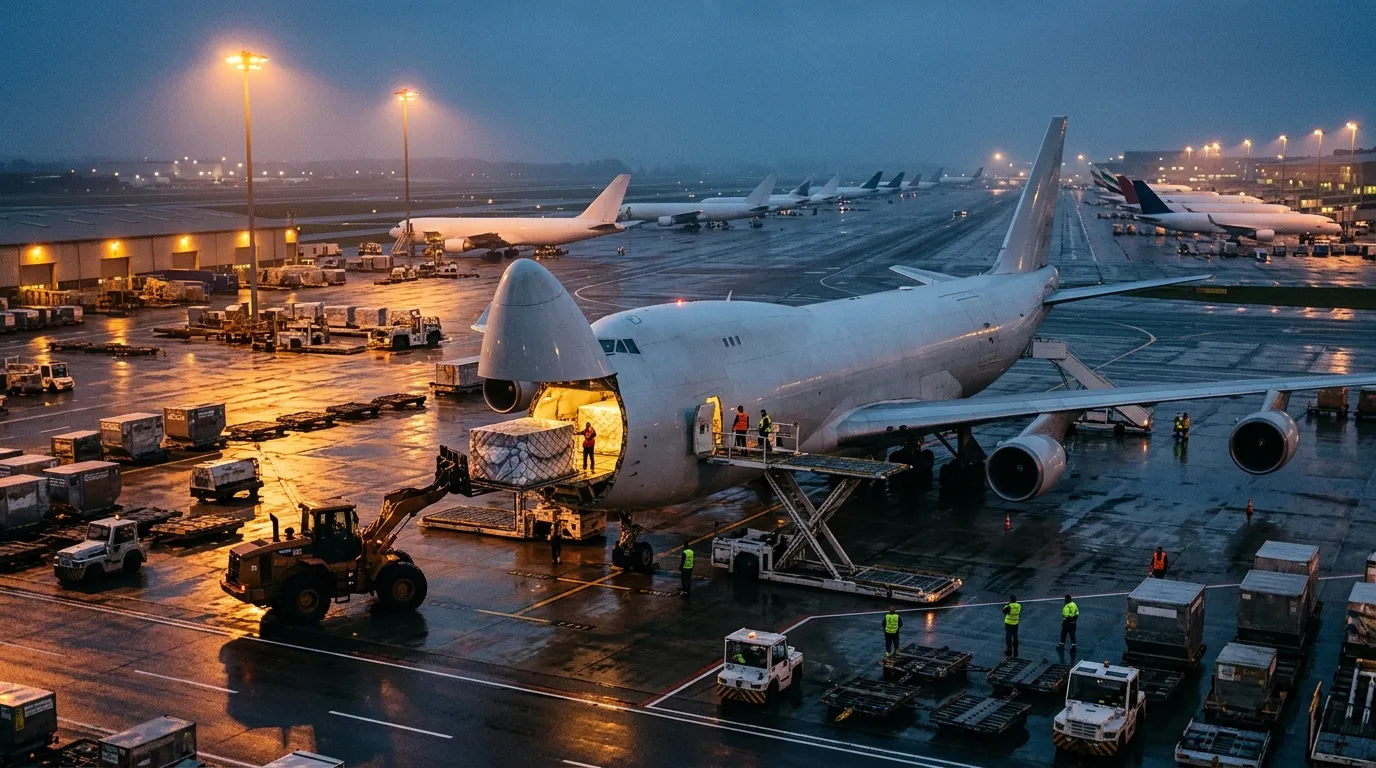
The global air freight sector reportedly grew by 15% during 2026, driven by a shift of time-sensitive shipments toward aviation as an alternative to disrupted sea routes, amidst ongoing disruptions in major maritime shipping lanes.
Despite this global growth, the share of air freight companies in the Middle East region declined due to the closure of parts of regional airspace and the rerouting of flights around tension zones, according to reports, extending flight durations and raising fuel and operational costs.
Air cargo carriers are considered a last line of defense in supply chains, particularly for high-value or short-shelf-life goods such as medical supplies, electronics, and refrigerated food; however, their high cost makes them unsuitable for low-value bulk goods.
Logistics analysts stated that the growth in air freight clearly indicates the depth of the crisis in maritime supply chains, as many companies turned to aviation to avoid maritime delays, resulting in a noticeable increase in the cost of delivering goods to destination markets.
Air freight growth is expected to decline gradually if sea shipping routes regain their stability, but any further escalation in regional tension zones will keep this sector in high demand for the foreseeable future.
Weekly Newsletter
Read between the lines before everyone else. Decode the most important economic, tech, and decision-maker movements in the region.. in 5 minutes every Saturday.