Anthropic raises $81.3 billion in history's largest initial public offering
Anthropic raised $81.3 billion in its initial public offering on November 18, 2026. The AI firm secured $107.3 billion in total capital including a concurrent private placement.
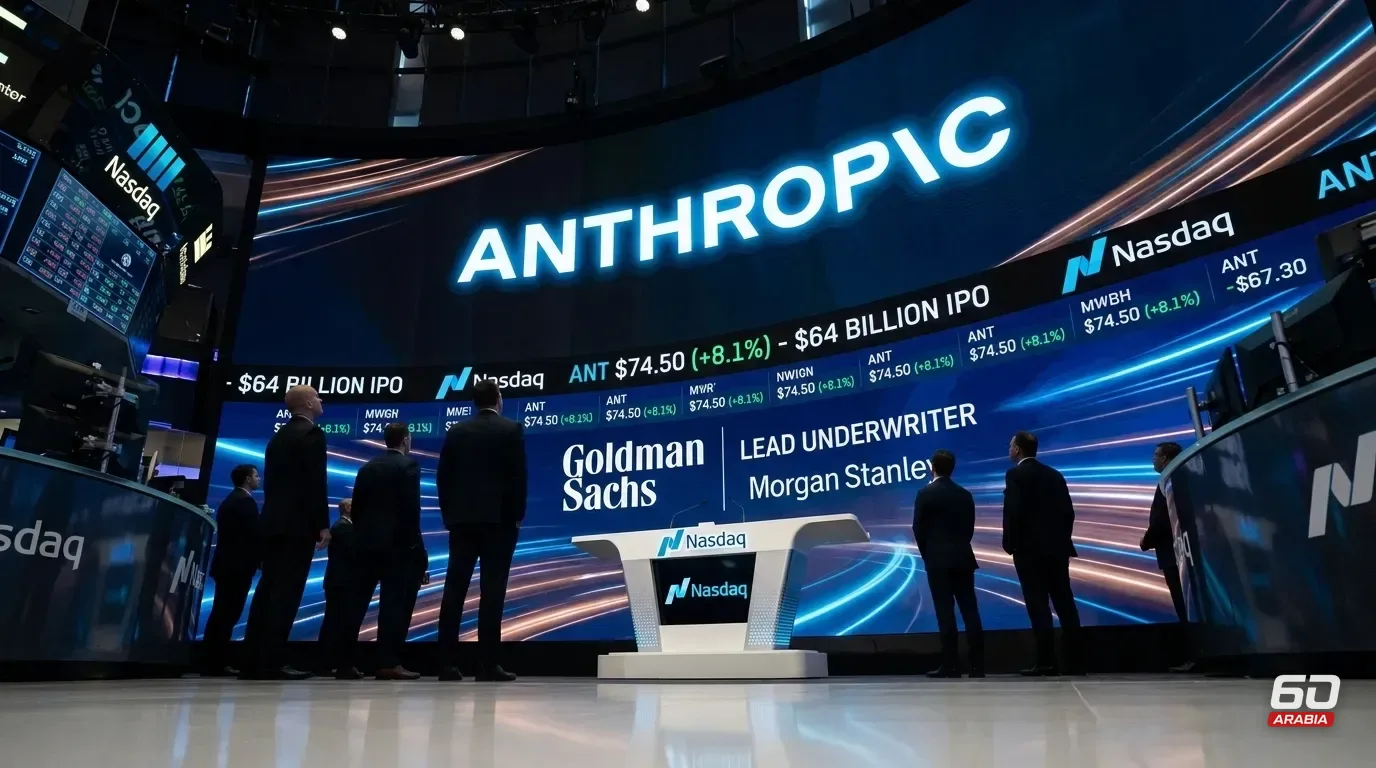
Anthropic priced its initial public offering at $83 per share on November 18, 2026, raising $81.3 billion to $81.34 billion, according to Al Jazeera. The artificial intelligence company sold 980 million shares above its initial indicated price range of $70 to $78 per share.
The transaction marks the largest initial public offering in history, Al Jazeera reported. It surpasses SpaceX's $75 billion initial offering from June 2026, which later reached $86.2 billion after an overallotment option was exercised.
Anthropic simultaneously raised an additional $26 billion through a concurrent private placement, Al Jazeera reported. Major investors participating in the private placement included Google and Nvidia, bringing the total transaction size to roughly $107.3 billion.
The initial public offering values the company behind the Claude chatbot at approximately $1.5 trillion on a fully diluted basis, according to Al Jazeera. On an undiluted basis, the valuation stands at about $1.1 trillion.
Anthropic shares began trading on the Nasdaq exchange on November 19, 2026, under the ticker ANT, Al Jazeera reported. The company's annualized revenue run rate reached $81 billion as of October 31, 2026, reflecting a $10 billion increase from September 30.
In May 2026, Anthropic had raised $65 billion from private investors at a $965 billion valuation, according to Al Jazeera. The final listing price values the company approximately 55% higher than that previous private funding round.
What do these terms mean?
Initial public offering (IPO): A process in which a private company offers its shares to the public for the first time to raise capital from investors.
Share: A unit of equity ownership in a corporation that entitles the holder to a proportion of the company's assets and profits.
Overallotment option: A provision in an underwriting agreement that allows underwriters to sell more shares than originally planned if demand is high.
Private placement: The sale of stocks or bonds directly to selected institutional investors rather than on the open market.
Fully diluted basis: A calculation method of a company's total outstanding shares that includes all potential shares from convertible securities and stock options.
Ticker symbol: A unique arrangement of letters assigned to a security for trading purposes on a financial exchange.
Weekly Newsletter
Read between the lines before everyone else. Decode the most important economic, tech, and decision-maker movements in the region.. in 5 minutes every Saturday.