
Strait of Hormuz Under Daily Scrutiny: Any Sign of Easing Could Instantly Drop Oil by $8
The Strait of Hormuz remains the central focus of daily monitoring in oil markets; any sign of a partial reopening or US-China dialogue regarding Iranian sanctions would absorb the risk premium and trigger a swift decline in crude prices.
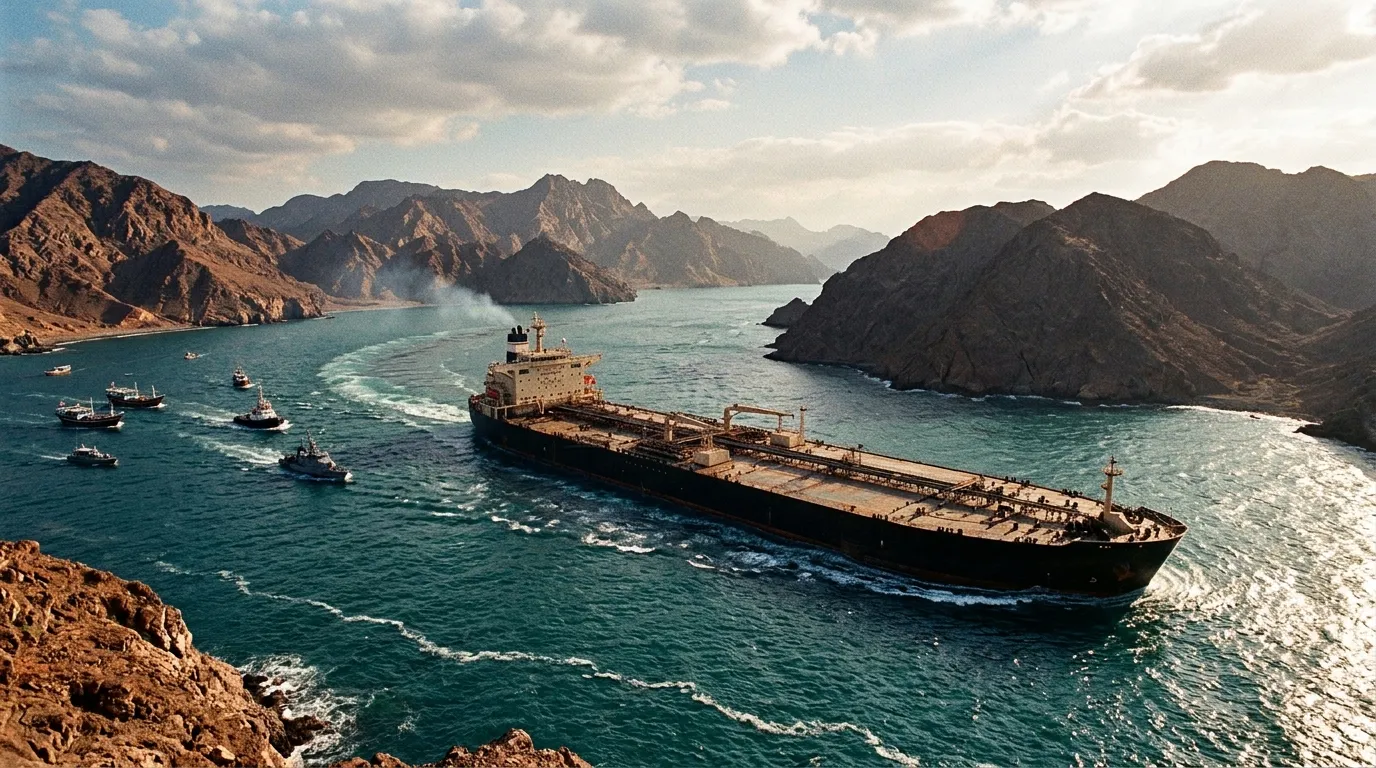
The Strait of Hormuz holds a permanent spot at the top of the indicators tracked daily by global oil traders. It is the maritime passage through which nearly 20% of global oil supplies flow, and any escalation or easing of its tensions is enough to move crude prices immediately and sharply.
Historical precedents strikingly demonstrate the strength of this impact: the partial opening of the strait on April 17 resulted in oil prices dropping between $5 and $8 per barrel in a single session, reflecting the magnitude of the "geopolitical risk premium" that buyers pay out of fear of supply disruption rather than actual supply fundamentals.
On a parallel front, market participants are closely monitoring any signs of US-China dialogue regarding Iranian sanctions. If Beijing demonstrates a willingness to coordinate with Washington or reduce its purchases of Iranian oil, this would eliminate part of the risk premium added to the price due to tensions between the two parties.
This reality reflects the core market equation at the current stage: the price of oil consists of two components, not one — production costs and actual demand on one hand, and the risk premium driven by fear of supply disruption on the other — and it is the second component that evaporates rapidly at the first sign of a breakthrough.
What do these terms mean?
Strait of Hormuz: A narrow maritime passage between Iran and Oman through which roughly one-fifth of global oil supplies pass. Even its partial closure causes immediate disruption in global energy markets.
Geopolitical Risk Premium: The difference between the actual price of oil and what it would be in the absence of political or military tensions. This premium is added when buyers fear supply disruptions.
Oil Supplies: The volume of crude produced and exported daily by nations to global markets. Any threat to these supplies drives prices up immediately, even before an actual disruption occurs.
Weekly Newsletter
Read between the lines before everyone else. Decode the most important economic, tech, and decision-maker movements in the region.. in 5 minutes every Saturday.