
UAE unveils autonomous lander for asteroid mission
The UAE has unveiled an autonomous lander developed by the Technology Innovation Institute in collaboration with the UAE Space Agency, designed to land on asteroid 269 Justitia following an eight-year journey concluding in 2036.
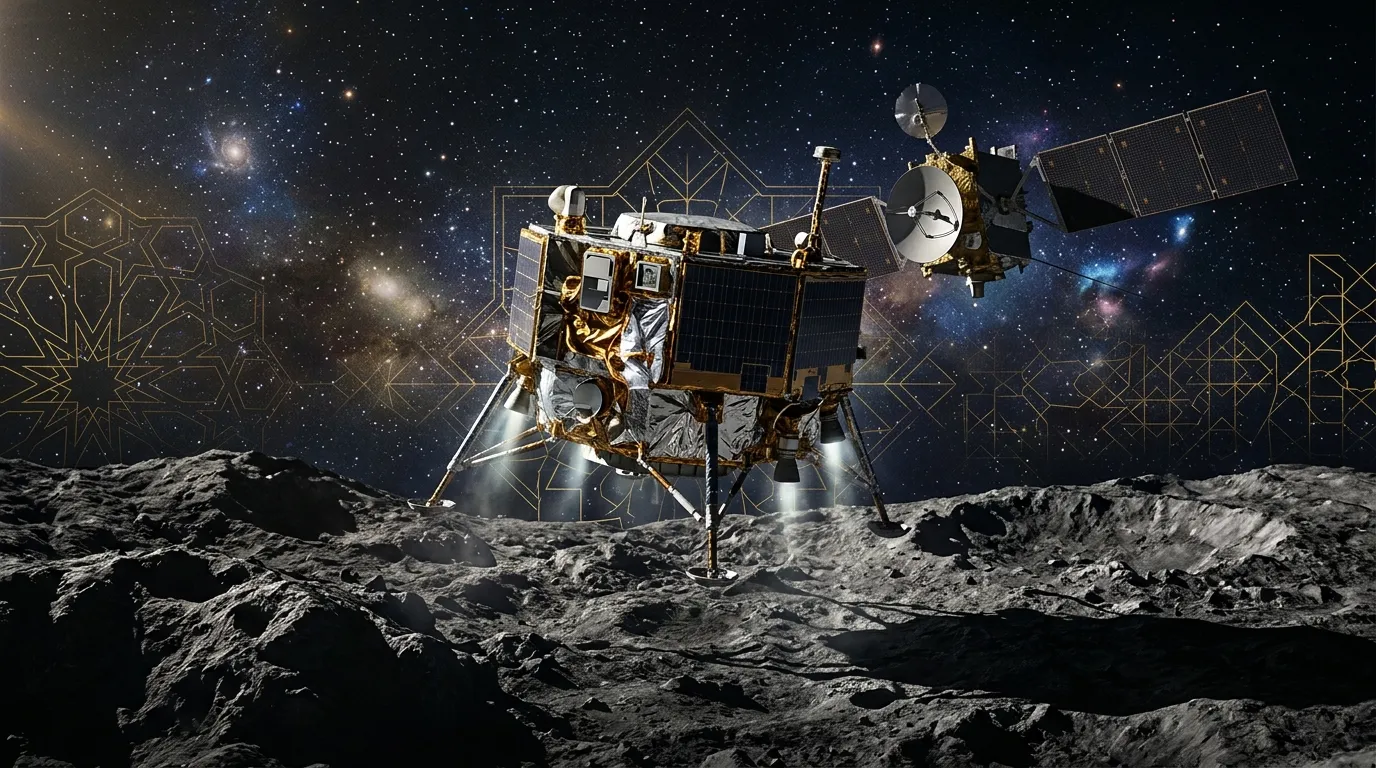
The UAE has unveiled a domestically built autonomous lander, developed by the Technology Innovation Institute in collaboration with the UAE Space Agency for the "UAE Mission to the Asteroid Belt." It serves as the mission's only detachable payload, according to Al-Ittihad newspaper.
The lander is designed to detach from the "MBR Explorer" probe and autonomously land on asteroid "269 Justitia" following an eight-year journey covering approximately 5 billion kilometers, with arrival scheduled for 2036.
The development of the lander comes as part of the UAE's efforts to enhance its deep-space technology capabilities, as the mission represents one of the region's most prominent national space programs. Landing autonomously on an asteroid presents a higher technical challenge than merely flying past it or capturing images from afar.
The mission is scheduled to launch from Japan in the first quarter of 2028, initiating an eight-year journey leading up to the landing moment. Selecting a rare type of asteroid containing minerals that potentially hold fossilized water adds to the mission's scientific value.
What do these terms mean?
Lander: A spacecraft designed to descend and settle on the surface of a celestial body, such as a planet or asteroid, and may carry measuring instruments or scientific payloads.
Asteroid Belt: A region located between the orbits of Mars and Jupiter that contains vast numbers of space rocks orbiting the Sun.
Deep Space: Space located far beyond Earth's orbit, where communication distances and time delays increase, making autonomous systems a necessity.
Autonomous Landing: The vehicle's ability to make landing decisions independently without real-time guidance from a ground team, which is essential due to vast distances and signal delays.
Weekly Newsletter
Read between the lines before everyone else. Decode the most important economic, tech, and decision-maker movements in the region.. in 5 minutes every Saturday.