
Saudi Arabia Attracts 159.1 Billion Riyals in FDI, Exceeding Target by 14%
Foreign direct investment inflows into Saudi Arabia rose 33% to 159.1 billion riyals in 2025, exceeding the National Investment Strategy target by 14%.
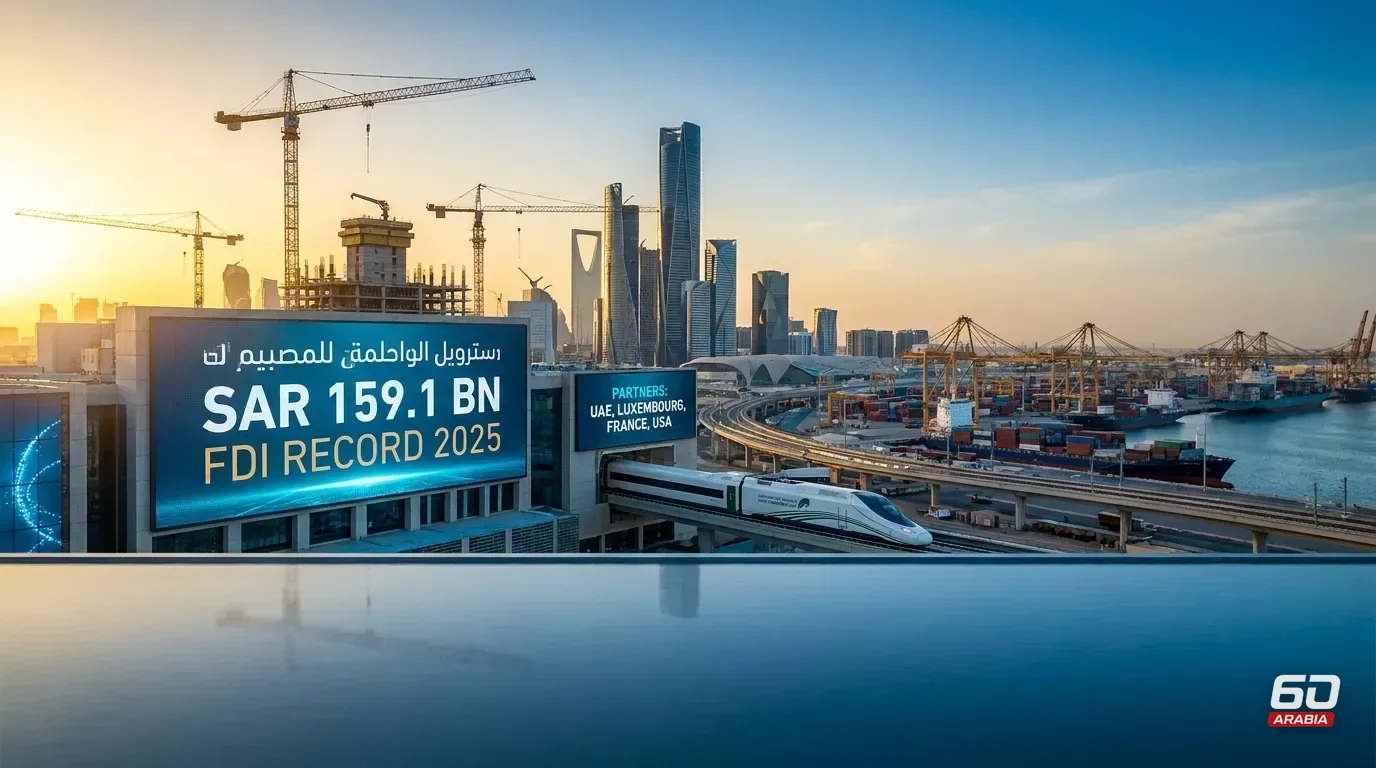
Foreign direct investment (FDI) inflows into Saudi Arabia increased by 33% to 159.1 billion riyals in 2025 from 119.2 billion riyals in 2024, according to data from the General Authority for Statistics. Inflows exceeded the National Investment Strategy target of 140 billion riyals by 14%.
Outflows jumped 98% to 77.7 billion riyals from 39.2 billion riyals, while net inflows rose 2% to 81.4 billion riyals from 80 billion riyals. The cumulative value of FDI reached 1.06 trillion riyals, an 8% increase from 977.4 billion riyals in 2024.
The manufacturing sector accounted for the largest share of the cumulative stock, valued at 285.4 billion riyals at the end of 2025. The UAE ranked first in terms of stock with 170.7 billion riyals, representing 16% of the total, followed by Luxembourg, France, and the United States.
On the basis of the published figures, the sharp 98% rise in outflows held net inflow growth to just 2%, meaning arithmetically that part of the new investments was offset by larger capital outflows.
What do these terms mean?
Foreign Direct Investment: An investment in which an investor from outside the country establishes a project or long-term stake inside the country, such as a factory or company, rather than temporarily purchasing shares.
Outflows: Funds injected by resident investors into projects outside the country, or capital withdrawn by foreign companies from their domestic investments.
Net Inflows: The difference between incoming and outgoing funds. A positive figure indicates a net inflow of foreign capital.
FDI Stock: The cumulative value of existing foreign investments in the country up to a specific date, rather than the volume of investment in a single year.
Weekly Newsletter
Read between the lines before everyone else. Decode the most important economic, tech, and decision-maker movements in the region.. in 5 minutes every Saturday.