

German Port Workers Vote on Open-Ended Strike After Rejecting Wage Offer
Around 11,000 workers at the ports of Hamburg, Bremen, and others voted on authorizing open-ended strikes after rejecting the employers' offer, provided the rejection rate exceeds 75%.
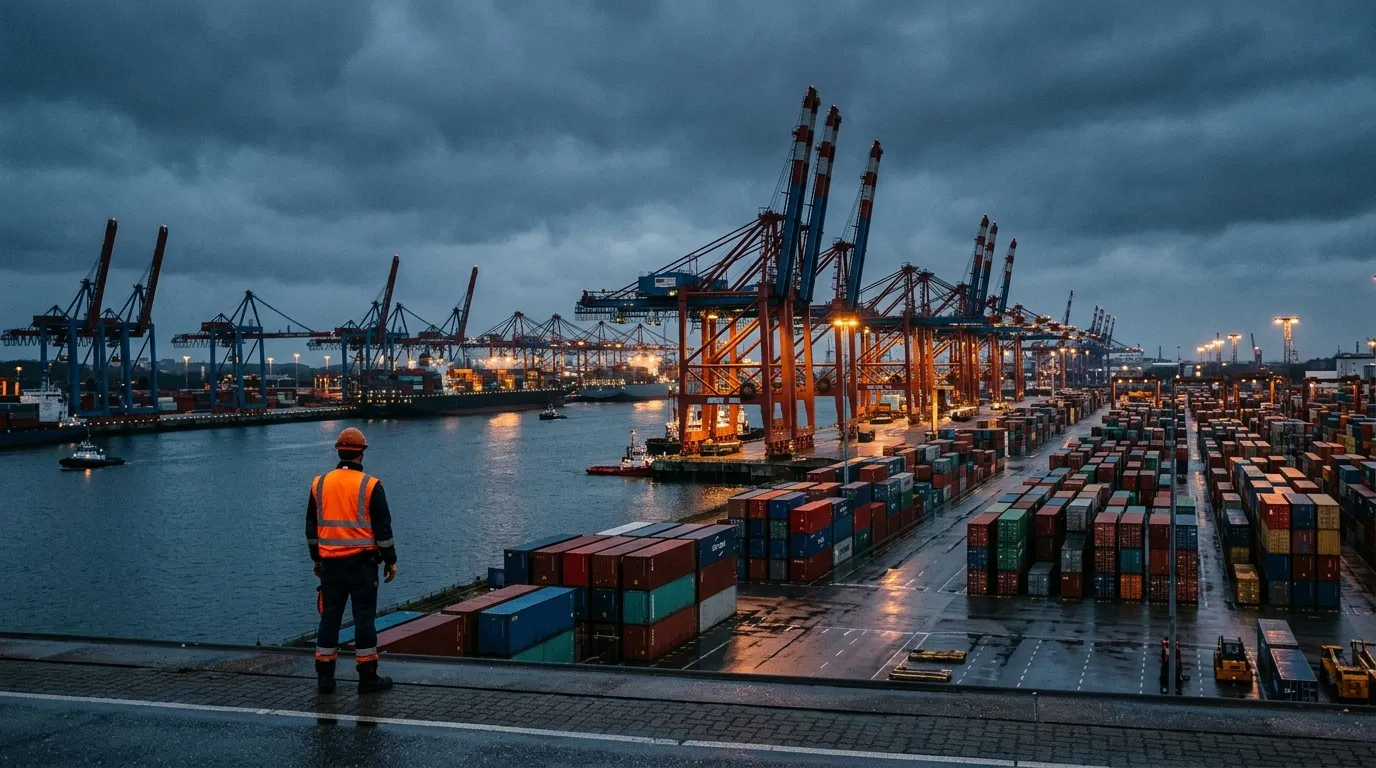
Around 11,000 workers in German ports have begun voting, which will continue until October 1st, to determine whether they will authorize open-ended strikes after rejecting the wage offer presented by employers in the latest negotiation round.
The vote includes workers at the ports of Hamburg, Bremen, Bremerhaven, Emden, Brake, and Wilhelmshaven, who are covered by collective wage agreements, according to a statement reported by the World Ports Organization.
Approving an open-ended strike requires a rejection rate exceeding 75%, while a previous survey showed that 64.7% of more than 5,500 participants rejected the employers' offer, indicating a close vote that remains undecided and requires additional support.
The vote directly impacts cargo traffic through one of Europe's most vital trade gateways, as any stoppage at these ports places pressure on global shipping schedules and supply chains bound for European markets, raising delay costs for importers. Exporters in the region are closely monitoring the voting results, as any strike could force them to divert their shipments to more expensive alternative ports.
What do these terms mean?
An open-ended strike is a strike with no set end date that continues until demands are met. Workers covered by a wage agreement are those subject to negotiated collective contracts. The rejection rate is the proportion of voters who rejected the offer, and its threshold determines whether the strike will be authorized. As for a port, it is the maritime gateway where goods are unloaded and shipped to markets.
Weekly Newsletter
Read between the lines before everyone else. Decode the most important economic, tech, and decision-maker movements in the region.. in 5 minutes every Saturday.