
L3Harris Builds Glass LISA Telescope to Detect Gravitational Waves
NASA has selected L3Harris to design and assemble an all-glass Zerodur telescope for the European LISA gravitational wave observatory, without disclosing the contract value.
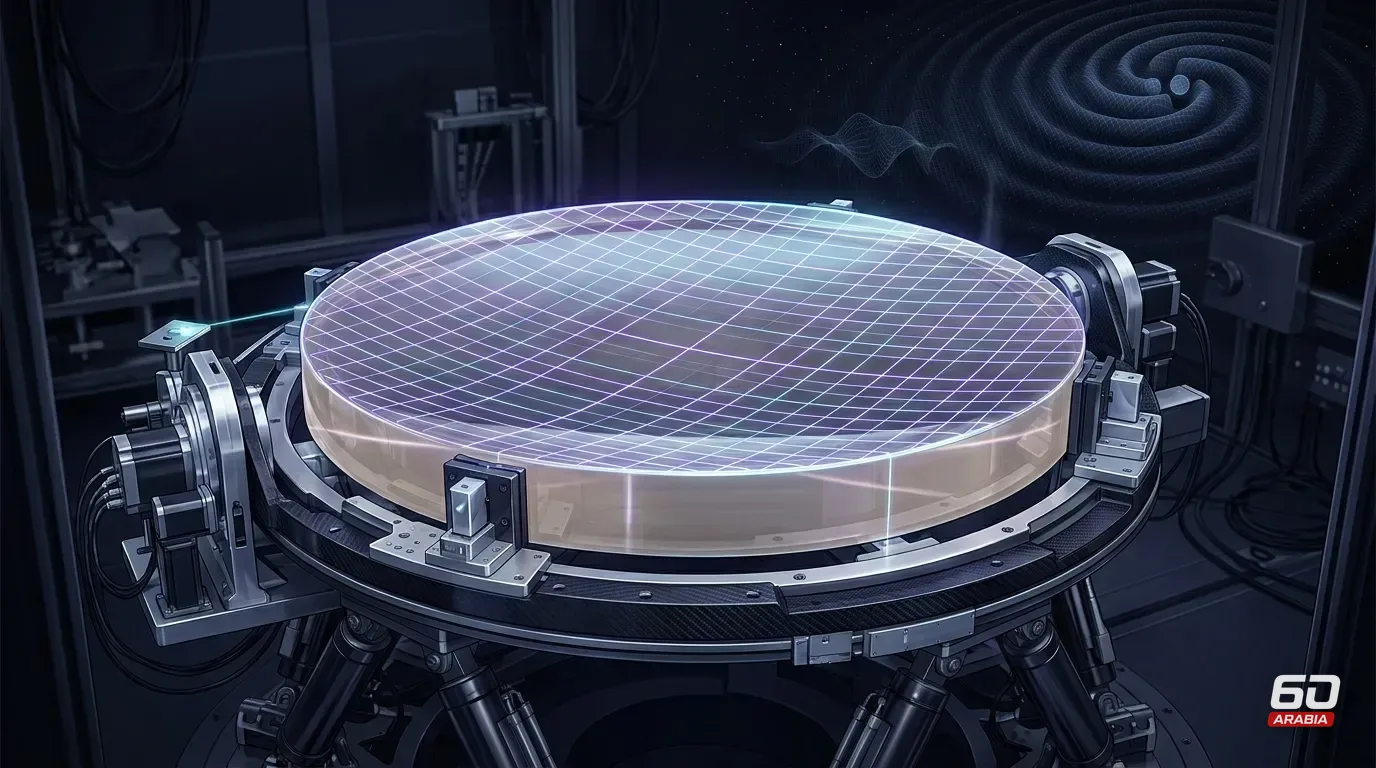
The National Aeronautics and Space Administration (NASA) has selected L3Harris Technologies to design, assemble, and integrate an all-glass telescope made of Zerodur, serving as the engineering test unit and the final step before manufacturing flight hardware.
The telescope is part of NASA's contributions to the Laser Interferometer Space Antenna (LISA) gravitational wave observatory, a project led by the European Space Agency (ESA) planned for launch in the mid-2030s.
The company had previously delivered a prototype telescope in 2024 and a structural metal mock-up in June 2026.
The value of the contract awarded to the company was not disclosed in the statement. This project is relevant to precision manufacturing and optical technology companies, as space observatories require the fabrication of mirrors and telescopes with extreme precision that tolerates no dimensional deviation.
What do these terms mean?
Gravitational waves: Ripples in the fabric of spacetime caused by violent events such as colliding black holes, inferred by measuring minuscule changes in distances.
Zerodur: A glass-ceramic material whose volume changes extremely marginally with temperature, making it ideal for high-precision mirrors and telescopes.
Engineering test unit: A prototype model built to verify performance before producing the final flight-ready component.
Space observatory: A telescope or scientific platform operating in orbit instead of on Earth to avoid atmospheric effects on measurements.
Weekly Newsletter
Read between the lines before everyone else. Decode the most important economic, tech, and decision-maker movements in the region.. in 5 minutes every Saturday.