
Shipping lines return to the Suez Canal amid Asian port congestion and relative calm in the Red Sea
MSC and CMA CGM resume test transits through the Suez Canal, as Asian port congestion drives shipping lines back to the Red Sea despite Hapag-Lloyd's hesitation.
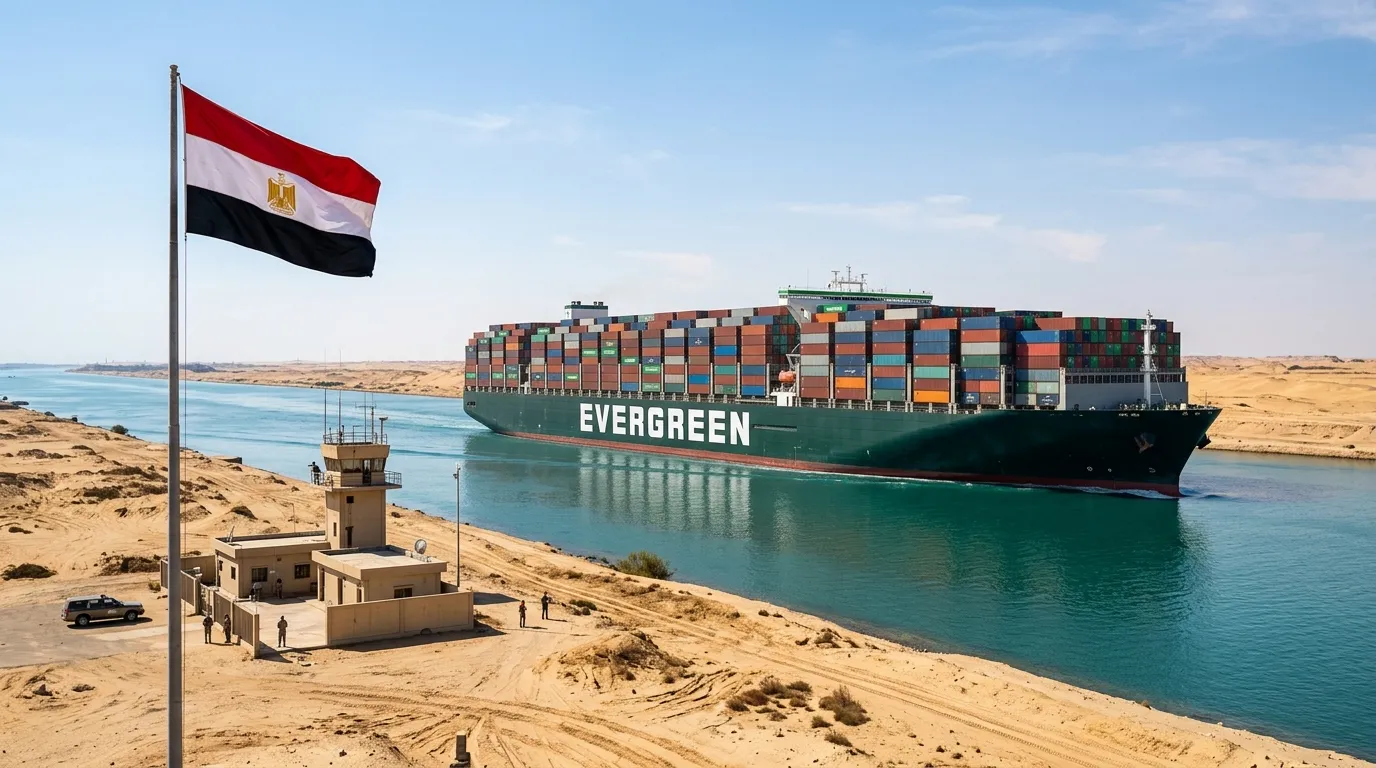
MSC, the world's largest container shipping company, has initiated trial voyages through the Suez Canal after a long pause, becoming the first major carrier to return to this route since the outbreak of the Red Sea crisis. French carrier CMA CGM announced the resumption of full-loop services via Suez, while Denmark's Maersk is testing the feasibility of returning, and another carrier confirmed its return this week.
Stances within the sector vary, as Germany's Hapag-Lloyd chose to wait and refrain from announcing an imminent return, reflecting a different assessment of security risks in the Bab al-Mandab Strait. Analysts point out that the main driver for returning is not the complete elimination of the Houthi threat, but rather Asian port congestion, which has pushed the overall cost of the longer Cape of Good Hope route to levels exceeding the Red Sea risk premium.
This shift comes amid a highly complex maritime landscape; while Hormuz transits decline due to the Iranian crisis, container carriers are heading toward reusing the shorter Suez route, which could redistribute pressure between the two routes. Leading shipping lines are taking on the risk first to gain a competitive advantage in delivery times.
The contrast among major shipping companies reveals precise calculations balancing the security risk premium in the Red Sea against the cost of congestion and the length of the alternative route. If MSC's trial voyages prove that the route is safe enough for regular commercial operation, other carriers will rush to return in a sequential wave, bringing down freight rates on Asia-Europe routes and easing inflationary pressure on imported goods.
What do these terms mean?
Full-loop service: A continuous recurring shipping route connecting multiple ports in a regular loop, ensuring fixed and repeated schedules for customers instead of irregular individual trips.
Port congestion: The accumulation of ships at a port due to low capacity or operational disruption, lengthening unloading wait times and increasing overall shipping costs.
Cape of Good Hope route: The maritime route circling South Africa used by ships as an alternative to the Suez Canal. It adds about 10-14 additional days to Asia-Europe voyages, raising shipping and fuel costs.
Weekly Newsletter
Read between the lines before everyone else. Decode the most important economic, tech, and decision-maker movements in the region.. in 5 minutes every Saturday.