
Oil Shipments Through Hormuz Rise to Highest Level as Saudi Arabia Shifts to Eastern Route
Oil shipments through the Strait of Hormuz recorded their highest level this month after Saudi Arabia diverted more of its crude to the strait, at a time when Red Sea traffic declined.
Listen to this story
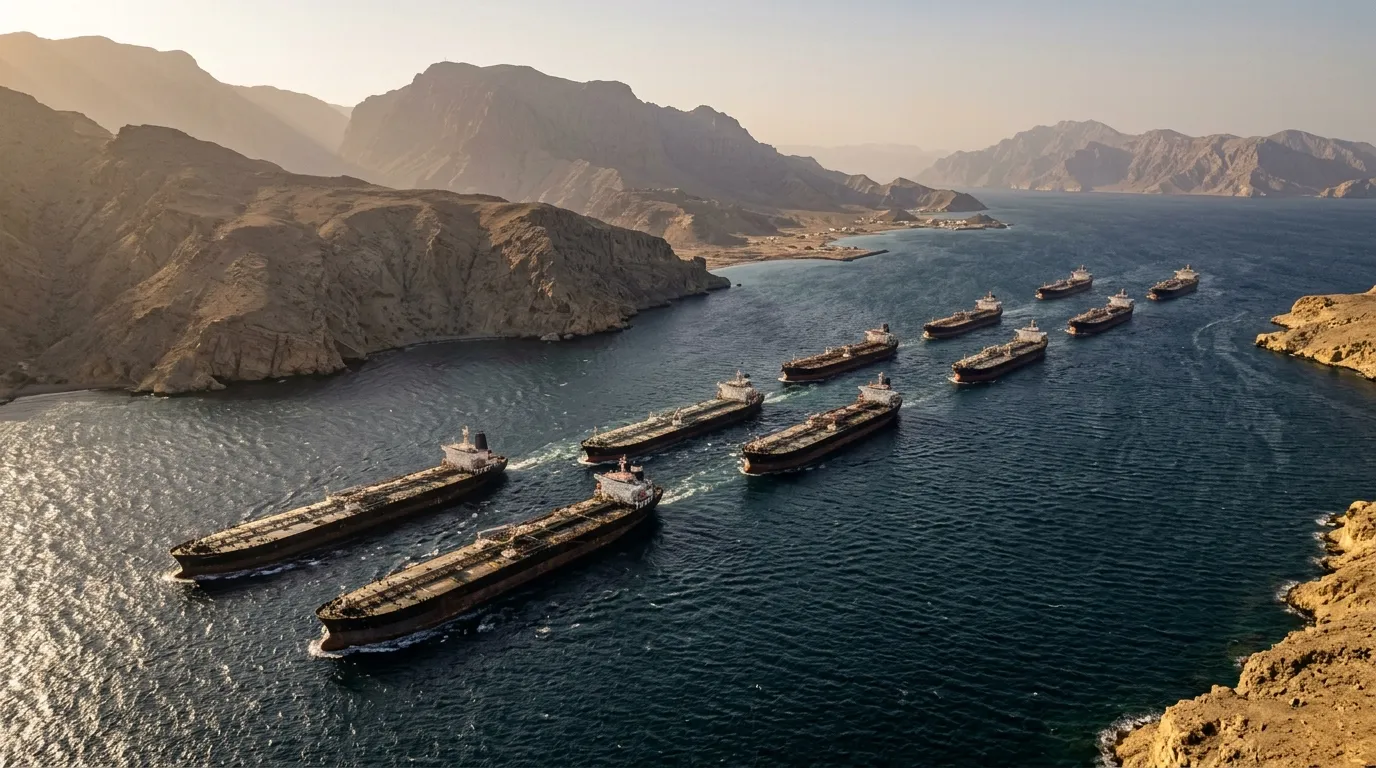
Oil shipments through the Strait of Hormuz rose to their highest level this month since the start of the war on Iran, after Saudi Arabia was forced to pass more of its crude through the contested waterway following Houthi attacks restricting its route in the Red Sea. Preliminary data from Kpler showed that Saudi shipments via Hormuz jumped to 2.58 million barrels per day in September from about one million barrels per day in August, accounting for 43 percent of oil traffic in the strait.
This increase came at a time when traffic through the Bab al-Mandab Strait fell by more than half to 2.56 million barrels per day from 5.45 million barrels per day in August. Riyadh had resorted to the East-West Pipeline, with a capacity of five million barrels per day, to transport oil across the Kingdom to the Red Sea port of Yanbu, after which tankers carry it south through Bab al-Mandab toward Asian markets; Saudi flows through this corridor reached 3.99 million barrels per day in June. Saudi Arabia resumed crude loading from Yanbu following pipeline repairs that restored part of its operational capacity.
This increase was not enough to reverse the broader decline in regional oil traffic. Combined volumes for all exporters via Hormuz, Bab al-Mandab, and the Suez Canal dropped to 9.99 million barrels per day in September from 12.17 million barrels per day in August, leaving flows 61 percent below February levels and close to the wartime low of 9.95 million barrels per day recorded in May.
Saudi Arabia accounted for about 3.7 million barrels per day of September's total. This route has come under increasing pressure from the Houthis in Yemen, who declared a naval blockade on Saudi shipments on July 20 and threatened vessels linked to Saudi Arabia, Israel, and the United States; people were also killed in August in a missile attack targeting a cargo ship. Energy traders are monitoring these figures as they reveal the actual supply available to global markets, and analysts say continued weak flows keep prices elevated even amid any relative lull in escalation.
What do these terms mean?
East-West Pipeline: A massive pipeline transporting oil from Gulf fields in the east to the Red Sea coast in the west, giving Saudi Arabia an alternative to passing through the Strait of Hormuz. Barrels per day: The unit used to measure oil production and export volume; one million barrels per day is roughly enough to cover the consumption of a medium-sized country.
Weekly Newsletter
Read between the lines before everyone else. Decode the most important economic, tech, and decision-maker movements in the region.. in 5 minutes every Saturday.