

Panama Canal Reduces Daily Transits Starting September 3 Amid Falling Water Levels
The Panama Canal reduces its transits on September 3 with additional cuts on the 15th, alongside rising transit fees and a shift in shipping toward US West Coast ports.
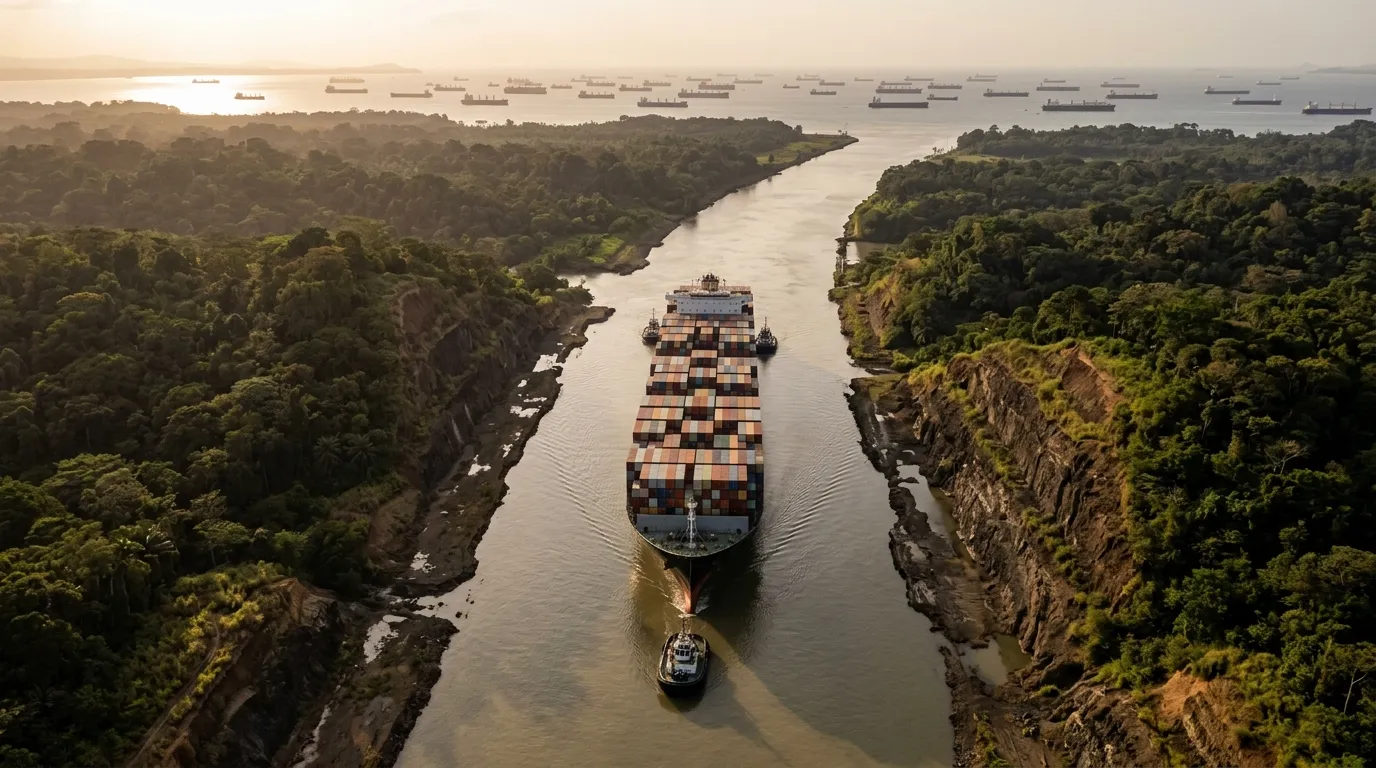
The Panama Canal Authority announced a reduction in the number of allowed daily transits starting September 3, with additional cuts scheduled for September 15, amid an ongoing decline in water levels that resulted in narrowing the allowed draft limits once again. Carriers reported that previous optimistic forecasts regarding the rainy season failed to materialize on the ground.
The Canal Authority raised transit fees once more to reflect increased demand and capacity scarcity, prompting major shipping companies to reroute part of their container traffic toward US West Coast ports. Demand has also grown for Arctic transit services and the Cape of Good Hope route as potential alternatives to the Panama Canal.
The current situation recalls the Panama Canal crisis of 2023–2024, when officials were forced to make historical transit cuts that affected global freight rates. More critically this time, the reductions coincide with the deadline for US-Canadian tariffs on September 8 and the winding-down deadline for Iranian sanctions on the same date, compounding pressure on supply chains in a short period.
The rare convergence of three simultaneous shocks in September—Panama Canal cutbacks, US-Canadian tariffs, and Iranian sanctions—exerts unprecedented pressure on international maritime trade. If the decline in water levels persists into the fourth quarter, container freight rates on trans-Pacific routes will experience a sharp surge, bringing goods inflation back to the forefront.
What do these terms mean?
Ship's Draft: The depth of the submerged part of the vessel in water. Narrowing its limits means ships must reduce their cargo before crossing the canal, increasing the cost of each voyage and reducing actual transport capacity.
Canal Congestion Surcharges: Additional fees imposed by the Panama Canal Authority when demand exceeds available capacity. These fees rise when transits become scarce, reflecting on global freight prices.
US West Coast Ports: Ports such as Los Angeles, Long Beach, and Seattle that receive shipments coming directly across the Pacific Ocean. They serve as the primary alternative to using the Panama Canal for Asian goods bound for the Americas.
Weekly Newsletter
Read between the lines before everyone else. Decode the most important economic, tech, and decision-maker movements in the region.. in 5 minutes every Saturday.