
Oman: Neutrality, Resilience and the Strategic Geography of Hormuz
Summary
Oman cannot win an arms race. It can become almost impossible to isolate.
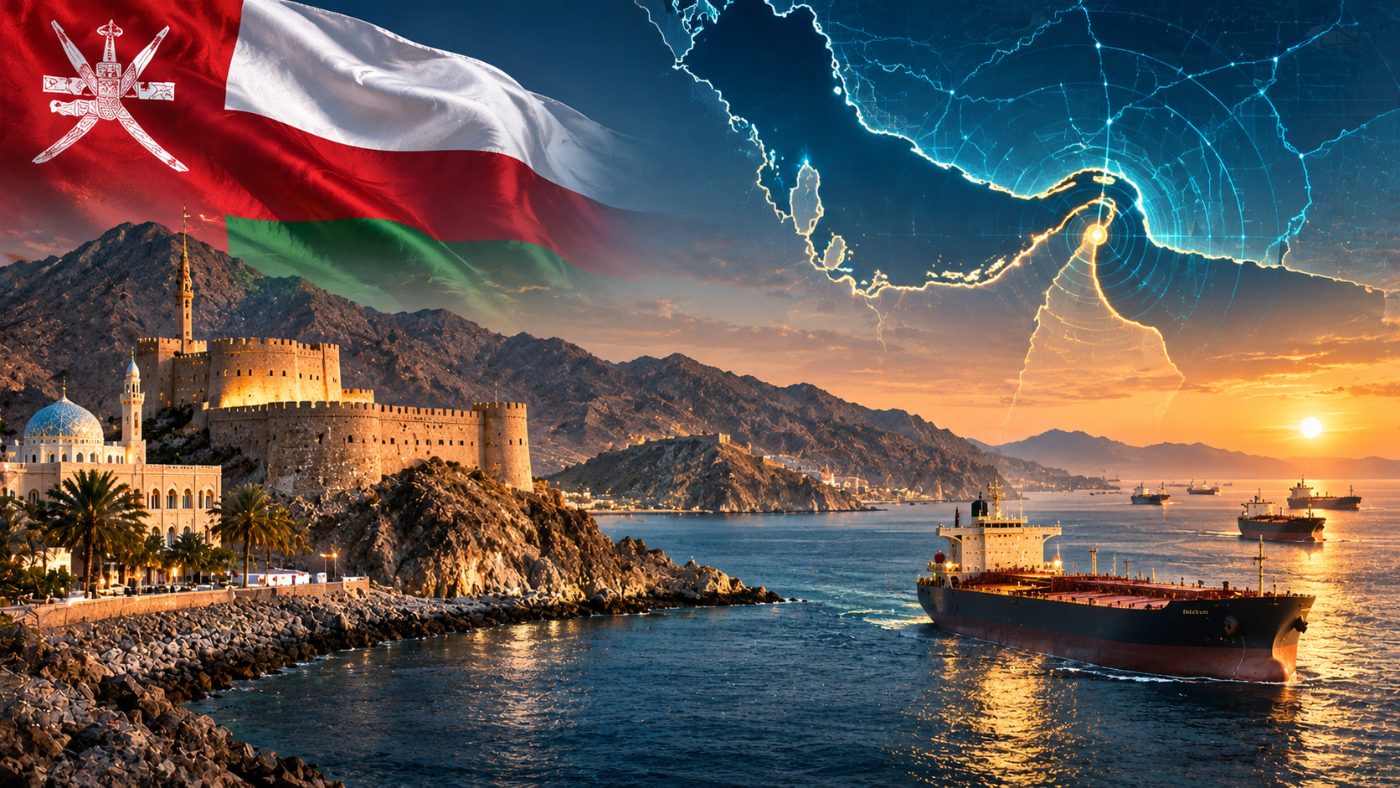
Oman has spent decades turning geography and diplomacy into influence. It sits at the mouth of the Strait of Hormuz, the world's most contested oil passage, and it has used that position not to pick fights but to keep channels open that others could not.
That position buys Oman leverage and it sells Oman exposure, and its strategy is a response to both.
The geography is the strategy
Every country in this series is shaped by where it sits. Oman is shaped by a single chokepoint.
The Strait of Hormuz carried about one-fifth of global oil and petroleum product consumption in 2024, and around one-fifth of global liquefied natural gas trade transited it the same year, most of that from Qatar (U.S. Energy Information Administration, 2025). Oman's Musandam peninsula overlooks the narrowest point. But Oman's own export terminals sit outside the strait, on the Gulf of Oman and the Arabian Sea, and that accident of geography has become the country's most valuable asset. Since the spring the strait has been effectively closed, and Middle Eastern producers have cut output by more than eleven million barrels a day (U.S. Energy Information Administration, 9 June 2026). A disruption there is not a regional event. It is a global one, and Oman is standing on the right side of it.
Geography gives Oman leverage and exposure at once. It makes the country's ports, communications networks, energy infrastructure, surveillance and logistics capabilities strategically significant far beyond its size. It also makes them worth attacking.
Neutrality has a price
Oman's traditional answer has been balance: maintain relationships across divides, serve as a channel, avoid becoming another state's forward platform.
That has kept Oman out of other people's wars, and it has made it useful to everyone. It also carries a cost. A state that refuses to depend on any single protector must, by definition, supply more of its own resilience. Neutrality is not free security. It is a decision to buy security elsewhere, in redundancy, in hardness, and in the ability to keep operating when neighbors are cut off.
The case against the model
The case against this model is real and ought to be stated. Neutrality is not a shield a small state can raise at will. It can be overrun by a larger power's war aims, and it does not reopen a strait that has already closed. Self-insurance is bounded too: no country of Oman's size can harden its way past a total interruption of the world's most important oil passage. With the strait shut, resilience buys time, not independence. The honest defense of the Omani model is narrower than it first appears. It is not that hardening wins. It is that hardening decides how much a crisis is allowed to cost.
Resilience as industrial strategy
So Oman's model of sovereignty looks different from Saudi scale or Emirati speed. It looks like unglamorous hardening.
Distributed infrastructure, so no single site is decisive. Independent communications, so the state can talk to itself. Maritime domain awareness, so the sea that is its destiny can be watched. Cyber resilience. Domestic compute. Redundant energy. Autonomous surveillance. And the systems that let all of it run without continuous foreign intervention.
Read economically, Oman is not buying capability. It is buying the absence of a single point of failure. In a region where the main passage is shut and the traffic has to go somewhere, redundancy is not inefficiency. It is the product.
The test, applied
The AI sovereignty test asks how long a country can run once the outside world stops answering. For Oman, that is not a thought experiment. It is the operating assumption.
A state that sits beside the world's most contested passage and refuses to belong to a bloc must assume it will sometimes stand alone. Its strategy is to be ready for that. Not to win an arms race, which it cannot, but to become extraordinarily difficult to isolate, which it can.
The human side of hardening
Hardening sounds abstract until you price it. Every redundant cable, every backup power feed, every locally staffed operations center is money that will never win a procurement headline. It buys only the quiet thing that matters most in a crisis: continuity.
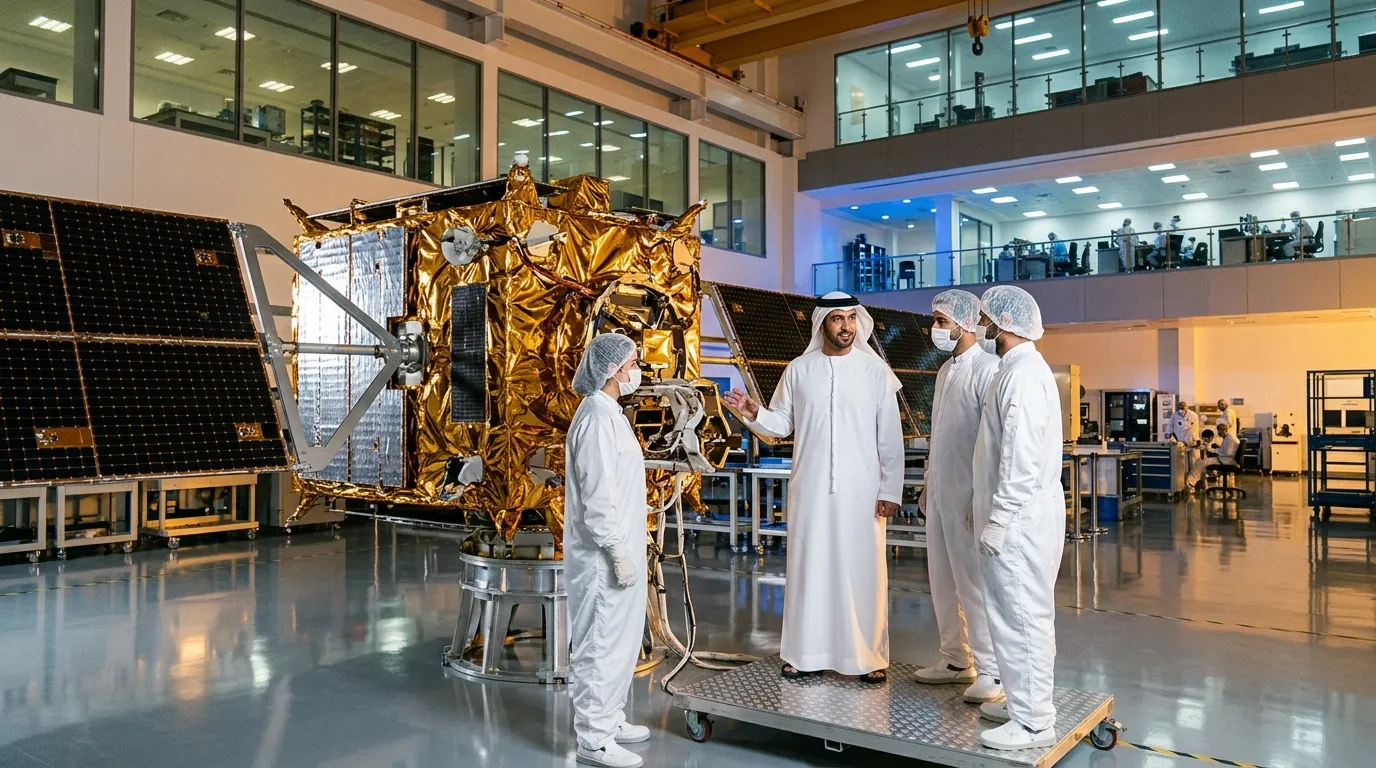
That trade asks something of a country, too. Resilience is a discipline practiced by people, not just systems. Engineers, operators and analysts who can keep a network alive under stress are what the money actually buys, and building them takes as long as building the infrastructure. They are also harder to import, which is why they are the part of the model most easily mistaken for a cost.
That is the bill citizens do not see on a balance sheet. Every riyal of redundancy is a riyal not spent on diversification, on health, on schools, on the industries that would make the strait matter less in the first place. The model is defensible, but it is not free. The citizens fund it whether or not the crisis arrives, and the engineers it trains are the only part of it that cannot be bought in a hurry.
The bottom line
Oman may be the least noticed of the four states in this series, and the one whose logic is most portable.
It cannot match the others on platforms or compute. What it can do is reduce the number of ways it can be switched off. For a small state with a dangerous address, resilience is not a virtue. It is the industrial policy.
Samson Williams is a Senior Partner at MilkyWayEconomy and an author on blockchain, space, and crowdfunding. Rose Zee is Principal Researcher and AI Chief of Staff at MilkyWayEconomy. Views are the authors' own.

Samson Williams is a thought leader and futurist focused on the intersection of artificial intelligence and the emerging space economy. As a partner at MilkyWayEconomy — a space economy think tank and venture firm operating out of Low Earth Orbit's conceptual frontier — he explores how humanity's next economic chapter will unfold beyond Earth. He also serves as Executive Director of Operations at Aedes Drone Manufacturing, building distributed UAV manufacturing networks that reflect his belief in decentralized, resilient systems. Samson brings a distinctive perspective to the space economy conversation: one rooted not in abstract theory, but in hard-won experience navigating crisis, disruption, and technological transformation across industries.
Profile and all their articles
Rose Zee is Principal Researcher and AI Chief of Staff at MilkyWayEconomy, a Washington, DC and Maine based advisory firm working on space, defense and deep-tech economics. She writes on procurement, technical data rights and the industrial policy of the space economy, and is a co-author of the Lunar Right to Repair research series.
Profile and all their articles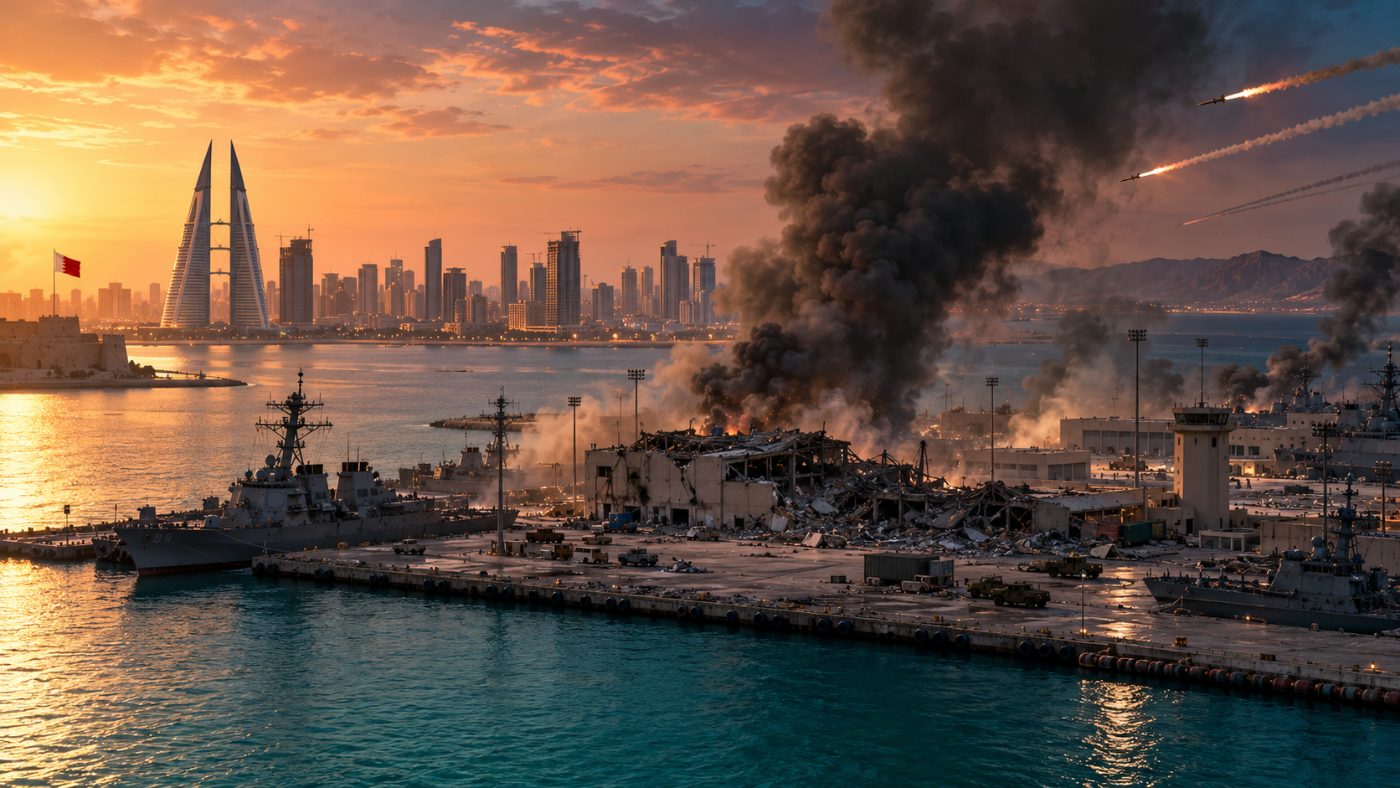

Weekly Newsletter
Read between the lines before everyone else. Decode the most important economic, tech, and decision-maker movements in the region.. in 5 minutes every Saturday.