
2027 and the Battle to Own the Tourist's Bill
Summary
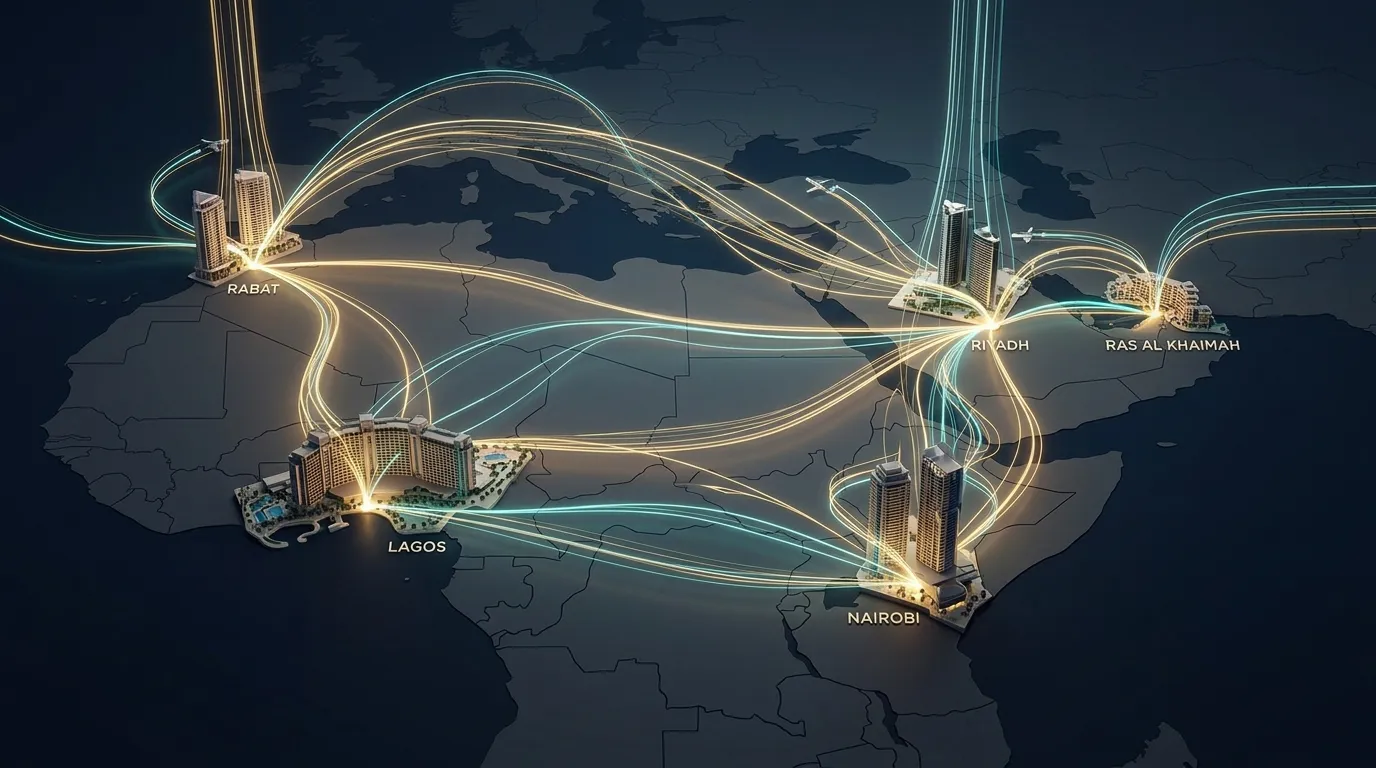
From Riyadh and Ras Al Khaimah to Rabat, Nairobi, and Lagos, tourism billions are shifting from room construction to owning bookings, payments, and mobility; that is where national returns will be decided in 2027.
A few days ago, Saudi Arabia's Public Investment Fund launched the Gulf Coast Real Estate Development Company to develop nearly 20 square kilometers in Khafji, including a 10-kilometer waterfront, while opening the project to partnerships with the private sector and local and regional investors. The timing of this move reveals what will define 2027: countries that spent years creating destinations will begin selling portions of their investment ecosystems to operators, developers, and service providers. The most crucial economic question will become: how much of the tourist's spending can the state retain after they pay for the room?
Saudi Arabia is poised to be the largest Arab laboratory for this transformation. Red Sea Destinations and Amaala opened a series of global resorts in 2026, while construction began on the 250-unit Nomad Hotel in AlUla, scheduled to open in 2027 under Marriott management. Meanwhile, the Tourism Development Fund provides funding for startups and micro-enterprises reaching up to one million riyals in some programs, while using fintech platforms to pass financing to small tourism businesses. Therefore, I expect 2027 to see smaller transactions than megaprojects, but with a greater impact on the "trip economy": companies focused on experiences, booking management, local transport, dining, and visitor data analytics. Their success will determine how much of the infrastructure billions translates into local business revenue, wages, and supply chains.
Ras Al Khaimah will provide the most vivid example. Wynn Resorts confirmed in August that the $5.1 billion Wynn Al Marjan Island resort will open in September 2027, following the project securing a $2.4 billion construction facility. In the same year, Joby Aviation, Skyports, and the Ras Al Khaimah Transport Authority plan to launch an eVTOL electric air taxi network connecting the emirate to Dubai, potentially reducing travel time from Dubai Airport to Al Marjan Island from over an hour by car to less than 15 minutes by air. Here lies the relationship that will reprice tourism investment: reducing travel time expands the hotel's addressable market. A resort that once required a long road trip can suddenly be sold to a business traveler or a weekend guest. Consequently, the value of surrounding hotels, restaurants, and real estate rises even before visitor numbers increase to the same degree.
Morocco enters 2027 with a different quantitative indicator, having welcomed nearly 20 million tourists in 2025 and generating 138 billion dirhams in travel revenues. Through the end of May 2026, arrival numbers rose by 7%, while revenues jumped 21% and overnight stays increased by 9%. Revenue growth is far outstripping cross-border arrival growth. This is the crucial metric to monitor, as the country has already begun integrating artificial intelligence into marketing and sales, expanded contracted air capacity for the summer 2026 season to 7.74 million seats, and launched 52 new international routes in the first half. As the post-2026 tourism roadmap takes shape, I expect a portion of 2027 deals to pivot toward entertainment, experiences, and digital demand management, particularly in preparation for the target of 26 million visitors by 2030. Adding a new room expands capacity once; convincing a tourist to stay an extra night reactivates the restaurant, retail shop, transport, and guide on the same trip.
This logic is also beginning to emerge in African hospitality investment. Marriott plans to add more than 50 properties and 9,000 rooms across the continent through the end of 2027, with over 30% of these additions coming through adaptive reuse of existing buildings and hotels. The deal economics here shift fundamentally: an investor can integrate an existing asset into a global reservation network much faster than building a new hotel, reducing the capital tie-up period before revenue begins. Interest rates and construction costs will push this model forward in 2027, particularly in Morocco, Kenya, Tanzania, and Nigeria. Therefore, I expect more acquisitions, management deals, and brand conversions than the photos of new towers might suggest.
Kenya, meanwhile, may produce Africa's most scalable tourism innovation. In April 2026, the Kenyan Ministry of Tourism launched the Tourist Tap app, developed by Craft Silicon in partnership with KCB and Visa. It allows tourists to pay local vendors using their card via a phone number or payment account, without a traditional POS device. The technology may seem small compared to a new hotel, but it addresses a point where immense value leaks: a tourist who can seamlessly pay a driver, guide, or local activity provider expands the circle of beneficiaries for every tourism dollar. With a target of five million visitors and Marriott's plans to open five hotels—including two Courtyard properties in Nairobi during 2027—integrating micropayments with bookings and experiences will become a prime market for new funding rounds. The presence of Purple Elephant Ventures, which raised $5 million to build tourism tech companies, gives this scenario a tangible, rather than theoretical, foundation.
Nigeria will test a new model in 2027 involving the aggregation of hotels into a national platform rather than developing single assets. In 2026, Accor and Shoreline Group signed a letter of intent to create a network of ten hotels across eight cities with over 1,200 rooms through 2030, backed by an announced $300 million investment and a hospitality academy targeting roughly 1,000 direct jobs. The government has also initiated PPP discussions covering an ultra-luxury hotel, an entertainment arena, and museum developments. Not all these projects have reached financial close, making 2027 a crucial year: if MOUs translate into financing, contracts, and concrete sites, the country can connect its global strength in music, cinema, and fashion to a monetizable lodging, transport, and events economy. If they remain at the announcement stage, culture will continue to generate demand while other sectors capture the lion's share of its value.
South Africa is seeking to explore the governmental dimension of turning opportunities into bankable projects. Tourism directly contributed roughly 4.9% of GDP in 2024 and supported over 954,000 direct jobs, while V&A Waterfront announced a 24 billion rand expansion, and 10 billion rand is being invested in Cape Winelands Airport. In August 2026, the Ministries of Tourism and Public Works signed a three-year agreement for Infrastructure South Africa to assist in project preparation and deal advisory. Therefore, I expect 2027 to see the financial close of a larger number of concessions for parks, amenities, and regional projects in partnership with private capital. The crucial bottleneck here will not be a lack of tourism sites, but the speed of moving a project from a government dossier into cash flows that a bank can finance.
Undoubtedly, the 2027 landscape will be filled with hotel openings, new aircraft, and resorts, but the most important indicator lies outside that map: how much does a tourist spend per day? How many nights do they stay? And what percentage reaches a local business before capital leaks out via foreign brands, booking platforms, or operational imports?
If governments and investors begin measuring this "Local Value Capture," the very nature of deals will change. A payments company, an experience platform, or a transport network may sometimes prove more vital to the national economy than hundreds of new hotel rooms. In 2027, the impact will first become visible in destinations that succeed in getting tourists to spend once again after closing their hotel room door.
Before it happens
من لا يقيس الكربون سيدفع ثمنه في ٢٠٢٧

$500 Million Seeking a Buyer! Nigeria Achieves a Quantum Leap in the Knowledge Economy

September Between Hormuz and the Fed: How Does the War Reach the Gulf Investor's Pocket?

Winter 2027 Could Raise Tea Prices Across the Arab World… So Who Will Pay More?
Weekly Newsletter
Read between the lines before everyone else. Decode the most important economic, tech, and decision-maker movements in the region.. in 5 minutes every Saturday.