
Tax Sukuk… A Brilliant Idea, But Let's Hope We Aren't Spending Tomorrow's Taxes Today
Summary
Egypt is studying a new financing instrument called Tax Sukuk: taxpayers pay tomorrow's taxes today in exchange for a yield. The article explains why the idea is genuinely clever, and why its very cleverness is the source of concern: because we are not creating new revenue, we are pulling future money to spend today. If the proceeds go toward productive projects that expand the tax base, this is r
Tax Sukuk in Egypt… Smart Financing or a Financial Time Machine?
Honestly, the idea of tax sukuk is worth pausing to consider. Not because it is bad. On the contrary… because it is very clever. And the cleverest ideas are precisely the ones where we need to look under the hood before we get into the car and hit the ring road.
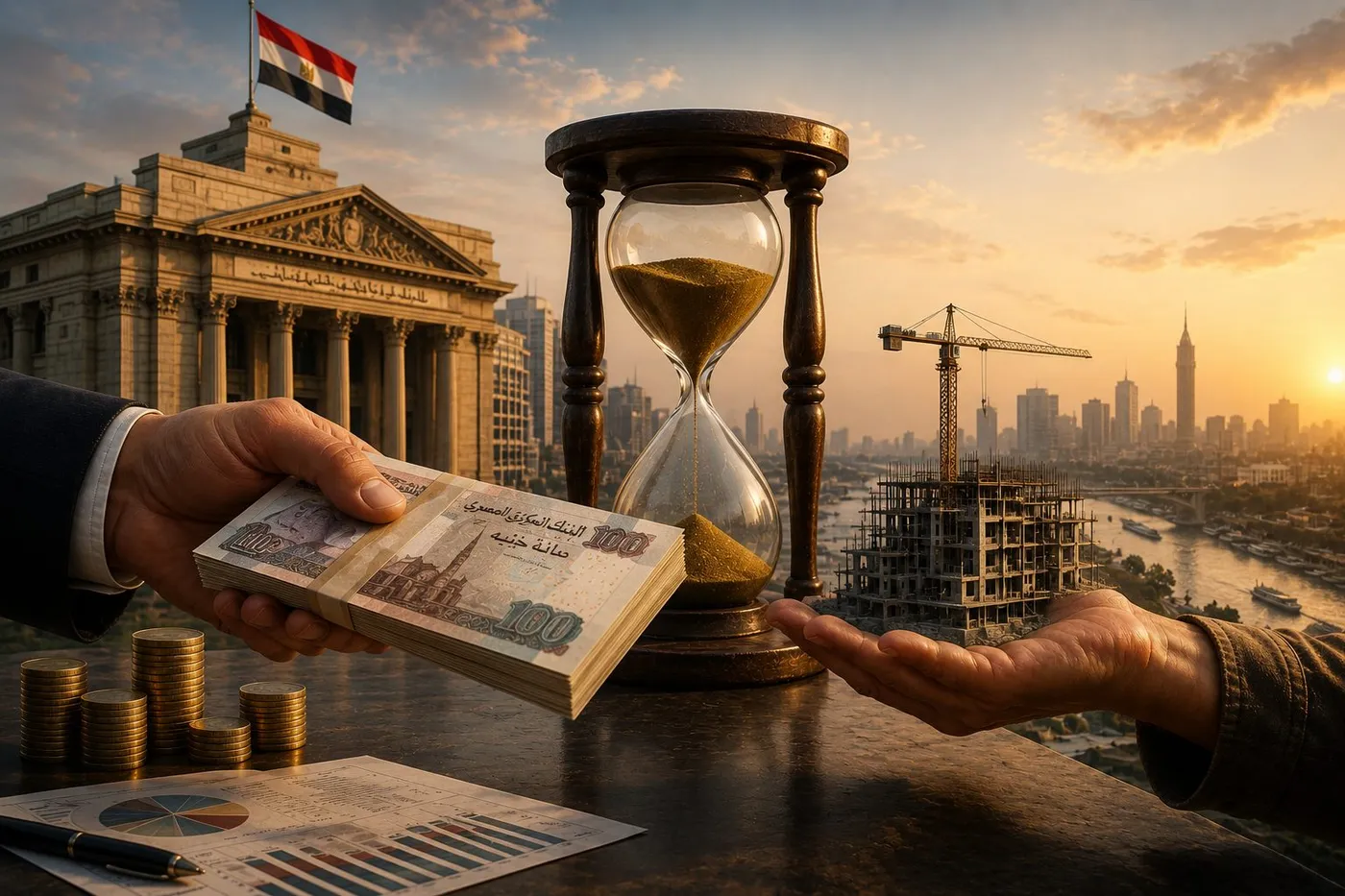
The idea is simple: instead of waiting until taxes are due next year or the year after, the taxpayer pays part of them to the state today in the form of a tax sukuk, receives a yield in return, and the value of the sukuk is later deducted from their future tax liabilities. In plain terms, the state is telling you: "You owe me 100 million EGP in a few years? Hand it over today, and I'll give you a yield in exchange for paying early.".
From a cash flow perspective, this sounds great. The state needs financing, and instead of borrowing the entire amount from the debt market at high interest rates, it opens a new source of funding from taxpayers themselves. This idea isn't from outer space: in the US, they have long used Tax Anticipation Notes, where local governments borrow against expected future tax revenues, and other countries like Uruguay and Argentina have used various forms of tax credit certificates.
But here, we must underline the phrase "various forms." Because the proposed Egyptian model, according to information made public so far, combines several concepts together: future tax, financing, and investment yield, all in a single product. That is what makes it innovative. And that is also what makes me worried.
Let's put down some numbers so this doesn't sound like a debate between TV experts. Suppose a company is expected to pay the state 100 million EGP in taxes over the coming years, and the state needs the money today. So it tells the company: pay the 100 million now in a tax sukuk and get a suitable yield, and when your taxes are due later, we will deduct the value of the sukuk. The state gets 100 million in cash today. But keep in mind: when the year comes in which the state was supposed to collect that 100 million as tax, the money won't come in again… because it already came in before.
This means we didn't create new money. We pulled tomorrow's revenue and spent it today.
And in business, that is perfectly normal. But in business, a question immediately follows: what did you do with the money? For me, that is the single most important point in this entire matter.
To grasp the scale of this question, let's scale up this calculation from a single company to the level of the entire country. If the government issues 100 billion EGP in tax sukuk, and instead of borrowing them from the market at a 25% cost, it secures them via sukuk at a 15% cost, there is a 10% cost difference. That's a theoretical saving that could reach 10 billion EGP a year before factoring in remaining details and costs. Here, I would say: Bravo. That is respectable financial engineering.
But if the state takes that 100 billion and spends it on current expenditures, and two years later reaches the year when those taxes were supposed to be collected, only to discover that a portion of its revenue was already collected… what will it do? Issue new sukuk against 2030 taxes? And when we reach 2030, bring in 2032 taxes?
Here, the car we were looking under the hood of starts speeding away with us.
This is simply called a Fiscal Time Machine: every now and then we travel into the future and bring back some money to solve present problems, until the future itself arrives… only to discover we left it without an allowance. That is my first and biggest concern.
The second concern is the yield rate. If the state borrows from the market at a certain cost, and the tax sukuk gives the taxpayer a yield very close to it, what exactly did we save? Did we just change the name on the paper? Financial innovation is not about product names. Real innovation lies in the cost of financing itself. If the sukuk is clearly cheaper than conventional borrowing, excellent. If the difference is marginal, then we must ask: is surrendering future tax revenue worth it in the first place?
The third concern is somewhat more dangerous. Who holds the largest and most guaranteed future tax liabilities? Large corporations. This means that if the design isn't crafted carefully, we might find that we created an excellent financial product for major taxpayers, while small and medium enterprises are left watching from the window.
And there is a fourth important question. What if a company buys 500 million EGP in sukuk based on its tax projections for five years, and after two years a recession hits or the company suffers losses, making its actual tax liability only 150 million… what do we do with the remaining 350 million? Are they refunded? Sold? Transferred to another company? Extended in maturity? These are not minor details. They are the product itself.
Despite all this, I believe the idea could be extremely powerful if executed a bit differently. Instead of saying, "Give me tomorrow's taxes to spend today," we say, "Give me part of tomorrow's taxes today, and I will use it to grow tomorrow's economy." That is, we issue the 100 billion in tax sukuk, but tied to specific productive projects: industrial infrastructure, energy, ports, logistics, manufacturing for export. Projects where we can measure how much we put in and how much came out, how many jobs were created, how much exports increased, and how large a new tax base was created for the state.
Then the equation changes completely. Because you are no longer borrowing from tomorrow. You are investing tomorrow's taxes to create tomorrow's taxpayers. For me, that is the difference between financial engineering… and tampering with the clock.
Tax sukuk could be one of the smartest financing tools ever introduced in Egypt. But it could also turn into a very chic way to spend future revenue before the future even arrives. The difference between the two is not the name of the sukuk, nor its announcement, nor even the yield. The whole difference lies in one very simple question:
The money we borrowed from tomorrow… what will we do with it today?
Because tomorrow, unfortunately, has a very annoying habit…
It eventually arrives.


Weekly Newsletter
Read between the lines before everyone else. Decode the most important economic, tech, and decision-maker movements in the region.. in 5 minutes every Saturday.