Emirates profit falls 66% despite fuel-hedging gains
Emirates' first-half net profit fell 66% to AED 3.3 billion, revenue dropped 13% and passengers 22%, while fuel-hedging gains offset part of the decline.
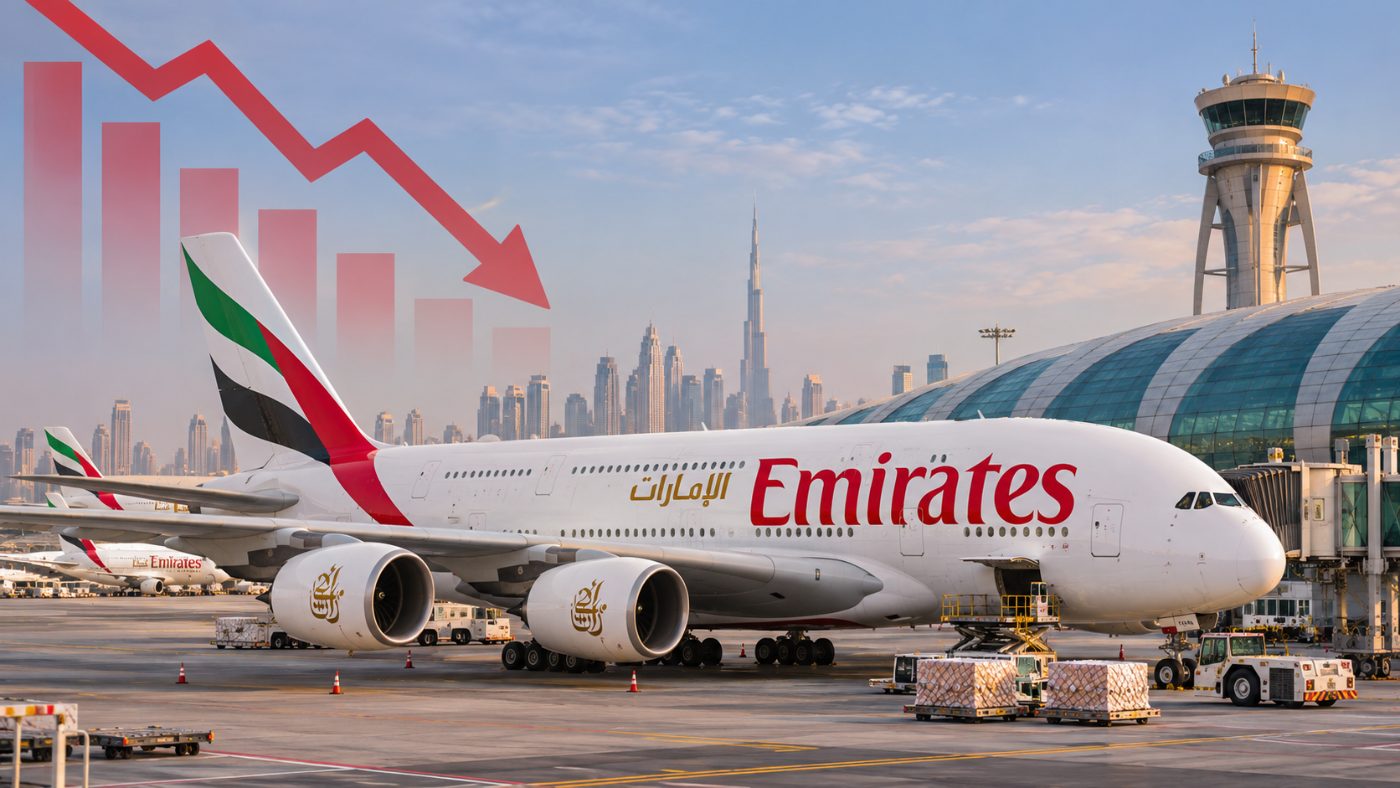
Emirates' net profit fell 66% to AED 3.3 billion, equivalent to $899 million, in the first half of the year, according to Skift.
The airline's revenue fell 13% to AED 56.9 billion, while fuel-hedging gains reached AED 7.1 billion, or $1.93 billion, which kept the company profitable.
Data showed passenger numbers fell 22% to 21.8 million, while the seat factor dropped to 72%.
According to the source, fuel-hedging gains softened the impact of higher operating costs and fewer passengers on the first-half results.
What do these terms mean?
Fuel hedging: An agreement made in advance to fix the price of fuel purchases for a future period, protecting the company from market price swings.
Net profit: What remains of revenue after deducting all costs, expenses and taxes.
Seat factor: The ratio of seats sold to total seats available on flights, measuring how full aircraft are.
Revenue: The total amount a company receives from selling its tickets and services before deducting costs.
Weekly Newsletter
Read between the lines before everyone else. Decode the most important economic, tech, and decision-maker movements in the region.. in 5 minutes every Saturday.