

India slashes visa categories to 9 and cuts form fields by 70%
Reduces main visa categories from 13 to 9 to simplify travel. Cuts application form fields by up to 70% across 23 sub-categories.
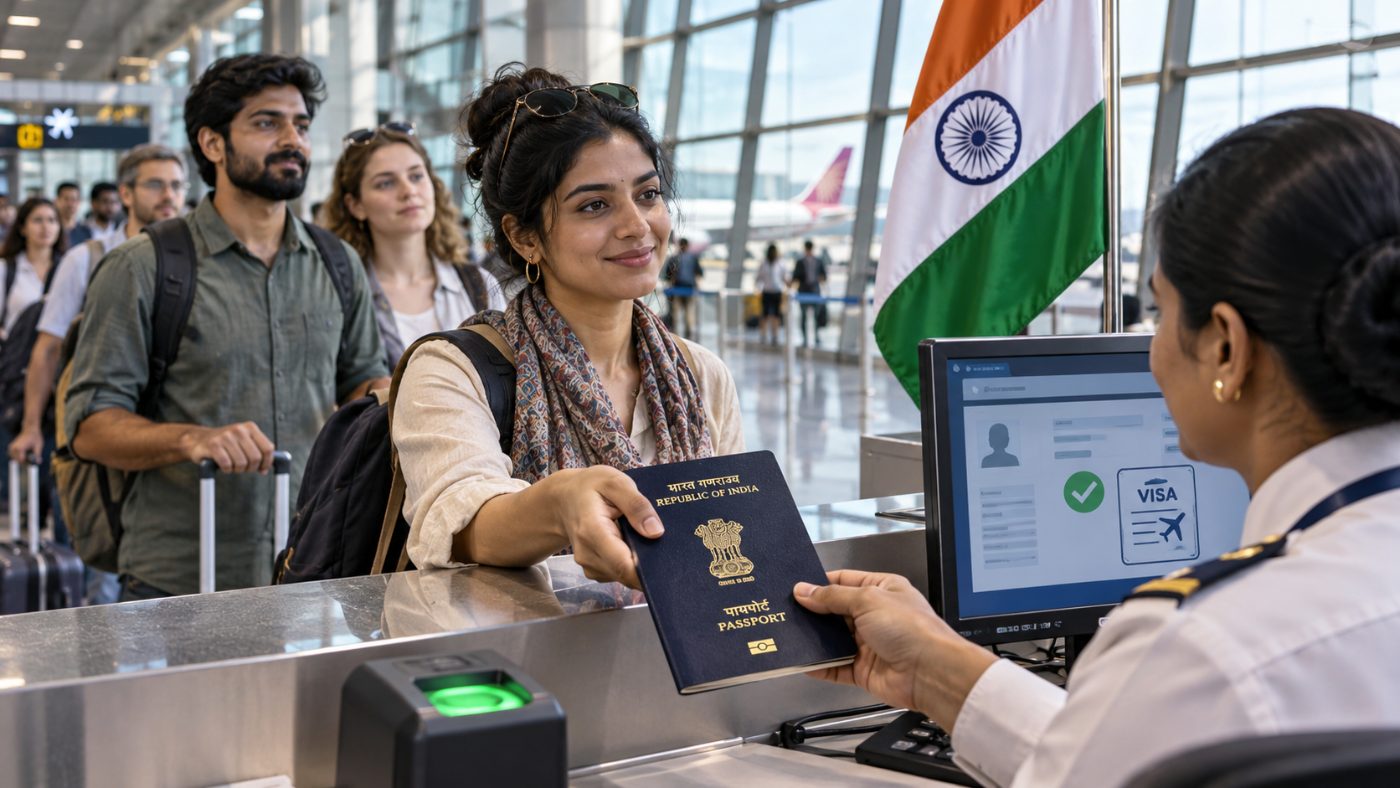
The Indian government announced on Wednesday a major overhaul of its visa regime. The Ministry of Home Affairs reduced the main visa categories from 13 to 9 and consolidated sub-categories from 49 to 23.
The Home Ministry also simplified visa application forms, cutting the number of required fields by 65 to 70 per cent across all 23 sub-categories. The changes aim to facilitate entry for foreign nationals traveling for tourism, medical treatment, education, research, and business.
Under the new structure, the government renamed the Tourist Visa as the Visitor Visa and split it into two sub-categories. The V-1 visa offers a 30-day multiple-entry stay for tourism, short business meetings, wellness retreats, and short courses, while the V-2 visa covers longer visits of one, five, or 10 years.
The government restructured the Medical Visa framework into M-1 for conventional treatment and M-3 for AYUSH system treatments, both issued for a default period of one year with multiple entries. Attendants receive separate M-2 or M-4 visas corresponding to the patient's visa type.
The overhaul consolidated Student Visas into S-1 for school and degree programs and S-2 for research scholars and faculty. It also restructured Business Visas into long-term B-1 visas and short-term B-2 visas, which include a specialized Production Investment Business Visa for technical personnel.
India currently offers e-visas to nationals of 172 countries. The government stated that it is updating its information technology systems to implement the new framework across all electronic and standard platforms.
What do these terms mean?
Visa category: A classification established by immigration authorities to specify the permitted purpose and duration of stay for foreign visitors.
AYUSH systems: Traditional and alternative healthcare systems recognized in India, including Ayurveda, Yoga, Unani, Siddha, and Homeopathy.
E-visa: An electronic travel authorization issued online that allows foreign travelers to enter a country without visiting an embassy.
Weekly Newsletter
Read between the lines before everyone else. Decode the most important economic, tech, and decision-maker movements in the region.. in 5 minutes every Saturday.