
A Jump of Seconds and the World Believed It: Musk's Car Between Reality and Science Fiction
Summary
After nine years of delays, the Roadster jumped over a row of cars using ten compressed air thrusters. Musk calls it flying, while the aviation museum curator calls it hopping. So who is right?
On a stage near Waco, Texas, two cars stood side by side on the evening of October 15th.
The first was a white Lotus Esprit from the James Bond movie "The Spy Who Loved Me," the one that transforms into a submarine in the famous scene. It is part of Elon Musk's personal collection, and he brought it to the event himself.
The second was the new Tesla Roadster, also white, with an angular design inspired by the SR-71 and F-35 aircraft.
One was science fiction from 1977, and the other claims to have brought it to reality.
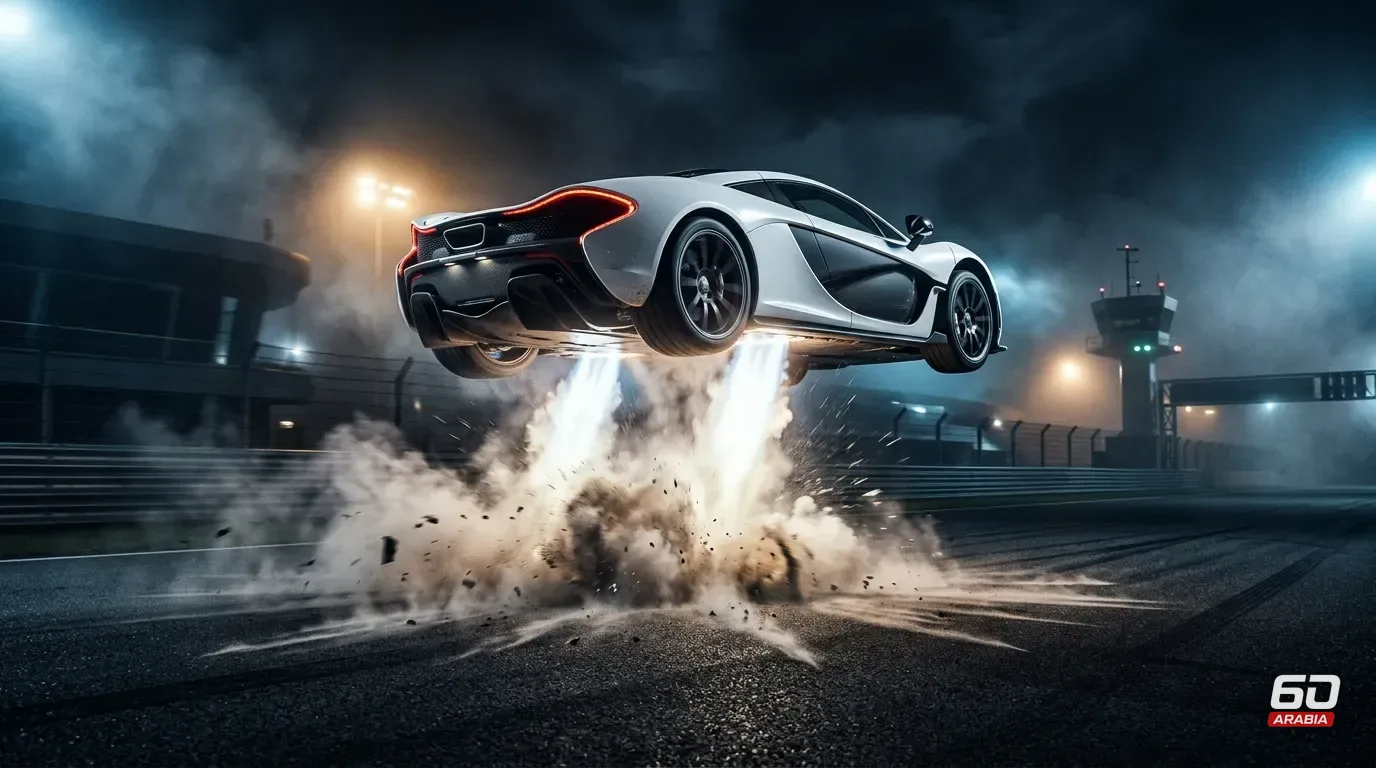
Then the second one sped up a steep ramp, flipped upside down, leaped off the edge, did a somersault in the air, and landed safely on the asphalt. In a second demonstration, it jumped over an entire row of Tesla cars.
The question worth asking is not: Is this amazing? But rather: Is this flying?
What Exactly Happened
The demonstration came nearly nine years after the initial reveal of the second-generation Roadster in 2017, following a series of delays in 2020, 2021, 2023, and 2024, followed by a target date at the end of 2025, then April 1, 2026, and finally October 1, which was postponed by weather.
Musk was well aware of the accumulated skepticism, telling the audience that their presence was necessary "to prove that this isn't AI."
Lars Moravy, Tesla's Vice President of Vehicle Engineering, explained the mechanism: a fan suction system beneath the car generates up to 2G of downforce, allowing it to drive upside down on the ramp. He then added that the company "borrowed some technology from SpaceX" for the rest.
That "rest" consists of ten cold-gas thrusters powered by 600 liters of compressed air distributed throughout every usable space inside the car, in the form of carbon-fiber wrapped pressure vessels, with a refillable tank.
The announced numbers are striking: acceleration from 0 to 96 km/h in less than one second, a range exceeding 480 kilometers, and a top speed above 370 km/h.
And three trim levels: Performance with a $50,000 reservation, Thrust at $250,000, and Rocket by special invitation only. Production, according to Musk, will begin in 2028.
The Physics the Announcement Doesn't Mention
Here begins the fun part.
Cold-gas thrusters are neither a new nor a mysterious technology. They are among the simplest and oldest propulsion systems, used in spacecraft for decades. How they work requires no complex explanation: compressed gas is released through a nozzle, propelling the object in the opposite direction. No combustion, no fuel, no heat.
And this simplicity comes at a price. Cold gas is the weakest among propulsion systems in terms of thrust generated per kilogram of consumed propellant. For this exact reason, they are used in space for small directional and attitude adjustments, not for transferring between orbits.
Translate that to a car weighing over a ton on Earth's surface, under full gravity and full air resistance: 600 liters of compressed air give you seconds of thrust, not minutes.
This is not a criticism of the engineering, but rather a description of it. What we saw was not a flaw in execution, but precisely what this technology is capable of delivering.
And Here the Museum Curator Steps In
Roger Connor, curator of the vertical flight department at the Smithsonian National Air and Space Museum, described what happened in one word: "hopping," not sustained flight.
He added an observation that summarizes decades of failed attempts to build a flying car: combining a road vehicle and an aircraft involves a fundamental conflict. Road safety standards mandate heavy structures, whereas flight requires lightweight designs to generate lift efficiently. Every kilogram added to survive a crash on asphalt makes takeoff harder.
He was not alone in his skepticism, as famous tech reviewer Marques Brownlee described the announcement as potentially being a "prank."
What We Actually See, and What We Call It
Let us be precise in our characterization:
What happened: A calculated jump aided by a ramp and thrusters, with attitude control during flight, and a stable landing. This is a genuine engineering achievement, and controlling the attitude of a heavy object in mid-air is no small feat.
What did not happen: Vertical takeoff from flat ground, horizontal flight from point A to point B, hovering for more than a few seconds, or a controlled landing like an aircraft would perform.
The difference between the two is the difference between an acrobat jumping on a sled and a pilot flying an airplane. Both leave the ground, but only one chooses where to go.
Musk himself took it upon himself to clarify the limits in his own way, jokingly remarking that the car is "not necessarily optimized for safety," and stating on another occasion that safety is not the primary goal, but rather that the company "aspires to not kill anyone in this car."
This last statement deserves a pause. A consumer product being reserved today for fifty thousand dollars, described by its creator in such terms, will need to pass through an entire vehicle regulatory authorization system before touching a public road.
A Detail Worth Paying Attention To
The carbon-fiber wrapped pressure vessels distributed throughout the car's spaces are the very same type of component associated with several explosions in SpaceX rockets.
This is neither a coincidence nor an accusation, but an engineering reality: storing gas under extremely high pressure in a lightweight vessel is a notoriously difficult challenge, and managing it in a rocket launched a few times a year under expert supervision is one thing, while handling it in a car parked in a garage under the Texas sun driven by an ordinary person is entirely another.
And this is perhaps the most important engineering question in the entire project—a question that was not asked at the event.
Why Did the Demonstration Succeed Then?
Because the goal was not to prove flight.
Musk frankly stated that the Roadster is a "halo" car, and that it might not "move the needle much" in terms of revenue. In marketing terms, a halo car is a product not intended for direct profit, but rather to redefine the image of the entire brand.
By this metric, the demonstration was a resounding success. It made global headlines within hours, turned into short clips watched by millions, and shifted the conversation about Tesla from financial numbers back to wonder.
And a car company sells wonder, not just iron.
Conclusion
What we saw was neither a trick nor a flying car.
It is a real engineering demonstration of real technology, wrapped in the language of science fiction. And the technology actually works, within its strict physical limits. As for the language, it exceeds those limits by a wide margin.
And perhaps the most telling image of the entire event was the one no one intended: the 1977 Bond car standing next to the 2026 Roadster. After nearly half a century, we are still measuring the future with the ruler of imagination, celebrating whenever it comes close, even if only for a few seconds.
So when will that stop? Perhaps when we stop calling a jump flight, and start appreciating the jump for what it is.
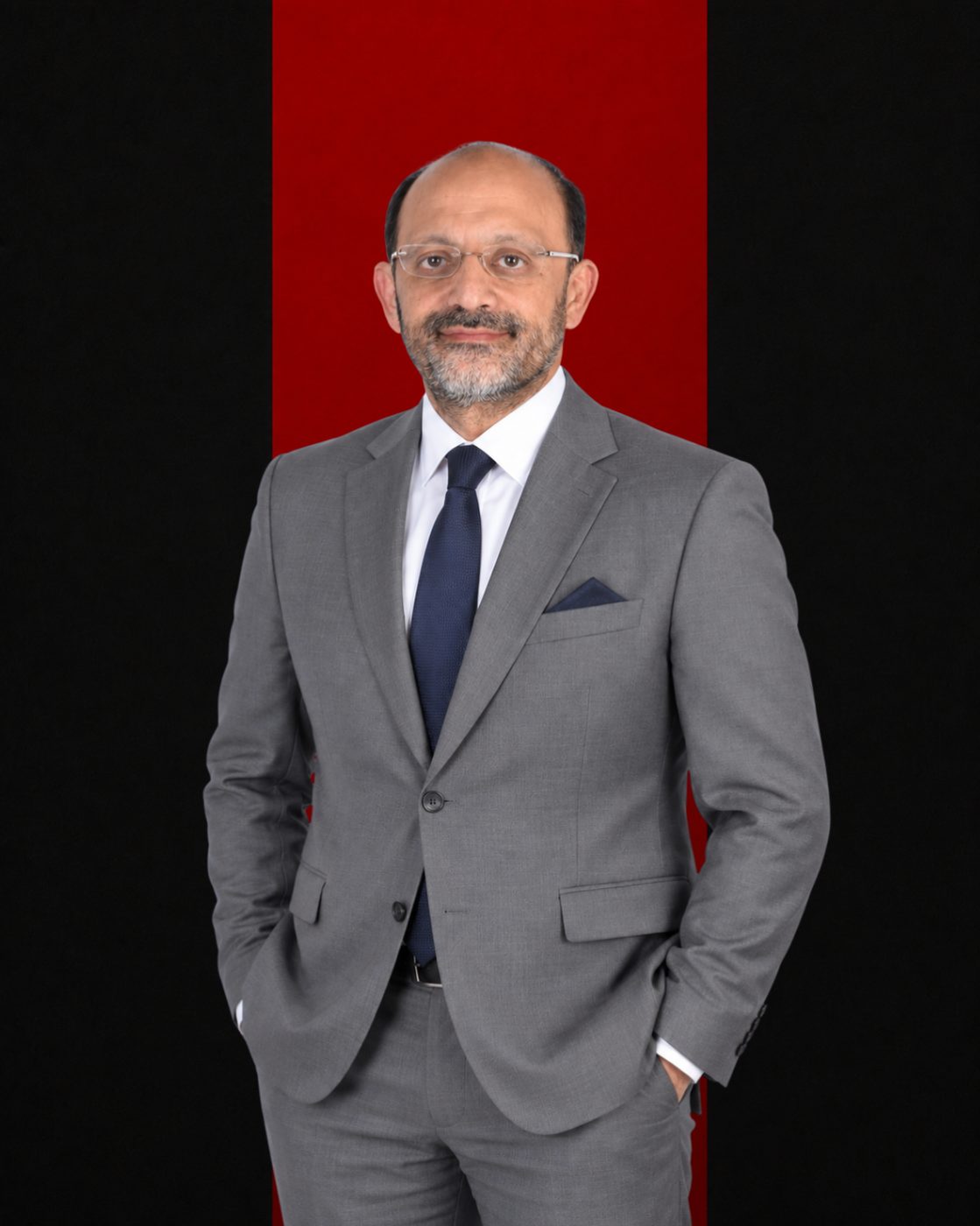
Amro is an industrial expert and scientist with more than 27 years of experience working in the oil and gas industry for such companies as Halliburton, Schlumberger and Baker Hughes. Currently, worked as a global Technology and Sustainability leader for AK Well Services based in Aberdeen. He has worked in most Middle East countries, the United Kingdom, all North Africa, and Azerbaijan. During his career, he has focused on new technology developments that reduce pollution, and emissions and optimize operations. His contribution resulted in winning several industrial awards and winning 2020 and 2021 Gold Stevie Awards. Amro's work has been highlighted by the UK Science Council in an article prior Cop26 in Glasgow. Amro is a Fellow of The Institution of Engineers in Scotland (FIES), Fellow (FRSC) and Chartered Chemist (CChem) of the Royal Society of Chemistry (RSC), Fellow (FIScT) and Chartered Scientist (CSci) of the Institute of Science & Technology, a full member of Sigma Xi, The Scie
Profile and all their articlesNovaTAQA


Weekly Newsletter
Read between the lines before everyone else. Decode the most important economic, tech, and decision-maker movements in the region.. in 5 minutes every Saturday.