
One Sea... Two Policies

Summary
The fields are shared and the geology is one. Norway issues 70 new blocks, while Britain bans licensing and loses 25,000 jobs. The difference is not in the tax... but in stability.
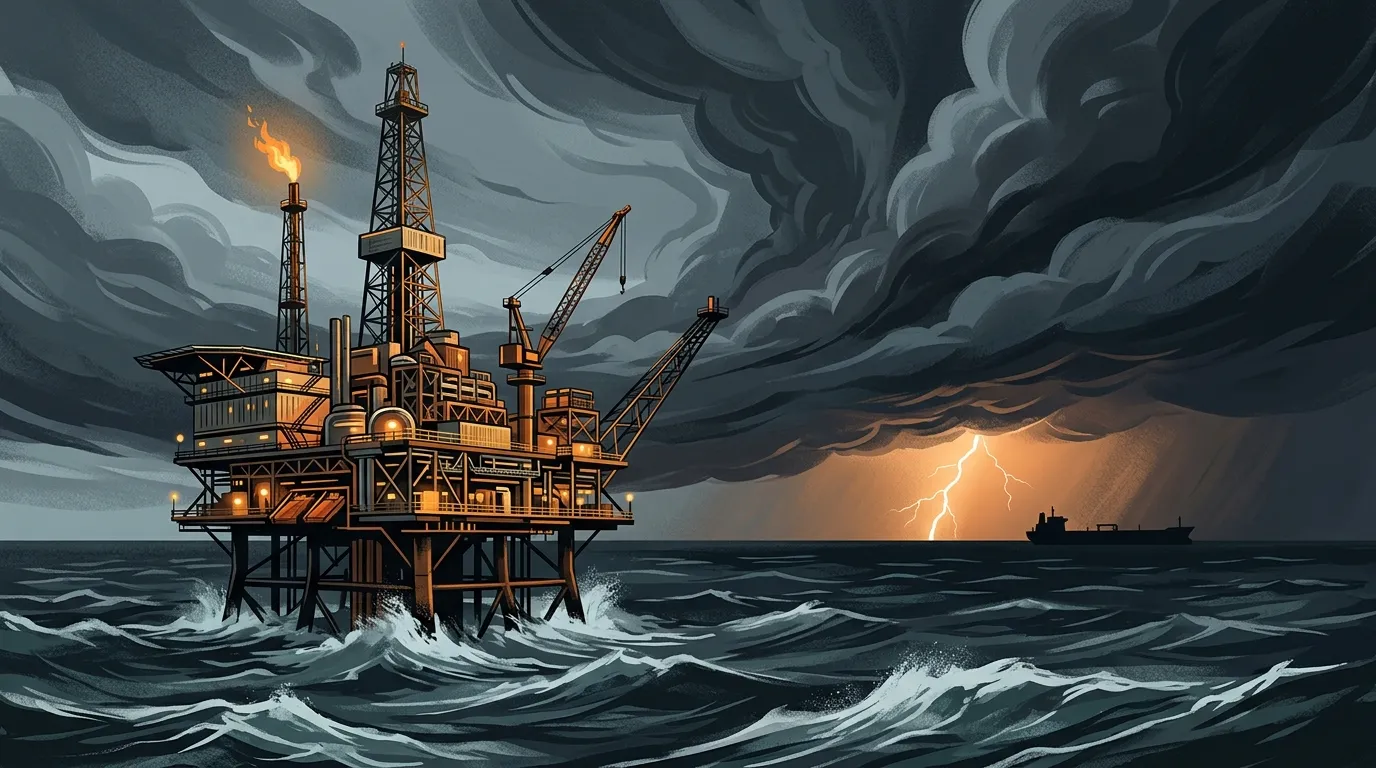
In the North Sea, an imaginary line separates British waters from Norwegian ones. And rocks do not know it.
The Statfjord field straddles both sides of that line. Other fields, such as Blane and Enoch, do the same. The reservoir is one, the depth is one, the weather is one, and the engineering challenges are the same.
Yet, what is happening on both sides of the line today is completely different.
Last May, the Norwegian Ministry of Energy announced a new annual licensing round, expanded by 70 additional blocks in the North Sea, the Norwegian Sea, and the Barents Sea. Applications closed in September after receiving bids from 21 companies, with licenses to be awarded in early 2027. In the preceding round, 57 production licenses were awarded to 19 companies.
On the other side of the same line, there are no licensing rounds at all. The British government is committed to an election pledge to stop granting new exploration licenses.
The result is not theoretical; it is reflected in employment numbers.
The British Figures
The UK oil and gas sector today supports around 115,000 jobs directly and across the supply chain. It has lost around 25,000 jobs since the last general election, according to a report released this month by a specialized taskforce.
The impact is geographically concentrated. In northeastern Scotland, about one in every four workers is employed in or serving the offshore energy sector.
Specific cases illustrate the picture. Harbour Energy, the largest producer in the UK North Sea, cut around 700 jobs since the windfall tax was imposed in 2022, with its chief executive stating bluntly that its UK unit will remain unable to compete for capital within the global company's portfolio as long as the tax remains in place. US company Apache plans to close the historic Forties field before the end of the decade. The Port of Aberdeen, the oldest operating business in Britain, has also begun cutting jobs after summer offshore activity collapsed by around 25%.
As for official estimates, according to data obtained by the opposition via Freedom of Information requests, they point to a potential contraction of the direct and indirect workforce by 82.7% between 2024 and 2050.
The Difference Is Not in the Tax Rate
Here lies the surprise that most coverage overlooks.
Norway is not a tax haven. Its marginal tax rate on oil and gas production stands at about 78%. And the marginal rate in Britain today? Also 78%.
So why are investments flowing to one side and fleeing from the other?
The answer lies in three differences, none of which have to do with the percentage rate:
First: Stability. The Norwegian tax regime has been stable for years, and companies plan around it for an entire decade. The British regime, however, has changed repeatedly since 2022: the tax was introduced, then raised, then extended, and then its allowances were modified. Anyone evaluating a twenty-year project fears a volatile tax far more than a high one.
Second: Deduction Design. The Norwegian system allows generous and rapid investment deductions, leaving marginal projects viable despite the high rate. In contrast, investment allowances in the British system were tightened, leaving the high rate applied to profits without sufficient cost deductions. The rule investors calculate is not the rate, but what remains after deductions.
Third: Licensing Continuity. Norway's annual rounds target mature areas near existing infrastructure—low-risk, fast tie-back projects. The Norwegian Minister of Energy put it clearly: annual rounds and a stable, predictable framework are the core of his country's policy. In Britain, however, the ban means existing infrastructure ages without new reserves to feed it, and once a platform is decommissioned, what surrounds it can no longer be developed at all.
A Third Crisis: Who Decides?
Added to this is a crisis of legal certainty.
The Rosebank and Jackdaw fields had previously received approvals, which were then overturned by a Scottish court in January 2025 for failing to consider Scope 3 emissions. Following the issuance of updated environmental guidelines, applications were resubmitted, and public consultations were conducted that closed last August, yet the decision remains pending.
This means a multi-billion-dollar project remained for over a year and a half subject to judicial interpretation and consultative procedures. In capital calculations, delay is an unwritten tax.
And This Has Another Side Worthy of Fairness
Fairness requires presenting the counterargument, which is not weak.
Opponents of expansion argue that Rosebank is 90% oil and that Britain exports most of its oil, so the project will not lower bills nor effectively enhance energy security, and its gas share might reduce the country's reliance on imports by only about 1%. Environmental groups estimate the project's lifetime emissions at around 254 million metric tons of CO2 equivalent. They add that geological decline is inevitable in any case: production dropped from its peak of around 4.5 million barrels of oil equivalent per day at the turn of the millennium to about 1.4 million, and will continue to decline even with licensing and investment.
And this is a fundamental point that must not be obscured: no one can promise the British North Sea a return to the 1980s. The real question is not between growth and contraction, but between a managed decline and an uncontrolled decline.
What Needs Correction?
If the goal is a managed decline that retains expertise and infrastructure until alternatives are ready, the required reforms are known and specific.
First, ending the windfall tax early and replacing it with a permanent price-linked mechanism, while establishing a clear rule: the tax rises when prices rise and falls when they fall, without sudden annual adjustments. The industry asked for 2027 instead of 2030, a request that can be resolved with a single decision.
Second, rebuilding investment allowances along the Norwegian model: fast capital write-offs covering electrification, emissions reduction, and carbon capture, not just drilling. If you want cleaner production, make spending on its cleanliness deductible.
Third, limited and conditional licensing in mature areas only, similar to the Norwegian system: tie-backs to existing facilities, without opening new frontier areas. This extends the lifespan of the very infrastructure that carbon capture and hydrogen projects will need later.
Fourth, reforming the approvals system. A single, clear emissions test applied upfront, instead of projects being decided in courtrooms after years of spending.
Fifth, tying all of this to a genuine transition deal: a skills passport that transfers workers from platforms to turbines without costly retraining, carbon capture projects centered on existing ports and platforms, and local content requirements that keep the supply chain in Aberdeen, not Houston.
There is a sixth option that London avoids discussing: state equity participation. Norway holds state shares in fields and a sovereign wealth fund exceeding one trillion pounds sterling, aligning its interest directly with production rather than just taxation. Meanwhile, Britain chose complete privatization, then tried to offset the difference with a volatile tax. Whatever your view on both options, the certainty is that the worst outcome is combining a lack of state equity with a lack of stability.
Concluding Paradox
Britain imports a significant portion of its gas from Norway.
That is, the very same gas, extracted from the very same sea, using the very same technology, is produced kilometers away from British waters, then purchased with hard currency, while jobs and tax revenues remain on the other side of the imaginary line.
Here lies the lesson that extends beyond the North Sea to any country drafting its energy policy today, from Cairo to Riyadh to Algiers: banning production does not stop consumption; it merely transfers production to a less hesitant neighbor.
Is the goal to reduce emissions, or simply to reduce domestic production? The difference between the two questions is the difference between climate policy and accounting policy.
"The views expressed are personal and do not represent any entity."
NovaTAQA




Weekly Newsletter
Read between the lines before everyone else. Decode the most important economic, tech, and decision-maker movements in the region.. in 5 minutes every Saturday.