
How Egyptian Fashion Brands Can Profit From Global Textile Recycling
Summary
Sorting pure cotton scraps at the cutting table allows Egyptian fashion manufacturers to capture value from waste that currently ends up in mattresses or cheap exports.
Listen to this article
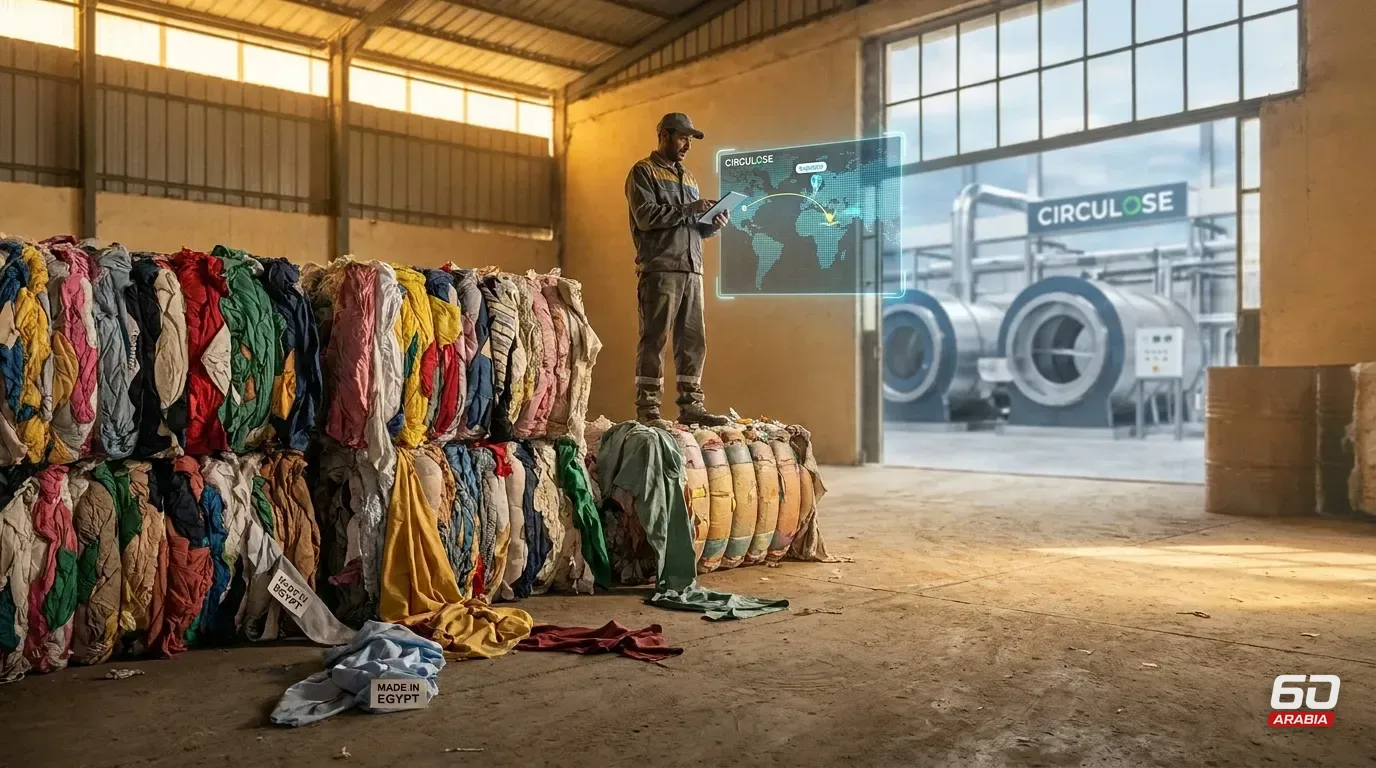
In November, Circulose announced that its plant at Ortviken, in Sundsvall, Sweden, had restarted commercial-scale production. The company calls it the world’s first commercial-scale chemical textile recycling plant. It used to be Renewcell, which went bankrupt before the private equity firm Altor bought it in 2024. This time the owners waited for orders before switching the machines back on. “With commitments from 16 brands, and more on the way, we are now there,” said Helena Helmersson, the executive chair.
The plant targets 60,000 tonnes a year of pulp made from discarded cotton textiles. Fibre makers turn that pulp into viscose and lyocell. Its diet is simple. It needs cotton waste, clean and sorted, by the lorry load.
What the coverage assumes
Global Fashion Agenda’s Apparel and Footwear Circularity Map, published last year, lists 31 collaborative initiatives it considers leading. Circulose appears in its alliance of textile-to-textile recyclers. The programmes that capture factory waste work in Asia, where GFA’s Circular Fashion Partnership segregated more than 11,000 tonnes of textile waste in Bangladesh in 2024. In December 2025, GFA announced a fourth national partnership in Türkiye, citing its proximity to the EU.
The word Egypt does not appear in the map’s eighteen pages. Africa and the Middle East are missing too. GFA says the map is not exhaustive and will be updated every year. Fair enough. But the picture it draws is clear. On this map, circularity happens where global brands sell and where their biggest suppliers sew.
Translation: the recyclers are switching back on, and they buy from whoever sorts.
Where it breaks in Egypt
Egypt has the scraps. A mapping for UNIDO’s SwitchMed programme, by Blumine and Reverse Resources, put the country’s pre-consumer textile waste at 212,000 tonnes a year. More than a third is pure cotton, about 80,000 tonnes. Garment making is the largest single source. Half of it comes from one cluster of industries within 150 kilometres of Cairo. “The high percentage of cotton in the textile waste is good news, as this is by far the most demanded textile waste,” Maxime Bourland of Reverse Resources said when the findings came out.
The same mapping traced where that cotton goes. Domestic recycling capacity is limited, so the best scraps are largely exported, mostly to Europe, many of them unshredded. Much of what stays becomes padding and mattress filling. Among the weaknesses it lists is limited sorting of waste on the factory floor.
At home, the scraps are just as invisible. On 10 November, the Cabinet’s Information and Decision Support Center put Egypt’s waste at about 100 million tonnes in 2025. Its published highlights give tonnages for farm waste and plastic. Textile scraps get no number of their own. Nobody is coming to sort them for you.
The tech packs I see every week specify the fabric to the gram and say nothing about the offcuts. Founders treat waste as the factory’s business. It starts at your cutting table.
What to do this quarter
Ask where your scraps go. Your workshop already sells or gives away its offcuts. Find out who takes them and what they pay. If nobody knows, that is your first dropped stitch.
Sort at the cutting table. Pure cotton goes in one sack and blends in another, split by colour where you can. Clean, single-fibre cotton is the waste European buyers already import. A mixed sack ends up inside a mattress.
Design the scrap before you cut it. Choose pure cotton wherever the garment does not need stretch. Fashion for Good warns that even low elastane content can significantly disrupt textile-to-textile recycling, and stretch cotton typically carries 1 to 5 percent. A little stretch feels lovely on the hanger. On the cutting room floor, it costs you a buyer.
Cut less than you hope to sell. Overproduction and deadstock make up about a sixth of Egypt’s pre-consumer waste in the same mapping. A reorder costs you time. A dead roll costs you cash.
Tighten the marker. Ask your cutter for the marker efficiency in writing, and nest pockets and facings into the gaps between the big pieces. A good cook buys the whole fish and makes stock from the bones. Every scrap on your floor is fabric you paid for at full price.
Pool with your neighbours. One label’s offcuts fill a sack. The workshops of Downtown or Shobra could fill a lorry. Agree one sorting rule with the brands that share your cutters, then sell as one lot. Recyclers answer the phone for volume.
Do not launch a scrunchie line to look circular. Turning offcuts into accessories eats sewing hours that rarely pay back. Sorting costs minutes. Sewing scraps costs hours.
A plant in Sweden is waiting for cotton scraps. Your cutting room makes them every day. Sort them before they become a mattress.
Sources
Bardees A. Gamal is a writer and fashion business specialist covering the Arab world's fashion economy, from factory floor to shop floor, and why promising brands stall. She founded the Cairo label Bardees Designs and Fashion Production Services (FPS), a production house that has worked with more than 40 brands across the region, and teaches fashion business in Egypt and the UAE.
Profile and all their articlesThe Fashion Economy Arabia
Egypt sets two million pound fines for fake White Friday discount claims

Dubai's Malls Are Full Again. Its Fashion Tills Are Not.

Your UAE Customer Asks AI First. Can It Find Your Brand?
For Tunisia's Textile Sector, Traceability Is the New Competitive Advantage
Weekly Newsletter
Read between the lines before everyone else. Decode the most important economic, tech, and decision-maker movements in the region.. in 5 minutes every Saturday.