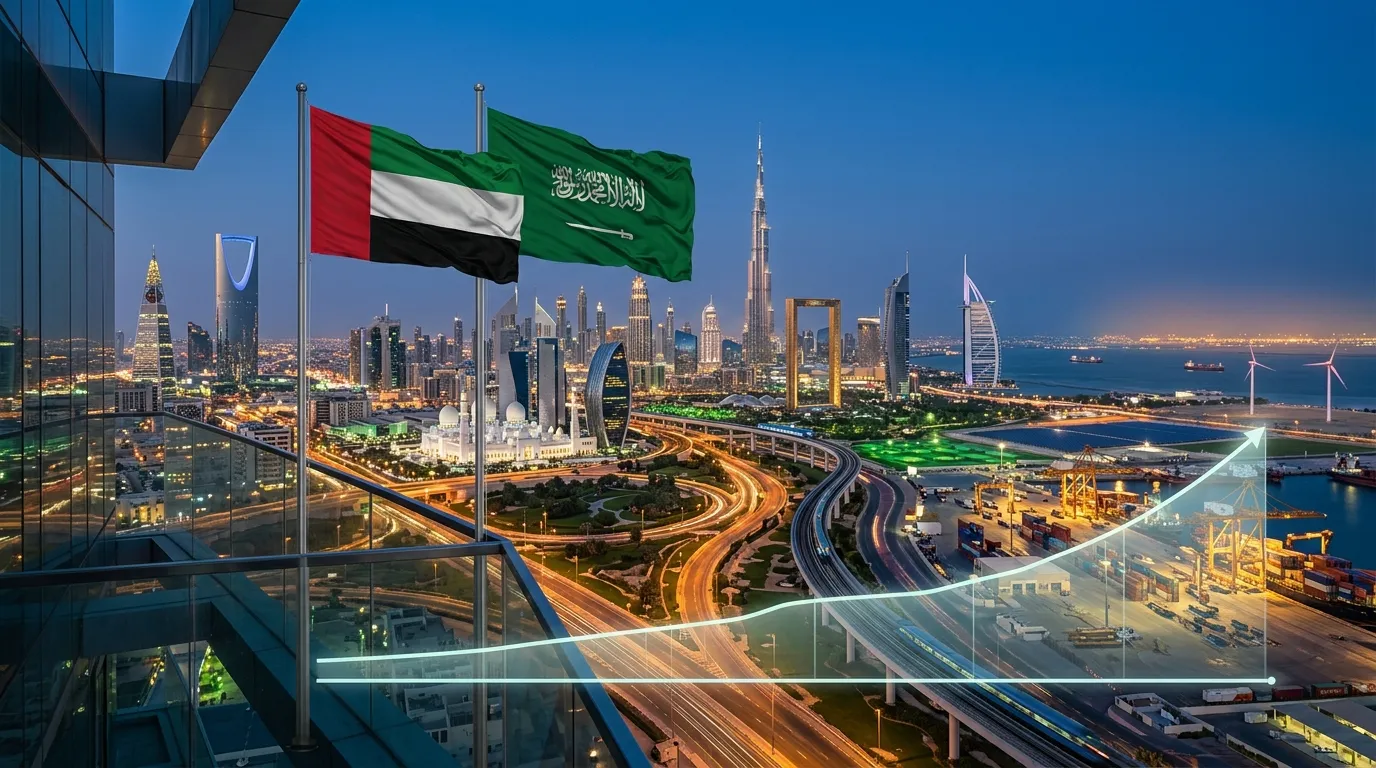

Debt-Ridden Countries May Be Wealthier Than They Appear

Summary
What if the crisis facing these countries stems not from a lack of wealth, but from a failure to mobilize it? And can tokenization transform real estate, gold, and illiquid bonds into new national capital?
Private sector credit in Nigeria stands at only about 12% of GDP, and the IMF concluded in 2026 that markets do not efficiently channel domestic savings into productive investment. It is hard to find a figure that illustrates the capital problem more clearly. Money and assets exist, but the gap between those who own them and those who need financing remains long and costly. For this reason, the Central Bank of Nigeria opened a new regulatory sandbox in 2026 to allow testing of stablecoins, token-based products, and payment and custody services, paving the way to draft rules that will determine what can move to broader adoption later.
Here, the true meaning of tokenization emerges away from the hype surrounding cryptocurrencies. When a country allows the ownership of a bond, real estate, or a quantity of gold to be converted into verified digital units, the underlying asset itself remains intact, while its ownership becomes fractionalized, transferable, and electronically settled. Today, an investor might need a substantial sum to buy a bond or real estate, whereas a tokenized system can lower the unit size to a level suitable for thousands of savers. Technology does not create new wealth in this case; rather, it enables a portion of existing wealth to function as capital.
This is why Pakistan took the clearest step, as officials there have been discussing the tokenization of sovereign bonds and Naya Pakistan Certificates since May of this year, while the government signed a framework to explore tokenizing sovereign and real-world assets worth up to $2 billion, including government bonds, treasury bills, commodity reserves, and other federal assets. This comes in a year in which the IMF expects total external financing requirements to reach approximately $21.2 billion during 2026–2027. Islamabad is not looking for a new financial gimmick; rather, it is attempting to expand the pool of buyers capable of funding existing assets and to attract savings that do not easily reach conventional debt markets.
Ghana offers a bolder experiment because it directly linked testing to real-economy assets. In August 2026, the Securities and Exchange Commission permitted the tokenization of gold, securities, treasury bills, bonds, trade finance, and commodities within its regulatory sandbox. The significance of this list lies in its timing: Ghana has just emerged from a comprehensive debt restructuring and resumed local bond issuances in April 2026 following a hiatus after the 2022 crisis. The IMF projects that the country will face a heavy concentration of domestic debt maturities in 2027 and 2028, with gross financing needs potentially exceeding 16% of GDP in 2028. If tokenization expands the investor base and increases bond liquidity, it will address one of the tangible bottlenecks in Ghana's recovery.
On another front, Kenya is moving from a different angle, where public debt remains high at around 66% of GDP at the end of the 2023–2024 fiscal year, while the IMF classifies the country at high risk of debt distress. In 2026, authorities established detailed regulations to implement the Virtual Asset Service Providers Act, setting rules for stablecoin issuance, reserves, and redemption rights for holders. While these regulations have not yet translated into broad financial reform, they build the foundation for future use of stable digital currency alongside regulated digital investment products.
Notably, another African nation, Zambia, has clearly stated its bet within the Central Bank's strategic plan extending to 2027. The bank committed to developing and implementing a framework for crypto assets and stablecoins, viewing them as potential tools to reduce transaction costs, accelerate value transfer, and support financial inclusion. This comes while the country remains at high risk of debt distress, despite restructuring covering about 94% of the target scope and reserves rising to $6.4 billion in May 2026. Here, digital infrastructure becomes part of an effort to rebuild a capital market better equipped to mobilize savings after the debt crisis restricted traditional financing options for years.
Stablecoins add a different element to this ecosystem, as the concept of a stablecoin does not dictate that the pegged currency must be the US dollar. An issuing entity, provided the law permits and mandates robust reserves and clear redemption rights, can issue a token pegged to a national currency or other assets. Tokenized money can then move on the same network as the tokenized bond or asset, enabling ownership, payment, and settlement to occur together. This is why the IMF places tokenization in a broader context than cryptocurrencies, noting that it may allow certain emerging markets to leapfrog parts of legacy financial infrastructure, reduce reliance on slow settlement systems, and broaden market access.
Herein lies the core idea uniting countries determined to cross the threshold of "economic inertia," such as Nigeria, Pakistan, Ghana, Kenya, and Zambia. These economies suffer to varying degrees from limited capital markets, weak credit, high debt, or elevated financing costs. At the same time, they possess real estate, gold, bonds, trade flows, savings, and remittance inflows that do not all easily convert into productive capital. Through tokenization, these nations are attempting to shorten the distance between the asset, its owner, and the investor who can finance it.
This will not succeed merely because blockchain exists. If the underlying asset itself remains legally unverified, if a genuine secondary market is lacking, or if custody costs remain high, the token will do no more than place a digital wrapper over a weak market. Furthermore, foreign stablecoins could drain liquidity from the local currency if the system is poorly designed.
For these reasons, 2027 will reveal the difference between genuine reform and technological window dressing.
Watch for one key thing in these countries over the coming year: it is a mistake to count new wallets and tokens; rather, the right question is to ask who has become able to purchase an asset they could not buy before. If retail investors gain access to bonds, if a small business secures financing backed by a tokenized asset, and if the buyer base expands beyond major banks and institutions, then these countries will have truly begun building a new capital market. In that case, the surprise will not stem from inventing wealth that did not exist, but from discovering that part of the economic problem was existing wealth that simply did not know how to move.
Before it happens

حين يصبح الاكتشاف العلمي أرخص من هاتفك... مَن سيشتري مستقبل العالم؟

The Soaring Economy and the Crawling Citizen... Has the Renaissance Begun in Rwanda and Guinea?
What if Lies Became Provable and the Truth Became Deniable?

A Hundred Years of Archaeological Excavations in the Wrong Places
Weekly Newsletter
Read between the lines before everyone else. Decode the most important economic, tech, and decision-maker movements in the region.. in 5 minutes every Saturday.