
Global Solar Energy Surpasses 2 Terawatts Barrier in Clean Energy Record
IRENA announced that global installed solar capacity has surpassed the 2 terawatt barrier for the first time, along a trajectory establishing solar power as a primary source in the global energy system.
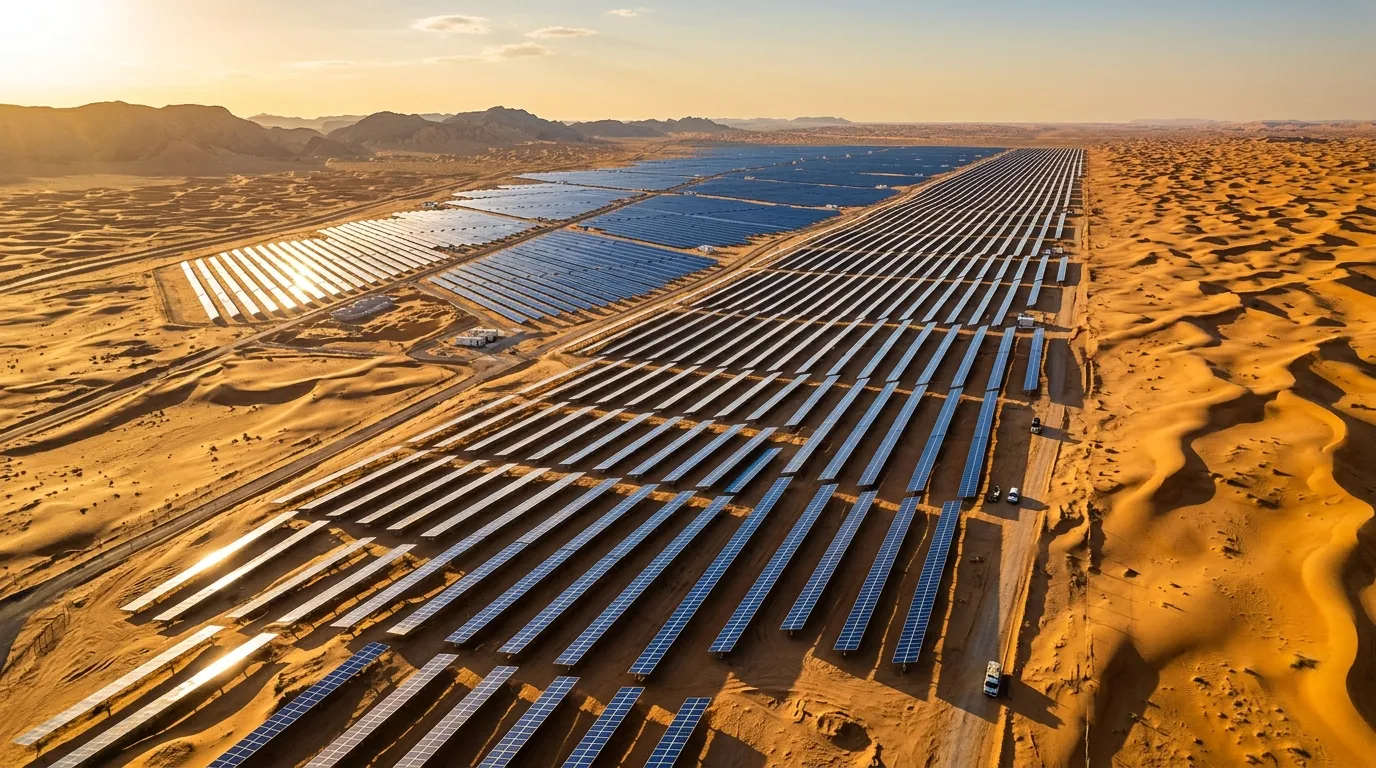
The International Renewable Energy Agency (IRENA) announced that installed solar capacity worldwide has surpassed the 2 terawatt barrier for the first time in history, in an accelerating path that makes the sun the fastest-growing energy source globally.
The agency's report indicated that China alone added more than 200 gigawatts of solar power over the past year, followed by the United States, India, and the European Union, alongside a continuous decline in solar panel costs reaching 90% over the last decade.
The cost per kilowatt-hour of solar energy in some regions has become cheaper than all other energy sources, including coal and natural gas, making investment in solar energy the most economical choice across large parts of the world.
Gulf states stand out among the regions with the highest solar potential globally. Saudi Arabia seeks to raise the share of renewable energy to 50% of its energy mix by 2030, while the UAE prepares for new solar plants near Abu Dhabi. This global solar acceleration is expected to impact long-term oil demand, making the management of this transition a vital economic challenge for the Gulf region.
What do these terms mean?
Terawatt: A unit for measuring electrical power equal to one thousand gigawatts or one trillion watts. 2 terawatts of solar power is theoretically sufficient to power hundreds of millions of homes, although it is dependent on sunlight hours.
Kilowatt-hour cost: The full economic cost of producing a single unit of electricity from a specific source over its operational lifespan. This metric is used to economically compare different energy sources.
Photovoltaics: A technology that converts sunlight directly into electricity using panels of solar cells. A single cell produces only one watt, but assembling thousands of them provides enough power to operate entire factories or residential neighborhoods.
Weekly Newsletter
Read between the lines before everyone else. Decode the most important economic, tech, and decision-maker movements in the region.. in 5 minutes every Saturday.