

Major energy companies bet on carbon capture as key to achieving climate neutrality
Oil and energy companies are pumping billions of dollars into carbon capture and storage technologies, while climate scientists view these technologies as essential for reaching carbon neutrality without entirely abandoning fossil fuels.
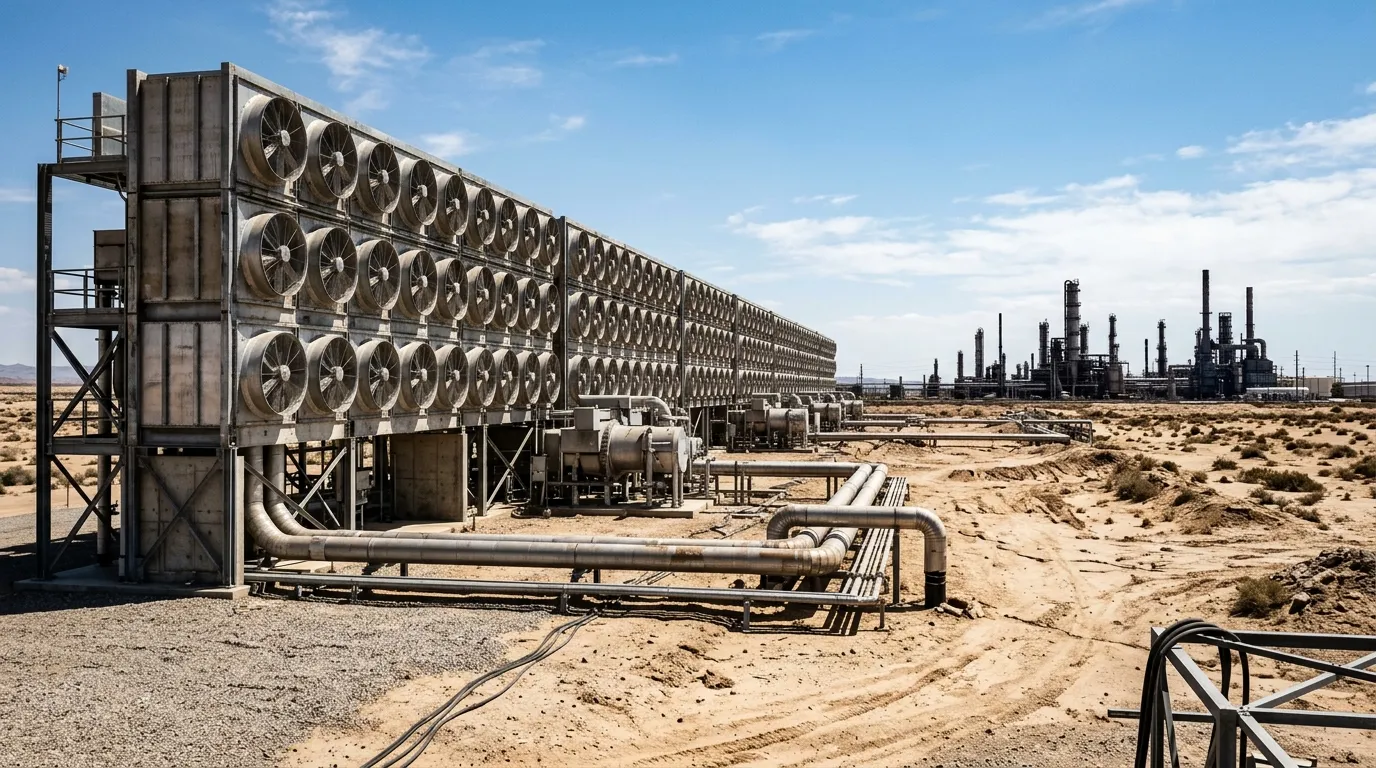
Massive investments are being poured into carbon capture, utilization, and storage (CCUS) technologies; Occidental Petroleum is operating the largest direct air capture facility in Texas with a capacity of 500,000 tons annually, while Saudi Aramco and Abu Dhabi National Energy announce plans to capture millions of tons of carbon dioxide emitted from their facilities.
Carbon capture is divided into three pathways: the first is point-source capture from factory chimneys and power plants before emissions escape; the second is direct air capture from ambient air, which is the most expensive; and the third is the industrial utilization of captured carbon in manufacturing synthetic fuels or construction materials.
Critics of this technology argue that it gives fossil fuel companies an excuse to slow down the transition toward renewable energy, and that its current costs are very high compared to expanding solar and wind power; however, supporters stress that sectors such as cement, steel, and petrochemicals cannot reduce their emissions without capture.
Gulf states view carbon technologies as a dual-benefit strategic investment; they alleviate climate pressures on the oil industry and open new markets for selling carbon credits. Energy experts believe carbon capture will play a pivotal role in the climate portfolios of oil-producing nations, provided its costs fall sufficiently to become viable on a large scale over the coming decade.
What do these terms mean?
Carbon Capture and Storage (CCS): A technology that captures carbon dioxide gas emitted from factories or power plants before it reaches the atmosphere, then pumps it into deep underground rock layers for safe storage for thousands of years.
Direct Air Capture: A more advanced technology that pulls carbon dioxide directly from ambient air like an air conditioner pulling and cooling air, enabling the removal of accumulated historical emissions, but it consumes significant energy and currently has high costs.
Carbon Credits: Tradable certificates, each representing one ton of carbon removed or avoided, purchased by companies to offset their emissions within voluntary or compliance carbon markets.
Weekly Newsletter
Read between the lines before everyone else. Decode the most important economic, tech, and decision-maker movements in the region.. in 5 minutes every Saturday.