
A Climate Phenomenon Doing to Chokepoints What War Did.. The Great El Niño
Summary
El Niño is not just climate news. It is drying up the Panama Canal, upending gas demand, and disrupting hydropower in India. Three global chokepoints are under pressure simultaneously.
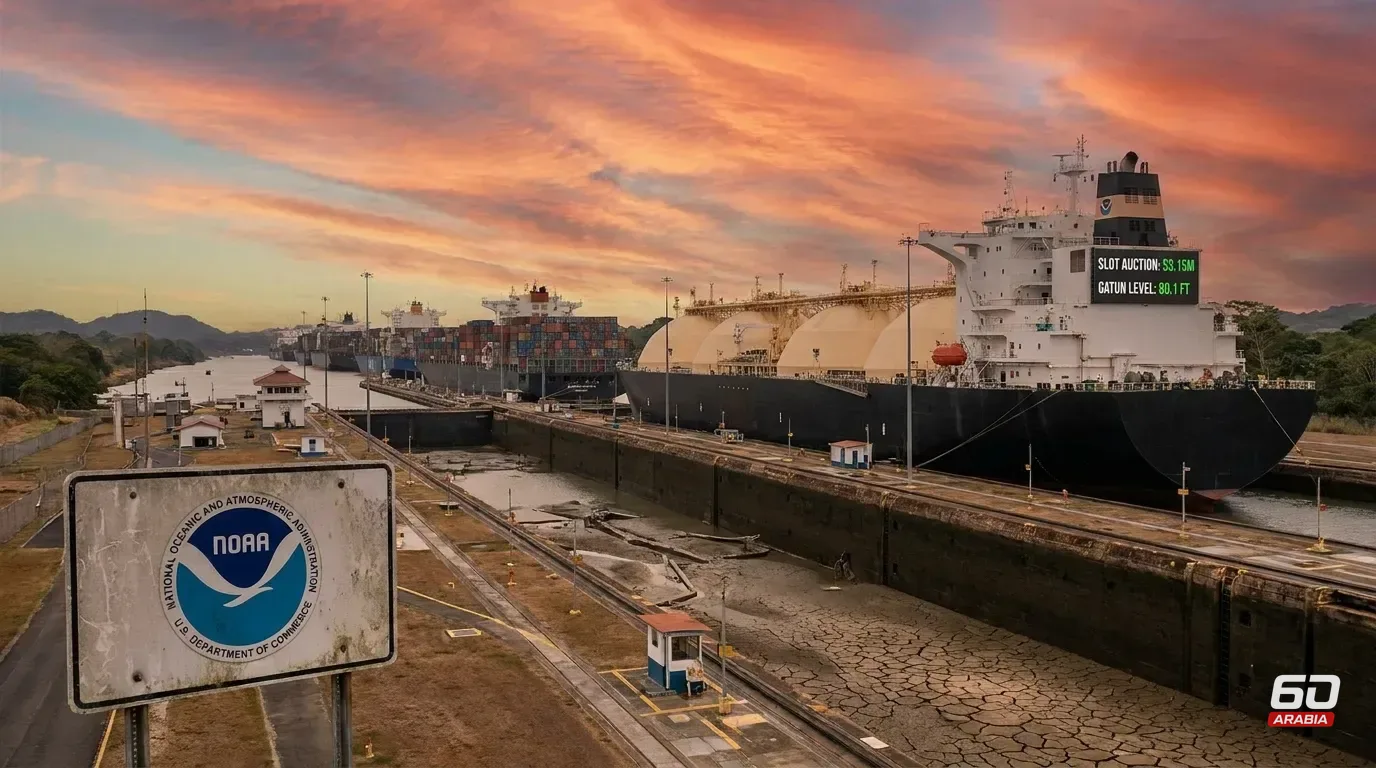
On August 28, a shipping company paid $3.15 million for one thing: booking a single transit slot through the Panama Canal.
Not a cargo, not a vessel, nor fuel. Just a spot in the queue.
The reason was neither war, sanctions, nor an attack. The reason was that it did not rain.
The Phenomenon the Oil Market Ignores
Reports this month talk about the impact of El Niño on coal markets: India is burning more, and China perhaps less.
But the bigger story is happening somewhere else entirely.
Let us start with a precise definition. The Great El Niño occurs when the Pacific Ocean surface temperature exceeds its average by at least two degrees Celsius. This has happened only three times since 1950, the last of which was in 2015-2016.
Both the World Meteorological Organization and the US National Oceanic and Atmospheric Administration expect the 2026-2027 event to be among the most destructive climate events in fifty years, with a nearly 100% probability of continuing through February 2027, and an 81% probability that the temperature anomaly will exceed two degrees.
Pacific temperatures have already surpassed two degrees.
So what does this do to oil and gas? The answer lies in four channels, the most dangerous of which is not demand.
The First Channel: The Third Chokepoint
This is where things get dangerous for the region in particular.
The Panama Canal runs on freshwater. Every vessel crossing it consumes millions of gallons from the artificial Gatun Lake, which are dumped into the ocean and lost. When rain fails, the lake level drops, reducing the number of ships that can pass through. That is all. No technology, no politics. The number of ships equals the amount of rainfall.
Pressure has already begun. On September 3, daily transits for Panamax vessels were reduced from 26 to 25, then to 23 on the 15th of the same month. Neopanamax transits were cut from 10 to 9.
Rainfall through mid-August was 20% below the five-year average.
What is coming is worse. In Kpler's scenarios, Gatun Lake hits its lowest point in April 2027 at 80.7 feet in the mild case, and 79.9 feet in the severe case, close to 2023 levels that imposed severe restrictions.
Who pays the price? LNG and LPG carriers, which are among the vessels most dependent on this route from the US Gulf Coast to Asia. When the queue shuts down, their only alternative is sailing around the Cape of Good Hope.
Now put this into full context:
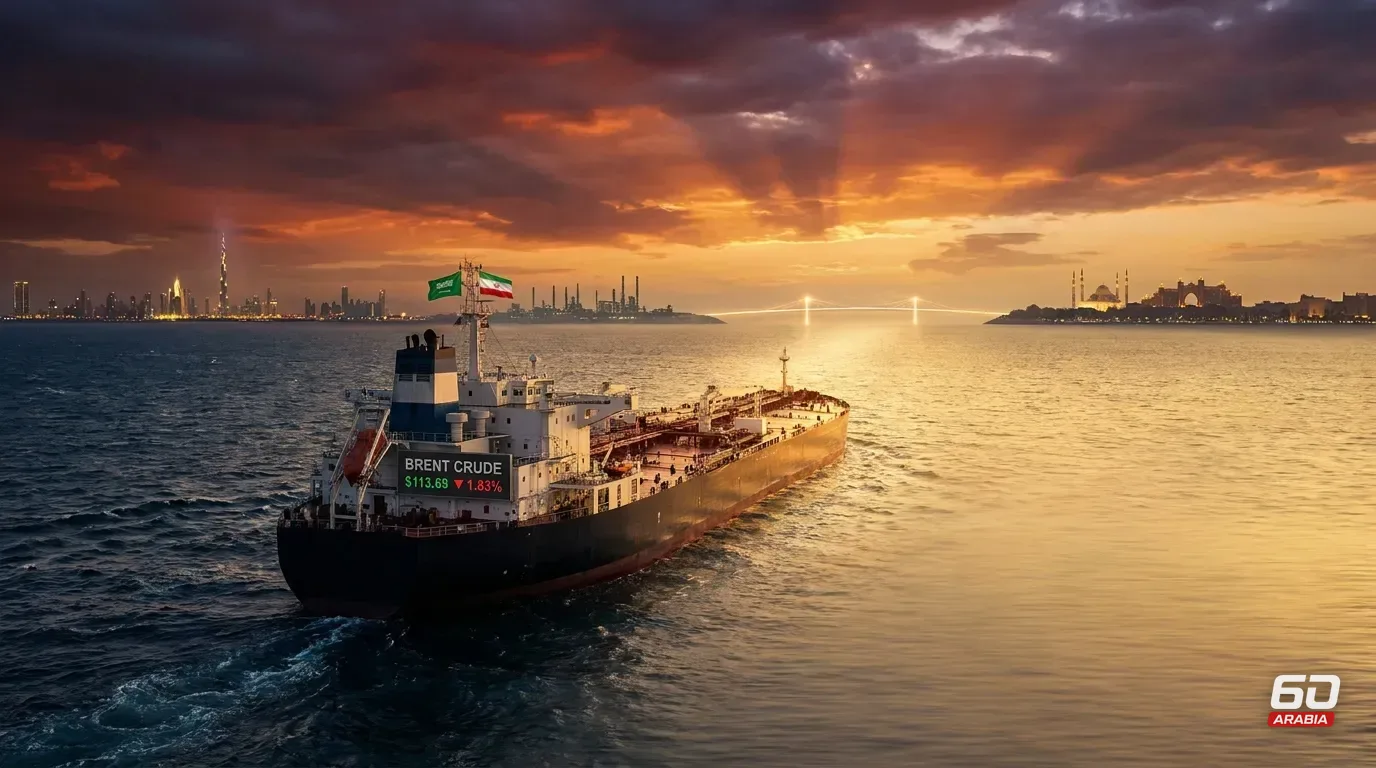
Hormuz is disrupted by war. Bab al-Mandab is blockaded. Panama is constricted by drought.
Three of the world's most critical energy chokepoints are under pressure simultaneously, for completely unrelated reasons. Only Suez remains operating relatively normally, raising its strategic value to a level unseen in decades.
The Second Channel: A Warm Winter That Saves No One
The second channel is gas demand, and here comes a surprise.
Intuitive logic suggests that a warm winter means less heating, less LNG, and lower prices. In principle, that is true.
However, an analysis by Rystad Energy sets a harsh condition: European winter temperatures must rise at least two degrees Celsius above their historical average before European LNG demand falls to last winter's level. This has happened only twice in twenty-five years.
The calculations are straightforward. In a mild scenario—a one-degree increase—Europe needs to boost its imports by at least 7 million tonnes compared to the previous winter, which supports upward rather than downward price pressure. In the strong scenario—two degrees—imports return to winter 2025-2026 levels, and only then does the impact turn bearish.
Overall, Europe needs to increase its imports by about 15 million tonnes through June 2027 to offset lower inventories and reduced imports caused by the Gulf war.
In other words, El Niño is a bearish lottery ticket, not an insurance policy against upside spikes.
There is a historical warning worth remembering: in January 2016, at the peak of a Great El Niño, a severe cold snap hit East Asia. Averages lie. El Niño raises the winter average, but it does not eliminate cold spells—it may even make them more extreme. And the gas market is priced not on averages, but on the worst week.
The Third Channel: The Hurricanes That Never Came
Here lies the only positive impact in the entire story, and it is the least mentioned.
El Niño increases wind shear over the Caribbean and creates stable, sinking air over the central Atlantic. These two factors choke hurricanes in their infancy.
The result this year is striking. Through early September, not a single hurricane was recorded, only five short-lived tropical storms, the strongest with winds of 80 km/h. The Accumulated Cyclone Energy (ACE) index stood at 4.4, the lowest since 1941.
Phil Klotzbach, head of seasonal forecasting at Colorado State University, said: "We are smashing all kinds of wind shear records this year."
In practical terms, this means Gulf of Mexico platforms and export terminals on the US coast did not shut down this season as they normally do.
In a year when the world lost millions of barrels to war, El Niño quietly protected US supplies from seasonal disruption. This was a service for which no one thanked it.
The Fourth Channel: When the Dam Dries Up, Diesel Ignites
The final channel is the closest to the consumer.
El Niño hits hydropower. This is well documented: during the 2015-2016 event, dam levels in Colombia dropped by up to 70%, and hydro generation fell in Brazil and Ecuador. A report by the US Energy Information Administration showed that the 2015 El Niño reduced hydropower generation in Washington and Oregon, boosting reliance on natural gas.
The scenario is repeating today in India. Hydropower generation fell 26% in October, the sharpest decline since February 2024, while coal-fired generation jumped 25.7% year-on-year, driving coal's share up to 71.7%.
And it does not stop at coal. A weak monsoon season in India means:
More diesel to run irrigation pumps.
More diesel for backup power generators during blackouts.
More gas wherever grid access is available.
And remember where we stand today: ADNOC's CEO warned that diesel inventories in some markets are at their lowest seasonal levels in 35 years.
Thus, a climate phenomenon boosts demand for the scarcest commodity in the world today.
Conclusion: A Volatility Machine, Not a One-Way Trend
El Niño is neither a bullish nor a bearish bet. It is a machine for generating volatility.
It lowers gas demand in the Northern Hemisphere while raising it in regions reliant on hydropower. It protects production in the Gulf of Mexico while choking the chokepoint in Panama. It warms Europe's winter on average, while potentially sending a deadly cold wave to East Asia.
In a normal year, these impacts offset one another, and the event passes unnoticed.
But in 2026, there is nothing to absorb them. Global inventories have been drained by a billion barrels, the tanker fleet is exhausted from long-haul shuttles, one major chokepoint is already disrupted, and diesel stocks are at 35-year lows.
The very shock-absorbing system itself has been depleted this year.
That is why what would have been back-page news in another year has today become a top-tier variable.
For the Arab reader, the lesson is practical: watch Gatun Lake's level just as you watch the tanker count in Hormuz. Both determine today how much you pay at the gas station, and both are beyond the control of any government in the region.
Finally, a question worth reflecting on: when three out of four global chokepoints are choked simultaneously, and only Suez remains operating normally, does Cairo realize the magnitude of the card it holds?

Amro is an industrial expert and scientist with more than 27 years of experience working in the oil and gas industry for such companies as Halliburton, Schlumberger and Baker Hughes. Currently, worked as a global Technology and Sustainability leader for AK Well Services based in Aberdeen. He has worked in most Middle East countries, the United Kingdom, all North Africa, and Azerbaijan. During his career, he has focused on new technology developments that reduce pollution, and emissions and optimize operations. His contribution resulted in winning several industrial awards and winning 2020 and 2021 Gold Stevie Awards. Amro's work has been highlighted by the UK Science Council in an article prior Cop26 in Glasgow. Amro is a Fellow of The Institution of Engineers in Scotland (FIES), Fellow (FRSC) and Chartered Chemist (CChem) of the Royal Society of Chemistry (RSC), Fellow (FIScT) and Chartered Scientist (CSci) of the Institute of Science & Technology, a full member of Sigma Xi, The Scie
Profile and all their articlesNovaTAQA
حين يتوقف النظام لأنه لا يعرف.. درس من سماء أمريكا
The Largest Chimpanzee Community is at War... and Scientists Don't Know Why

A Loophole in the Chip War That Laws Cannot Plug... Its Name Is Humans
النفط السعر الذي تقرأه ليس السعر الذي يُدفع
Weekly Newsletter
Read between the lines before everyone else. Decode the most important economic, tech, and decision-maker movements in the region.. in 5 minutes every Saturday.