
Saudi Arabia Sends First Biological Samples from Middle East to Space Station
Saudi Arabia sent the first biological samples from the Middle East to the International Space Station to study Alzheimer's and multiple sclerosis in microgravity.
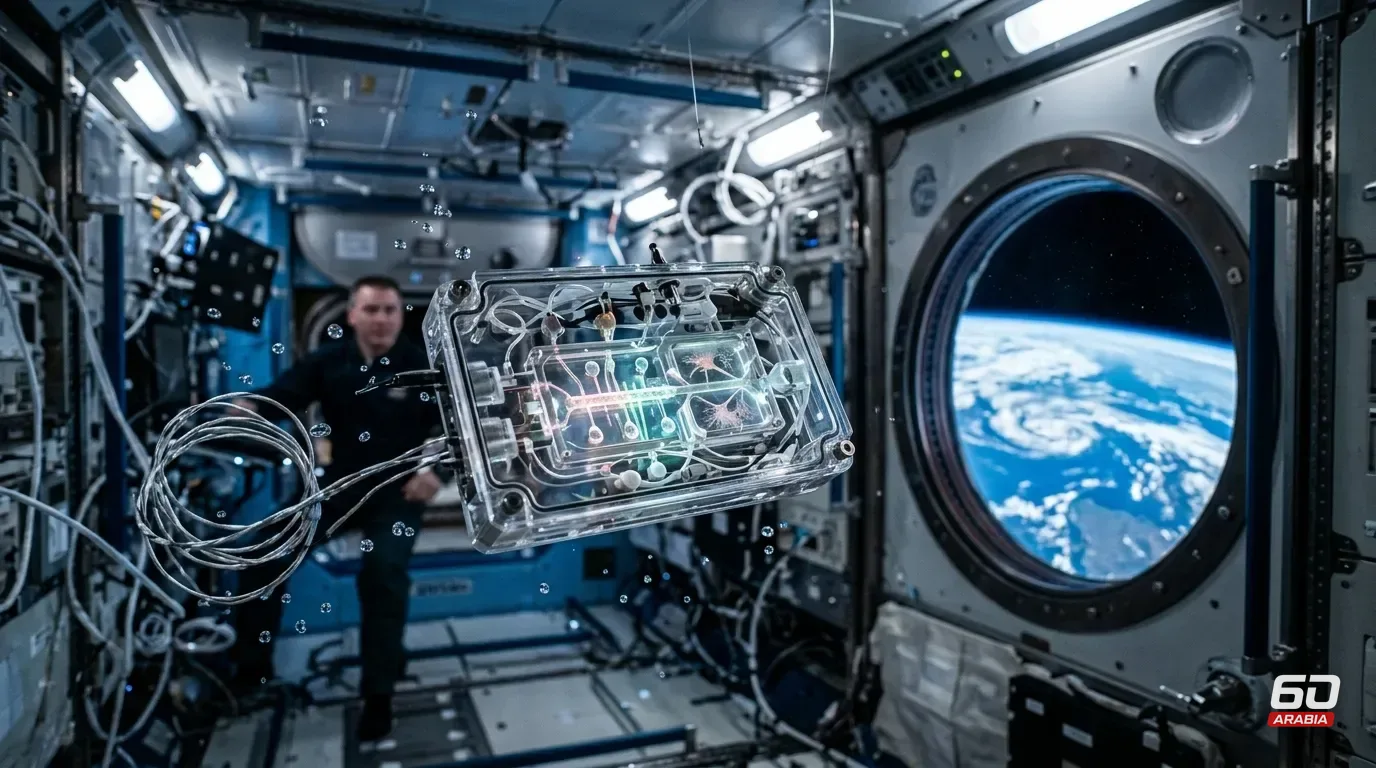
Saudi Arabia sent the first biological samples from the Middle East to the International Space Station, in a step led by the Kingdom to study nervous system diseases in a microgravity environment, according to a report published by the "SatellitePro Middle East" platform.
The samples were carried aboard SpaceX's "CRS-35" mission as part of a mission named "Biogravity 1", which aims to study Alzheimer's disease, multiple sclerosis, and other neurodegenerative diseases.
The program is led by the Saudi Space Agency and King Abdullah University of Science and Technology (KAUST), with support from NASA and the participation of Axiom Space.
This comes as part of an escalating Saudi trajectory in the space sector, as the Kingdom seeks to build research capabilities in orbital life sciences and utilize the International Space Station for scientific experiments.
What do these terms mean?
Microgravity: A state of near-total weightlessness in Earth's orbit, allowing the study of cell and protein behavior in a way that is not possible on Earth's surface.
Neurodegenerative diseases: Diseases that gradually damage nervous system cells, such as Alzheimer's and multiple sclerosis.
International Space Station: A research laboratory orbiting Earth, jointly operated by several countries.
Weekly Newsletter
Read between the lines before everyone else. Decode the most important economic, tech, and decision-maker movements in the region.. in 5 minutes every Saturday.