
Artificial Intelligence Reshapes Healthcare Through Faster and More Accurate Diagnosis
Artificial intelligence applications in healthcare are achieving a breakthrough in diagnostic accuracy and drug discovery, accompanied by massive investments from major technology companies in this sector.
Artificial intelligence applications in the medical sector are achieving remarkable results in disease diagnosis, drug discovery, and medical image analysis, as specialized models such as Google's MedPaLM have demonstrated their ability to answer medical questions with accuracy comparable to human specialists in certain fields.
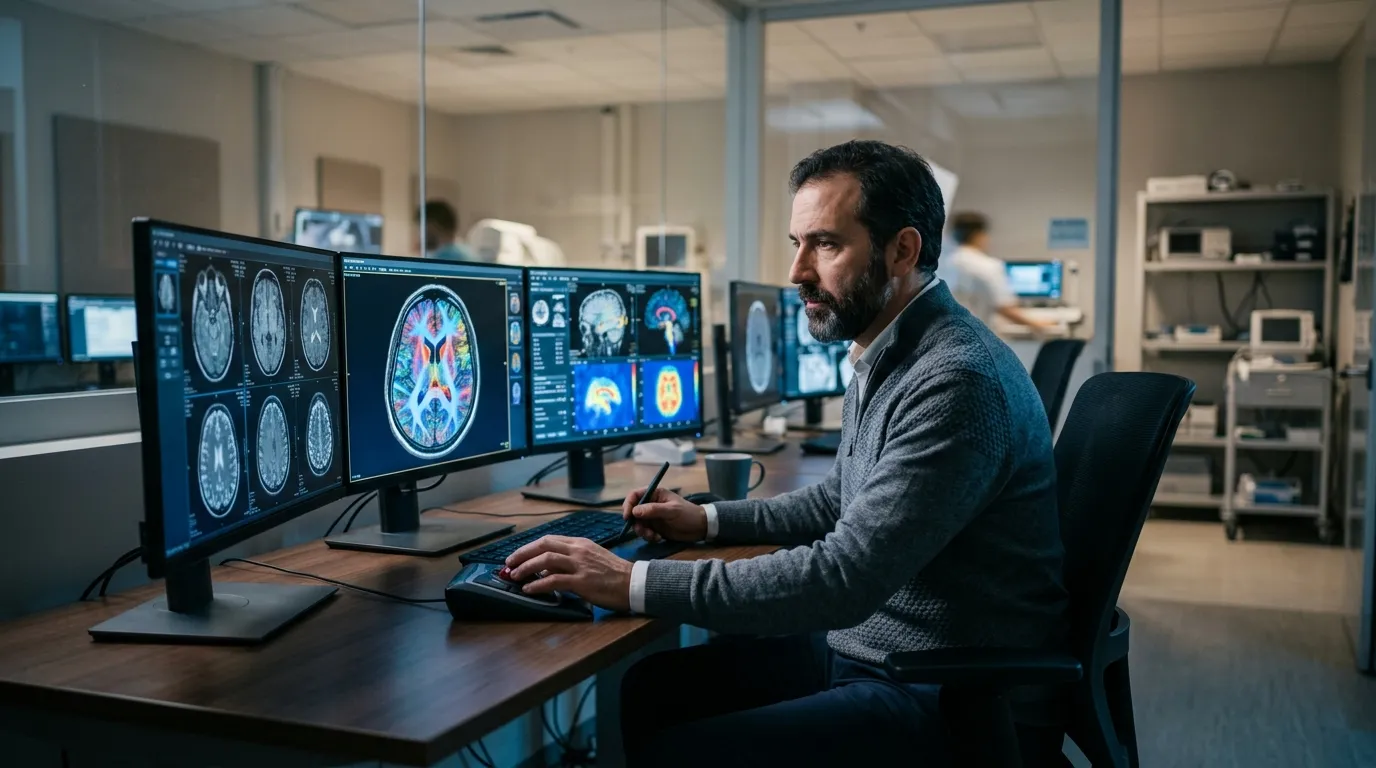
Multiple studies have indicated that artificial intelligence outperforms human doctors in detecting certain early-stage cancers through the analysis of X-rays and MRI scans, while AI models have shortened the drug development cycle from over a decade to just a few years in some trials.
Companies such as Google, Microsoft, Amazon, NVIDIA, and dozens of startups are racing to secure a leading position in this sector, whose market value exceeds $4 trillion, amid serious legal and ethical questions regarding responsibility for medical decisions and the privacy of health data.
Digital health experts agree that artificial intelligence will not replace human doctors, but will rather enhance their capabilities and free them from routine diagnostic tasks so they can focus on the human aspect of care, while emphasizing that building clear regulatory frameworks and diverse training data representing all ethnicities is the essential prerequisite for a fair and safe medical artificial intelligence.
What do these terms mean?
Medical Language Models: A specialized type of large artificial intelligence model trained on millions of medical documents and research papers, enabling it to answer medical questions, analyze cases, and assist doctors in diagnosis and treatment.
Magnetic Resonance Imaging (MRI): A medical imaging technique that uses magnetic fields and radio waves to produce detailed images of internal body organs without radiation, widely used in diagnosing brain, spinal, and tumor diseases.
Drug Development Cycle: The successive stages a drug goes through from laboratory discovery to receiving regulatory approval for marketing, usually taking between 10 to 15 years and costing billions of dollars on average.
Weekly Newsletter
Read between the lines before everyone else. Decode the most important economic, tech, and decision-maker movements in the region.. in 5 minutes every Saturday.


.jpeg?alt=media&token=94befd11-d37f-46fb-9c9d-621a1d92f33e)