

ISRO to Launch Third NavIC Satellite to Save India's Navigation System
India is preparing to launch a new navigation satellite on the evening of October 30 from Sriharikota, in an attempt to compensate for the weakness of the NavIC system following an atomic clock failure.
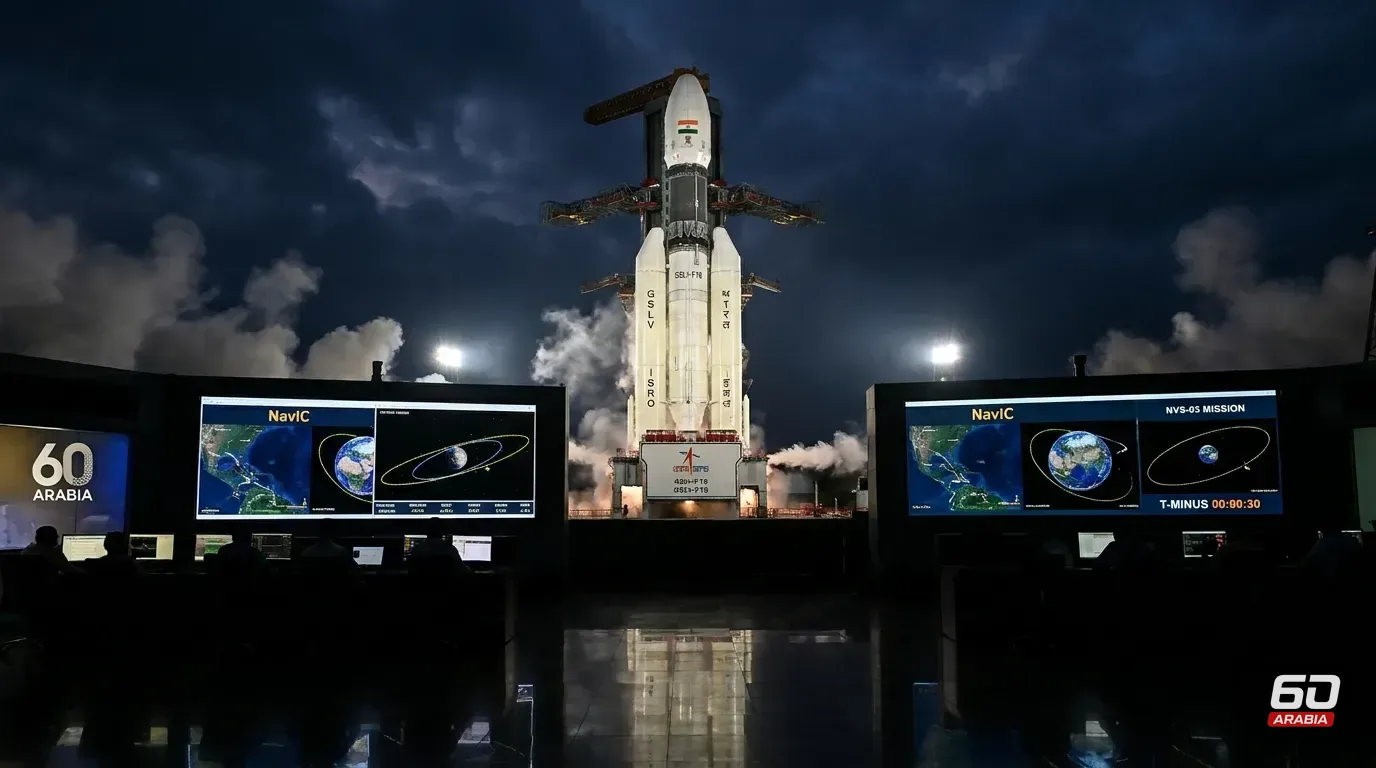
The Indian Space Research Organisation (ISRO) announced that the NVS-03 satellite mission will launch on a GSLV-F18 rocket on October 30 at 11:51 PM IST from the Satish Dhawan Space Centre in Sriharikota.
The rocket will place the satellite into a Geosynchronous Transfer Orbit (GTO). It is the third satellite in the new generation of India's "NavIC" navigation system, which aims to ensure the continuity of regional navigation services.
The satellite carries an Indian-made atomic clock along with other atomic clocks, and adds an L1 signal to the current L5 and S signals, with coverage encompassing India and a region extending 1,500 kilometers beyond its borders.
Through this launch, India seeks to revitalize the NavIC system, which was impacted after the atomic clock stopped on the IRNSS-1F satellite in March 2026. The NVS-02 satellite was launched in January 2025 but failed to complete its orbit-raising operations due to a valve fault.
What Do These Terms Mean?
NavIC: An independent Indian regional navigation system that provides positioning and timing services to India and a region extending about 1,500 kilometers around it.
Atomic Clock: An ultra-precise clock based on cesium or rubidium atoms, used in satellites to accurately determine position because any small timing error translates into a distance error.
Geosynchronous Transfer Orbit (GTO): A temporary elliptical orbit in which the rocket initially places the satellite, after which the spacecraft fires its engines to raise it to its final orbit.
Weekly Newsletter
Read between the lines before everyone else. Decode the most important economic, tech, and decision-maker movements in the region.. in 5 minutes every Saturday.