

India's Jio Surges 21% on First Trading Day After Country's Largest IPO
Jio Platforms shares surged 21% on their first day of trading following India's largest initial public offering, after raising more than $3 billion from investors.
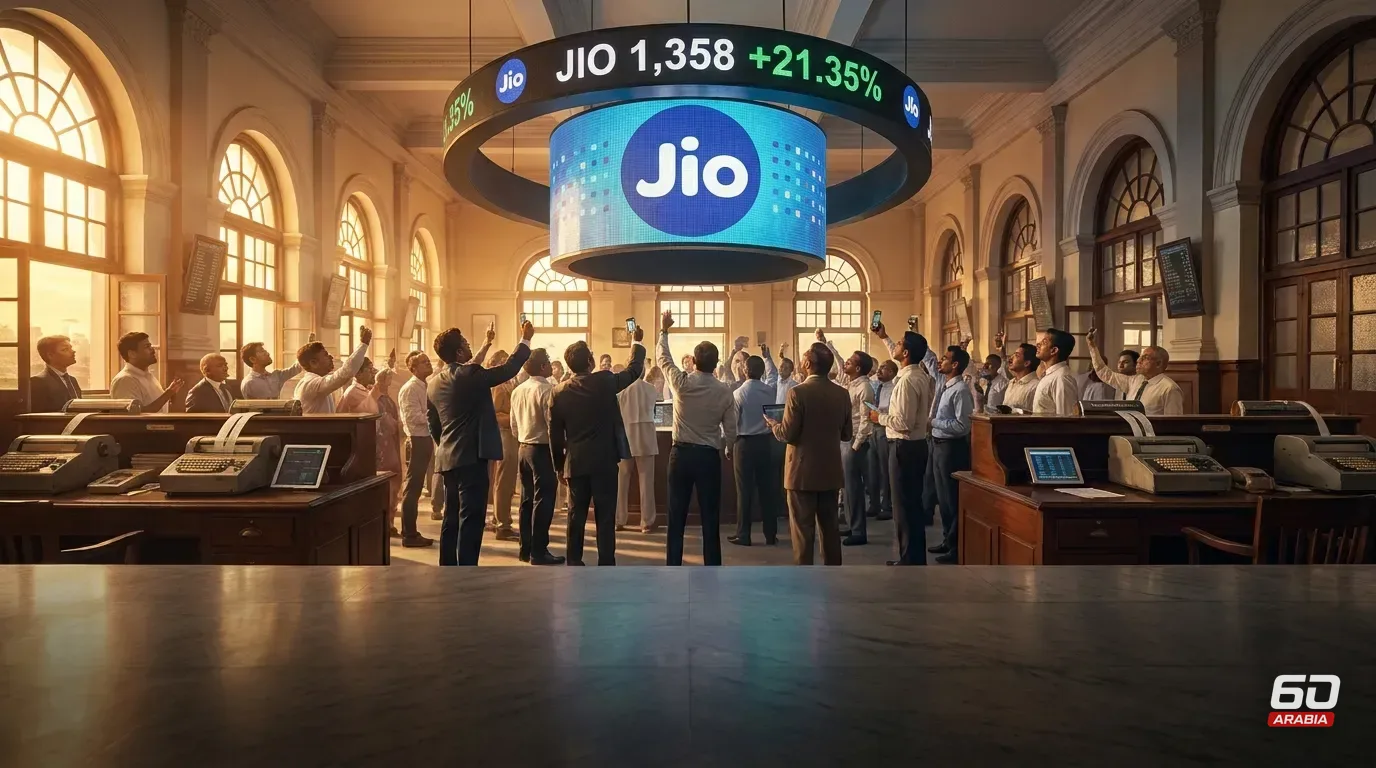
Jio Platforms shares surged over 21% on their first day of trading on the Indian stock exchange, after raising more than $3 billion in the country's largest initial public offering in history. The stock opened for trading at 1,358 rupees on the National Stock Exchange in New Delhi, compared to an offer price of 1,119 rupees.
The offering, valued at 30,213 crore rupees, attracted strong demand, with subscription oversubscribed nearly 22 times. The company's market capitalization at listing reached approximately 12.5 lakh crore rupees, making it the second-largest listed company in India by value, according to Agence France-Presse.
Akash Ambani, managing director of the company, said at the listing ceremony in Mumbai that over ten years Jio sought to make data accessible to everyone, and in the next decade wants to do the same with life-changing technologies for Indians, including artificial intelligence, cloud computing, connected devices, and satellite connectivity.
Jio, which owns India's largest wireless carrier and has over 530 million subscribers, is the digital arm of Reliance Industries. The company allocated most of the IPO proceeds to pay off the debt of Reliance Jio Infocomm, while some reports indicated that the stock closed up around 27%.
What do these terms mean?
Initial Public Offering (IPO): The first sale of a company's shares on the stock exchange, converting it from a privately held company owned by its founders and investors into a listed public company where the general public can buy shares.
Offer Price: The price set by the company for a single share before trading begins, against which the opening price is compared to measure the success of the offering.
Market Capitalization: The value of a company on the stock exchange, calculated by multiplying the share price by the number of outstanding shares.
Crore and Lakh Crore: Two units used for counting large numbers in India; one crore equals 10 million, and one lakh crore equals 100 billion.
Weekly Newsletter
Read between the lines before everyone else. Decode the most important economic, tech, and decision-maker movements in the region.. in 5 minutes every Saturday.