
Space Economy Surges Toward $1 Trillion, Redefining the Commercial Race Between Companies and Governments
The value of the space economy surpasses $600 billion as companies like SpaceX and Blue Origin race for dominance, while Arab nations launch ambitious space programs combining scientific and commercial goals.
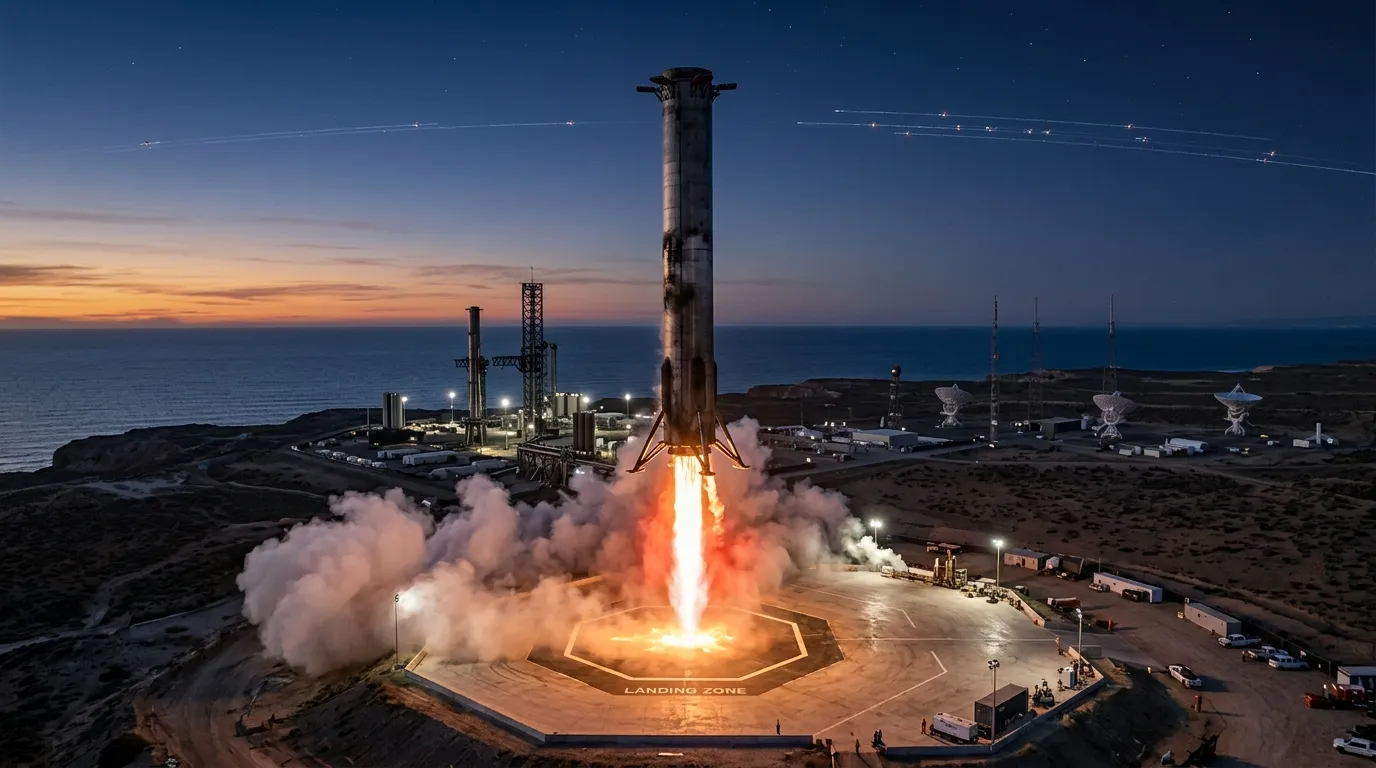
Specialized reports estimate the size of the global space economy at more than $630 billion in 2024, with projections to exceed $1 trillion by 2040. Elon Musk's SpaceX leads this growth with its fleet of reusable rockets and the Starlink satellite internet system, while Jeff Bezos's Blue Origin and rising Asian companies compete.
Space economy opportunities are distributed across multiple sectors; commercial satellites provide telecommunications, navigation, and Earth observation services, while the rocket launch industry is witnessing a sharp drop in costs thanks to reusability, alongside emerging sectors such as space tourism, asteroid mining, and pharmaceutical manufacturing in zero gravity.
The UAE launched a probe that reached Mars orbit in 2021 and announced plans for an exploratory mission to the main asteroid belt by 2028, while Saudi Arabia is pumping massive investments into the space tourism company Virgin Galactic and seeking to build national capabilities in the space sector under Vision 2030.
Space forms a new arena of geopolitical competition among the United States, China, and Russia, while Arab countries are positioning themselves as strategic partners through technological partnerships and locating launch stations. Commercial space experts believe that falling launch costs and the expansion of satellite services allow Arab countries to join the space economy as active partners rather than merely consumers of its services.
What do these terms mean?
Reusable Rocket: A rocket designed to land and be recovered after every launch instead of being lost at sea, reducing the cost of reaching space by over 90% compared to conventional rockets, much like how renting a plane reduces costs compared to manufacturing a new aircraft for every flight.
Low Earth Orbit Satellites (LEO): Satellites orbiting at altitudes between 200 and 2,000 kilometers above Earth, much closer than conventional satellites, which reduces latency and provides faster internet; the Starlink network relies on them to cover remote areas.
Asteroid Mining: A futuristic concept based on extracting precious metals and raw materials from asteroids in space, as some asteroids contain platinum and iron metals in quantities thousands of times greater than Earth's reserves.
Weekly Newsletter
Read between the lines before everyone else. Decode the most important economic, tech, and decision-maker movements in the region.. in 5 minutes every Saturday.