Mars Moon Probe Launching on October 19 to Retrieve First Sample from Phobos
The Martian Moons eXploration mission is preparing to launch its probe on October 19 toward the Martian moon Phobos, in the first mission to bring a sample from its surface back to Earth.
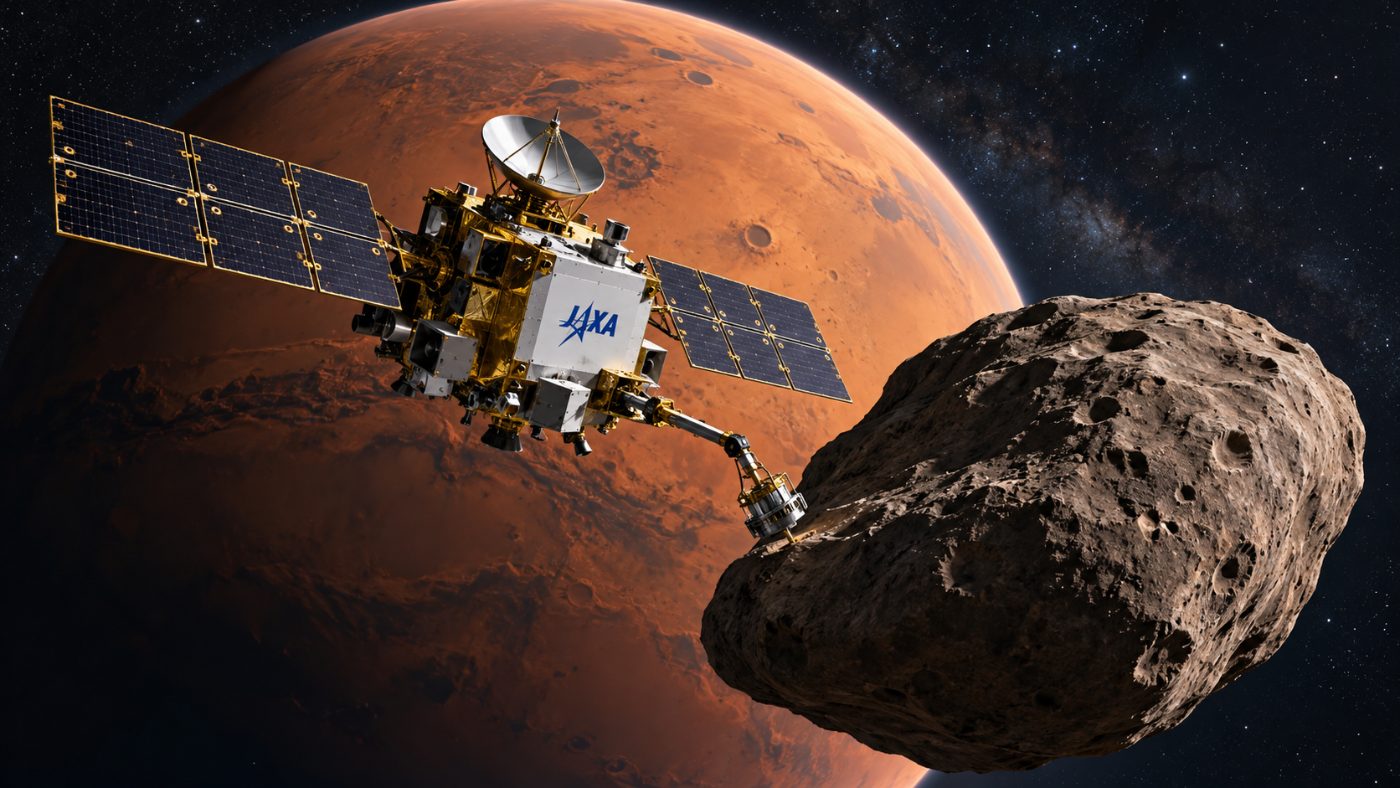
The European Space Agency announced that the Martian Moons eXploration (MMX) mission is preparing to launch its probe toward Mars' moon Phobos on October 19 (October 20 Japan time) aboard an H3 rocket from Tanegashima Space Center in Japan at 04:41 JST (19:41 GMT).
MMX is the first mission aiming to collect a sample from the surface of Phobos and return it to Earth, providing scientists with raw material that could reveal the moon's origin and the nature of the Martian system's formation. The mission is led by the Japan Aerospace Exploration Agency (JAXA), with participation from NASA, the French space agency (CNES), the German Aerospace Center (DLR), and the European Space Agency (ESA).
In a related context, the European Space Agency stated that the test twin of the ExoMars rover is undergoing training for its first drive step, as part of preparations for upcoming missions to explore the surface of Mars.
The mission represents a test of technologies for launching from and returning from the surface of a small moon, a technical step required for the broader ambition of sending crewed and robotic missions to Mars and its moons in the coming decades.
What Do These Terms Mean?
MMX: Abbreviation for the Japan-led Martian Moons eXploration mission, which aims to study Mars' two moons, Phobos and Deimos, and bring back a sample from the surface of one of them.
Phobos: The larger and closer of Mars' two moons, featuring a heavily cratered surface; scientists believe it may be a captured asteroid or formed from debris.
Sample Return: The process of collecting material from a celestial body and returning it to Earth for analysis in advanced laboratories, allowing higher accuracy than remote analysis.
H3 Rocket: A new-generation Japanese launch vehicle designed to be more flexible and efficient in launching satellites and scientific missions.
Weekly Newsletter
Read between the lines before everyone else. Decode the most important economic, tech, and decision-maker movements in the region.. in 5 minutes every Saturday.